

A newly discovered, rare species of moth appears to live only in the Florida scrub. Scientists hope that naming it will allow it to be protected.
Articles on New species
Displaying 1 - 20 of 56 articles

Three of the four new chameleon species found in Mozambique are probably at high risk of extinction.
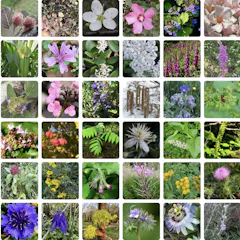
Pl@ntNet, the “shazam” for plants is a well-known app among the hiking community and nature enthusiasts, but not many know that it’s a precious resource for scientists.
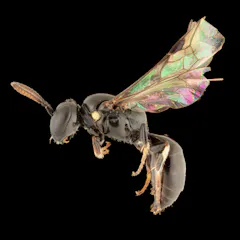
By lifting their gaze to the treetops rather than poking around on the ground, researchers discovered eight new species of masked bees.
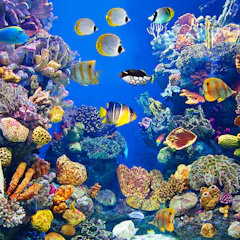
Stephen Garnett takes us inside a scientific spat about how to govern the naming of new species. Listen to The Conversation Weekly podcast.
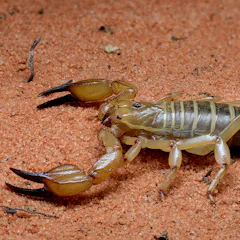
Most Australians think of scorpions as exotic desert animals, but they are fairly widespread across the continent. Still, next to nothing is known about most local scorpion species.

A local legend of a mysterious bird with big eyes grew into the discovery of the Príncipe scops owl. A biologist on the team tells the story of finding and cataloging this new species.

A new gecko species in New Zealand was named te mokomoko a Tohu in consultation with a local Māori tribe. This could be a good example for how taxonomists might approach the naming of new species.
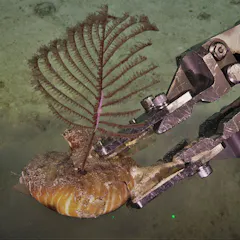
Black corals provide critical habitat for many creatures that live in the dark, often barren, deep sea, and researchers are learning more about these rare corals with every dive.

Spectacular finds of the world’s oldest jawed fishes from China push back the origins of jaws and teeth, and suggest how limbs might have evolved.
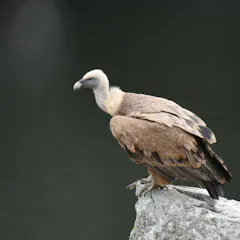
The identification of a vulture that lived more than 50,000 years ago is shedding more light on biodiversity loss and ecosystem change in Australia.
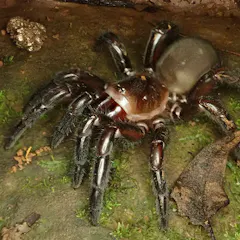
To many people, Australia’s spider diversity is a source of fear. To arachnologists, it’s a goldmine, with most Australian spider species still yet to be discovered.
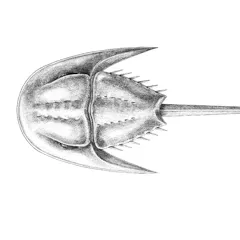
Between 250 and 200 million years ago, a whole host of bizarre horseshoe crabs had evolved in two distinct groups. Only one of these groups survives.
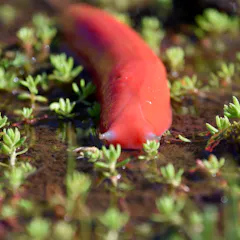
After more than 300 years of effort, scientists have documented fewer than one-third of Australia’s species. The remaining 70% are unknown, and essentially invisible, to science.
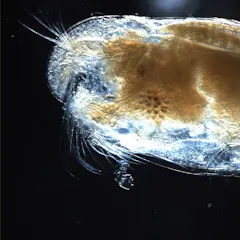
We discovered 11 (and probably more) new species of stygofauna living in water underground. These animals are usually blind, beautifully translucent and long-limbed.
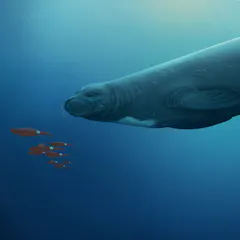
This newly discovered ancient monk seal is challenging previous theories about how and where monachine seals evolved. It’s the biggest breakthrough in seal evolution research in about 70 years.
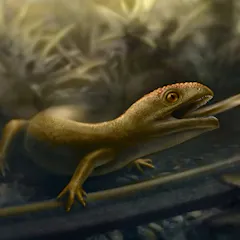
If albanerpetontids were around today, they’d easily fit in your hand. And although their bones are found all over the world, these unique amphibians eluded experts for a long time.
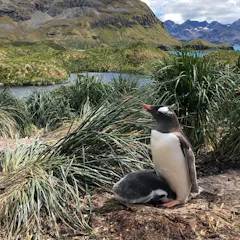
The discovery that gentoo penguins are actually four distinct species has important implications for their conservation.

This stroke of serendipity shows how much there is still to be learned about the natural history of Australia. Surely more surprises are out there waiting for us.
A public debate recently erupted among global taxonomists. Strongly-worded ripostes were exchanged. A comparison to Stalin was floated. But eventually, they worked it out.
Top contributors
-

Adjunct Assoc. Professor, The University of Western Australia
-
Professor of Conservation and Sustainable Livelihoods, Charles Darwin University
-
Professor of Marine Biology, Texas A&M University
-
PhD, University of Saskatchewan
-
Adjunct Senior Research Fellow, The University of Western Australia
-
Moran Professor of Conservation and Development, University of Cambridge
-
Professor, Leverhulme Centre for Anthropocene Biodiversity, University of York
-
Associate Professor, University of Saskatchewan
-
Distinguished Research Professor, University of Connecticut
-
PhD student, Murdoch University
-
Professor of Ecology, Universidade Federal de Goiás (UFG)
-
Director of the Australian National Insect Collection, CSIRO
-
Professor chair in Tropical Ecology and Conservation, University of Salford
-
Research Scientist, CSIRO
-
The University of Western Australia