
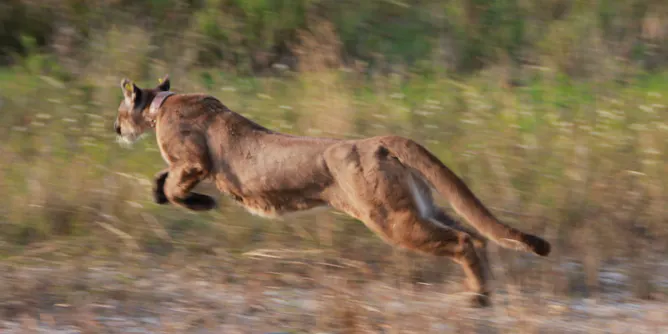
The stories of a whale, a panther and a butterfly help explain why new interpretations of the Endangered Species Act could be catastrophic for species’ survival.
Articles on Species
Displaying 1 - 20 of 110 articles
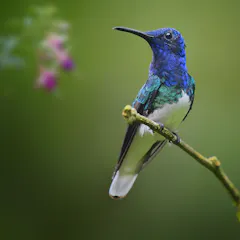
Scientists are discovering previously unknown species in unexpected places, according to a new study.
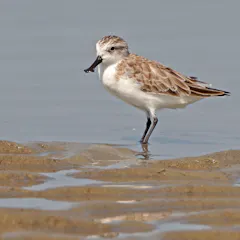
A new global assessment of the world’s migratory species finds reason for alarm, but also hope – and a road map for helping them survive.
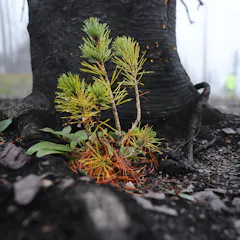
The dead remains of foundation species can boost or deter how well future generations are able to grow and thrive.
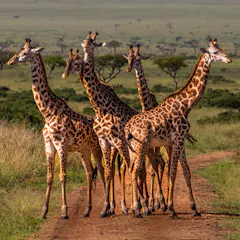
Even now, in an age of satellites and genome sequencing, the Earth still holds secrets.
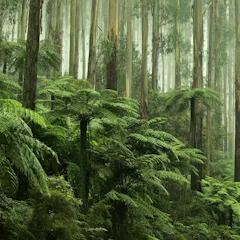
These long-delayed laws took three years, a new Environment Minister and a slew of compromises to be passed.
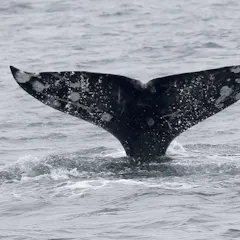
In the past, the gray whale population recovered fairly quickly. But data on baby whales show that isn’t happening, and a new study finds an alarmingly high mortality rate.
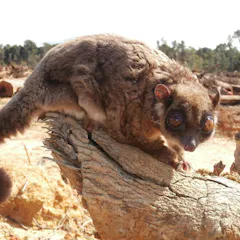
A plantation worker photographed this new genus of mammal in New Guinea, thought to have been dead for 6,000 years.
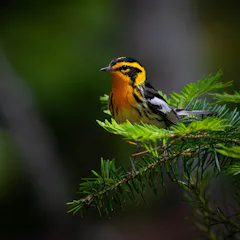
Interbreeding across species lines is one way helpful genes can spread into a bird population.
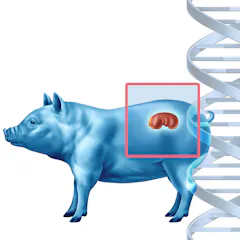
How many human cells does a pig need before it’s considered too human?

Studying charismatic species increased the likelihood of negative workplace experiences for younger colleagues, women and researchers.

The crucial reef-building corals were decimated by a marine heat wave in the Florida Keys. Can advances in restoration help them recover?

Many of these extraordinary places are increasingly at risk due to escalating climate change, invasive species, and and a lack of consistent funding to protect them.

Not everything dies in a mass extinction. Sea life recovered in different and surprising ways after the asteroid strike 66 million years ago. Ancient fossils recorded it all.
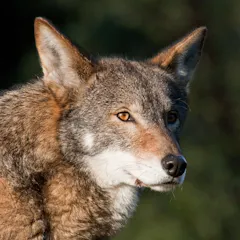
A legal scholar with a Ph.D. in wildlife genetics explains the promise biotechnology techniques hold for some animals that are currently endangered.

Figuring out whether de-extinction is possible is as much a technical puzzle as a philosophical one. Add two kinds of DNA to the mix, and it gets even more complex.
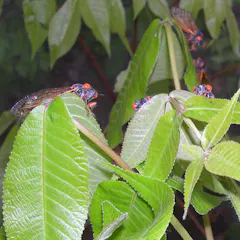
Two ecologists explain why a misleading map is worse than no map at all, and how they have worked for years to track the emergences of 13-year and 17-year cicadas.
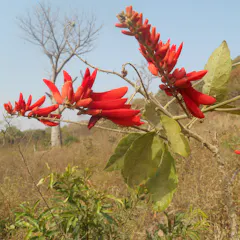
A new publication sheds light on the plants of Burkina Faso and Mali.
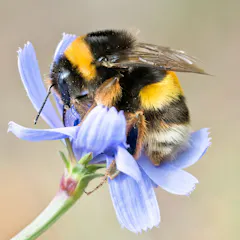
Fast-rising temperatures can change how plants and animals behave and disrupt the delicate timing of pollination.

The causes involve more than just habitat loss, but there are steps you can take to help save these delicate creatures
Top contributors
-

Professor of Conservation and Sustainable Livelihoods, Charles Darwin University
-
Adjunct Assoc. Professor, The University of Western Australia
-
Director of the Australian National Insect Collection, CSIRO
-
Director, Environment Institute, Adelaide University
-
Jenny Graves is a Friend of The Conversation.
Distinguished Professor of Genetics and Vice Chancellor's Fellow, La Trobe University
-
Emeritus Professor, University of Cape Town
-
Professor in Conservation Science, School of the Environment, The University of Queensland
-
Researcher of Ecology and Zoology, Universidad Nacional Autónoma de México (UNAM)
-
Department of Genetics, Universidade Federal do Rio Grande do Sul (UFRGS)
-
Senior Lecturer in Evolutionary Biology, Cardiff University
-
Adjunct Senior Research Fellow, The University of Western Australia
-
Professor of Zoology at the University of Fort Hare, University of Fort Hare
-
Senior Lecturer in Zoology, University of Hull
-
Professor, Biological Sciences Department, University of Cape Town
-
Professor, University of the Witwatersrand