
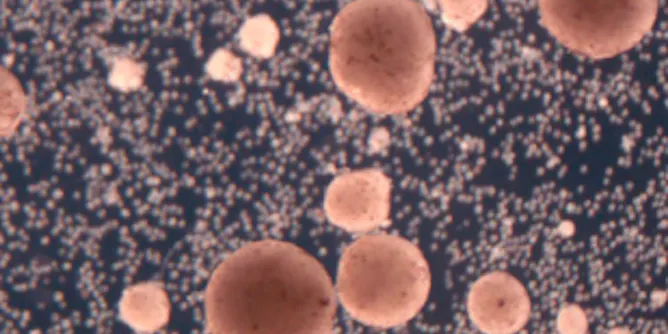
Scientists have created tiny self-replicating organisms made from frog stem cells. So is this as much of a Pandora’s Box as it sounds? Not yet, but we should carefully weigh the risks and rewards.
Articles on Synthetic biology
Displaying 21 - 38 of 38 articles

Solutions to some of the globe’s most daunting environmental challenges may be closer than you think. Scientists are harnessing nature to clean up toxic chemicals and mining waste.

Researchers are turning microbes into microscopic construction crews by altering their DNA to make them produce building materials. The work could lead to more sustainable buildings.
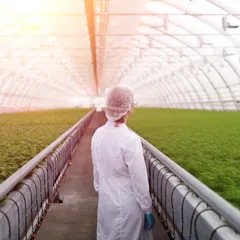
Synthetic biology lets us explore places where evolution has never gone, to help meet humanity’s food needs in a future shaped by climate change.
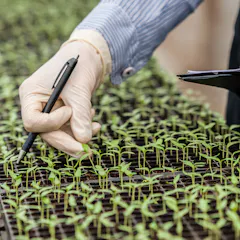
Synthetic biology is highly promising – but if we don’t get the regulation and engagement right, we risk alienating members of the public, and may even close doors for potentially fruitful research.
Right now, you’re living in a kind of industrial revolution – where biotechnology, information technology, manufacturing and automation all come together to form synthetic biology.
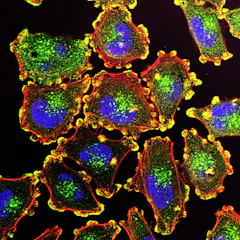
Synthetic biology allows us to engineer biological cells. This could help us tackle cancer in remarkable ways.

If Mary Shelley wrote the book today, Victor would surely be a synthetic biologist. But those fiddling with living things in 2018 have hopefully learned from her cautionary tale.
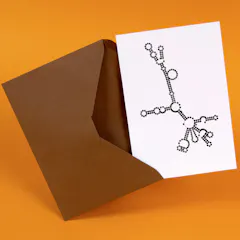
One big challenge for gene therapies is delivering DNA or RNA safely to cells inside patients’ bodies. New nanoparticles could be an improvement over the current standard – repurposed viruses.
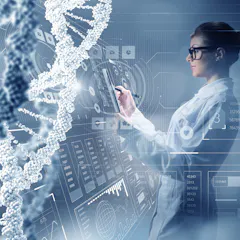
Biologists’ growing reliance on computers advances the field – but comes with new risks. The first step toward improved cyberbiosecurity is increasing awareness of possible threats.
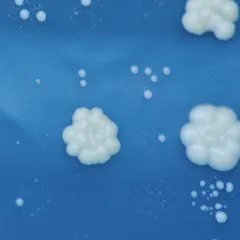
By exploiting the way yeast cells mate, researchers have figured out a quicker, easier way to identify on- and off-target drug interactions.

New research works out how to translate between the language of biology – molecules – and the language of microelectronics – electrons. It could open the door to new kinds of biosensors and therapeutics.
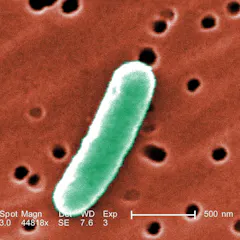
Scientists are working on a new method to cure cancer and have shown they can genetically program certain bacteria to invade the tumour cells of cancerous mice.
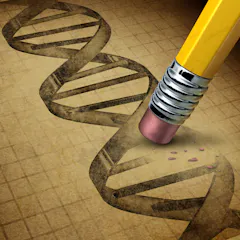
A recent closed meeting about building synthetic genomes raised suspicions about just what scientists were planning, away from the public eye.
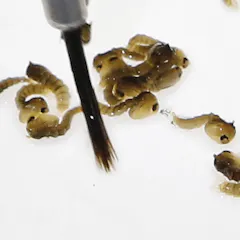
Insecticides and mosquito nets only get you so far. Synthetic biologists are ready to take the battle against mosquito-borne disease to the level of DNA – which might spell the insects’ ultimate doom.

Australia is to play a significant role in the quest for artificial life as it joins an international project to create the world’s first synthetic yeast, we can announce today. Under the leadership of…
Synthetic biology is an emerging discipline, but paradoxically it is not particularly new. Since the mid-1970s we have been developing ways of instructing pieces of biology to perform useful tasks in an…

Scientists in the US have developed a calculator from living cells, using old-fashioned analog programming. Their hope is that the technology could be used in the future to program cells to kill cancer…
Top contributors
-

Doctoral Student in Biochemistry, University of Washington
-
Director, Synthetic Biology Future Science Platform, CSIRO
-
Professor of Advanced Technology Transitions, Arizona State University
-
Professor - Emerging Technologies (Stem Cells) at The University of Melbourne and Group Leader - Stem Cell Ethics & Policy at the Murdoch Children's Research Institute, The University of Melbourne
-
Professor of Microbiology, University of Leicester
-
Research Fellow in Synthetic Biology, Macquarie University
-
Professor of Electrical Engineering and Computer Science, Massachusetts Institute of Technology (MIT)
-
Professor and Chair of Philosophy, Wageningen University
-
Personal Chair in Synthetic Biological Engineering, University of Edinburgh
-
Professor, Abell Chair in Synthetic Biology, Colorado State University
-
Professor of Electrical and Computer Engineering,, University of Utah
-
Professor of Bioengineering, University of Maryland
-
Ph.D. Candidate in Chemical Biology, Harvard University
-
Postdoctoral Researcher in Chemical and Biological Engineering, Colorado State University
-
Reader in Systems and Synthetic Biology, UCL