
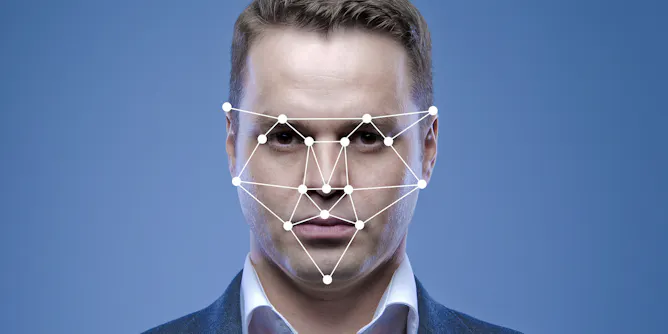
Computers are getting better at identifying people’s faces, and while that can be helpful as well as worrisome. To properly understand the legal and privacy ramifications, we need to know how facial recognition technology works.
Articles on Surveillance
Displaying 281 - 300 of 411 articles
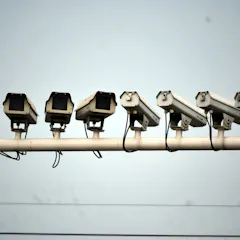
After more than 20 years and millions of cameras, UK’s first attempt to regulate CCTV cameras may be too little too late.

Functional early warning systems help countries respond to a disease before it spreads.
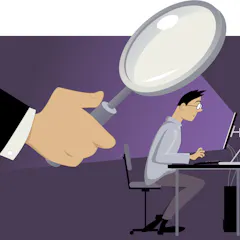
Government agencies and contractors are now less trusting of their workers, and keeping a much closer eye on them, both on and off the job.

The public must prepare to stand up for a free press, and against online censorship and surveillance.
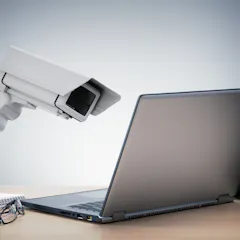
Are we seeing Orwell’s dystopian vision of 1984 coming to fruition?

The Snooper’s Charter has cleared parliament, but there might still be a way to stop the government collecting all our internet histories.

While online action alone can’t solve a problem, it can be a very useful tool to mobilize people and focus attention on a crucial issue.
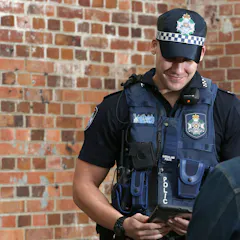
Body-worn cameras may seem to be a boost for policing and criminal justice, but they raise a host of issues around admissibility, privacy and fairrness.
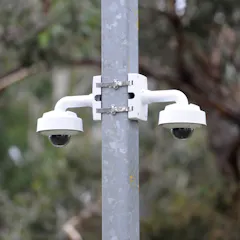
While potentially helpful in resolving extraordinary cases, an over-reliance on CCTV images to tell ‘the truth’ risks perpetuating certain myths regarding violence against women.
The dark web is often used for illegal activity and because of the way it’s structured, it’s hard to police.

Data surveillance has become increasingly invasive and its scope has broadened.

Look back centuries ago and you’ll find the same obsessive secrecy, and the same justifications, as seen today.

Eye-tracking technology helps us understand how people interact with their environment. This can improve policy and design, but can also be a tool for surveillance and control.
As governments look to new ways to step up surveillance, hackers find new ways to subvert it. Is there a way to end this cat and mouse game, described as a crypto-war?

Theresa May has been the longest-serving home secretary since the 19th century, but her tenure is distinctive for other reasons, too.
Will the Lords give the Investigatory Powers Bill the scrutiny it deserves?
New research shows how we can track and even anticipate terrorists’ movements using social media.
The UK government’s move to electronically track criminals on parole shows how wearable technology can become a virtual prison.
Social media can make us mistrustful and paranoid.
Top contributors
-

Associate Professor in Telecommunications Engineering, Swinburne University of Technology
-
Research Director of the Security and Surveillance Research group; Professor, The University of Queensland
-
Professorial Fellow, University of Canberra
-
Professor of Digital Society, University of Glasgow
-
Affiliated Faculty Member, Institute for Computational and Data Sciences, Penn State
-
Associate Professor, School of Law, University of Canberra
-
Senior Lecturer in Technology, The Open University
-
Research engineer, Advanced Surveillance Project, CSIRO
-
Senior Researcher and Project Manager, Advanced Surveillance Project, CSIRO
-
Lecturer in Technology and Crime, Griffith University
-
Professor and Director, Centre for Research into Information, Surveillance and Privacy, University of Stirling
-
Emeritus Professor in Law and Criminal Justice, Adelaide University
-
Professor of Global Legal Studies, Birmingham Law School, University of Birmingham
-
Head, The Cyber Academy, Edinburgh Napier University
-
Professor of Cyber Security Practice, Edith Cowan University