

Canadian supply chains have become the epicentre of these looming disruptions. The country urgently needs to strengthen its supply chain resilience.
Articles on Supply chains
Displaying 81 - 100 of 353 articles
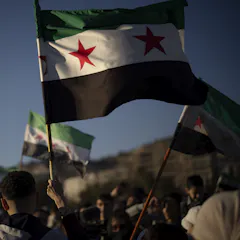
Since 2011, the weaponization of regional and global supply chains through economic sanctions has devastated Syria’s economic and social activities.
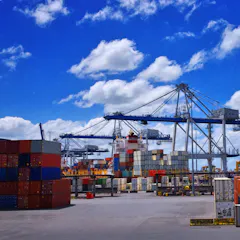
A study shows president-elect Donald Trump’s promised tariffs on Chinese, Mexican and Canadian imports will be a case of economic snakes and ladders for New Zealand. But bigger threats still loom.
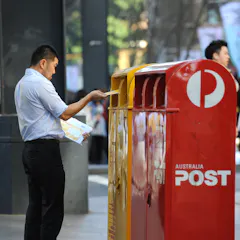
Australia Post’s letter business has been in terminal decline, but its ‘community service obligations’ mean it has to find a way to keep delivering them.
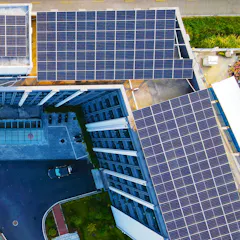
Microsoft, Walmart and a few other high-profile companies made news for scaling back their public climate commitments. However, a closer look at the numbers shows commitments are still booming.

By phasing out sugar, we could spare land that could be rewilded and stock up on carbon. Sugar could also be used to produce biofuels and bioplastics.
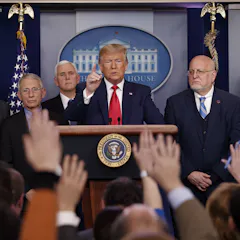
Should Trump be re-elected, the CDC will likely exist on a smaller budget with a reduced role internationally. Lessons from COVID-19 show this will increase Canadian vulnerabilities.
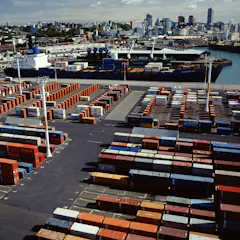
COVID-19 and recent geopolitical crises have shown just how vulnerable New Zealand’s supply chain is. Resilience and sustainability will require businesses to find new ways of working,
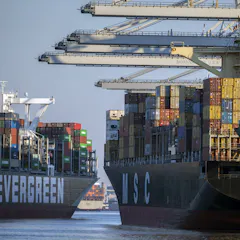
This is the first strike at East Coast ports since 1977. About 45,000 workers have walked off the job.
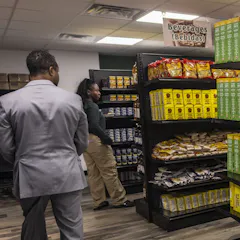
Supply chain improvements could help lower the food insecurity rate and reduce food waste while boosting profits for retailers.
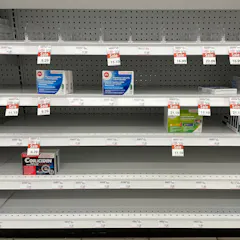
Contingency planning for a potential conflict shouldn’t cause a national panic. Australia needs a ‘first 90 days’ plan to ensure we’d survive until supply lines could be reestablished.
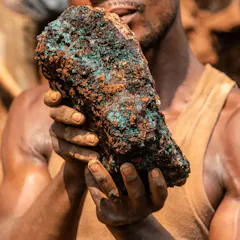
The Democratic Republic of Congo is the world’s major supplier of cobalt, used in electric vehicle batteries, and is asserting its rights as an equal partner in the renewable energy transition.
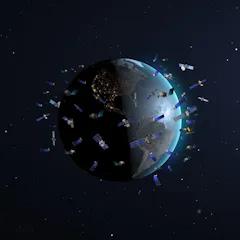
The space missions of the future will need to coordinate multiple satellites and spacecraft − and figure out how to refuel, repair and even replace them in orbit.

There needs to be a shift in sustainable supply chain management to go beyond minimising harm to proactive regeneration.

The scanning of a package of gum in an Ohio grocery store in 1974 marked the beginning of an era.
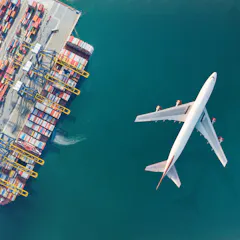
We don’t yet know the full cost and scale of the damage, or how long it will take supply chains to fully recover.

The Supreme Court drastically reduced federal protection for wetlands in 2023. Two environmental lawyers explain how private businesses and nongovernment organizations can help fill the gap.
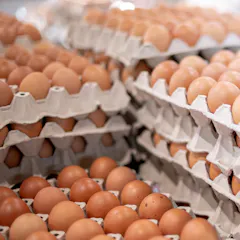
Coles’ decision is likely more of a precautionary move that reflects its own specific supply chain. It will also help deter against panic buying.
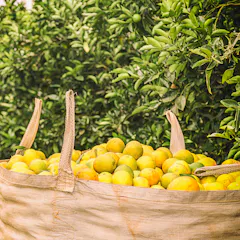
Brazil’s orange harvest has been badly damaged by a disease infecting trees and spoiling the fruit.

Severe weather and disease in Brazil’s main growing regions have led to a major global shortage. Australia does grow a lot of its own oranges, but still relies heavily on imported juice.
Top contributors
-

Associate Dean, School of Business and Law, Edith Cowan University
-
Eugene M. Isenberg Chair in Integrative Studies, UMass Amherst
-
Professor of Health Service Operations, School of Pharmacy & Medical Sciences, University of Bradford
-
Deputy Director of the HUMLOG (Humanitarian Logistics and Supply Chain Management Research) Institute, Hanken School of Economics
-
Professor in Sustainable Production and Consumption, Anglia Ruskin University
-
Lecturer in Logistics, Technological University Dublin
-
Associate Professor in Operations and Supply Chain Management, UTS Business School, University of Technology Sydney
-
Assistant Professor of Operations Management, University of Manchester
-
Senior Lecturer in Operations and Supply Chain Management, Anglia Ruskin University
-
Professor of Logistics and Supply Chain Management, Heriot-Watt University
-
Associate Professor of Supply Chain & Analytics, University of Missouri-St. Louis
-
Associate Professor, University of Sydney Business School, University of Sydney
-
Distinguished Professor of Supply Chain Management, Northeastern University
-
Associate Professor, Supply Chain Analytics, University of Bradford
-
Professor of Accounting, University of Portsmouth