

The real cost of what we buy is often hidden but demanding greater transparency from brands is one of the most powerful climate actions available to citizens.
Articles on Supply chains
Displaying 41 - 60 of 353 articles

Bouillons are back! What’s behind the French revival of these cheap and cheerful eateries that started out as canteens for Paris’ hungry, blue-collar workers?
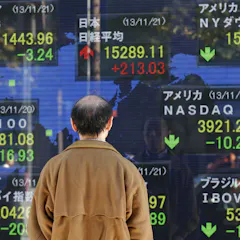
New research adds evidence to a common thesis offered after the end of the Cold War that globalization was making physical distance economically obsolete.

Coal mines are notorious sources of acid mine drainage, but the orange sludge that threatens water supplies and wildlife also contains valuable rare earth elements.

The new strategic reserve may provide the West with greater access to key minerals. But China still dominates the processing of many of them.
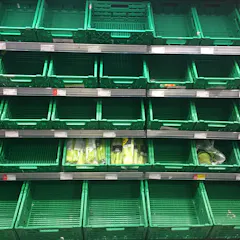
Raising public awareness that food security is a shared national responsibility does not infer panic – it means preparation.

Better measuring the risks posed by rising sea levels and more intense storms requires rigorous, comparable and transparent assessment.

During the pandemic, retailers used generous return policies to win over shoppers. Now, those policies are costing them billions – prompting a widespread rethink.

While Trump scraps US climate policies, companies still face pressure from states, other countries and their customers. That pressure trickles down supply chains.

The optimal and safe use of agricultural inputs to increase food production is key to achieving global food security.
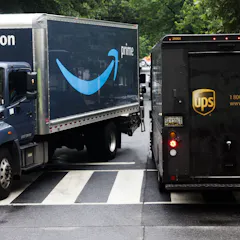
A first-of-its-kind study finds Amazon’s delivery drivers earn less and face more instability than their unionized counterparts.
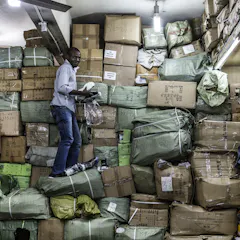
Ethiopian migrants in Johannesburg have reused buildings, densified commercial space and developed networks.
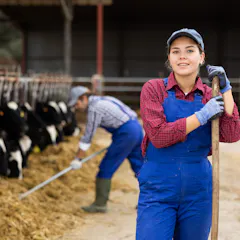
Modelling shows that we will need to change not just how we farm, but what farming produces and what we eat.

If you’ve noticed Australia’s roads are worse for wear, you’re not alone. Extreme weather and climate change are already taking their toll.

Flexible supply chains sometimes need support.
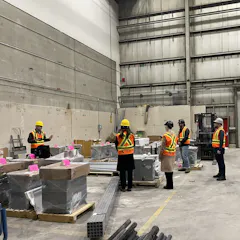
Canadian officials have pledged more than $43 billion in subsidies to create new low-carbon supply chains. A new study identifies some problems.

Small farms will have the hardest time meeting the rules, giving big producers an edge. One potential solution: agroforestry, growing coffee plants among the trees.

Businesses are scrambling to rethink their global supply chains in the face of tariffs.

The US is moving away from a laissez-faire version of capitalism and toward a state-directed form.

When confronted with modern slavery risks, some companies justify their inaction or adopt ineffective measures that do little to address the problem.
Top contributors
-

Associate Dean, School of Business and Law, Edith Cowan University
-
Eugene M. Isenberg Chair in Integrative Studies, UMass Amherst
-
Professor of Health Service Operations, School of Pharmacy & Medical Sciences, University of Bradford
-
Deputy Director of the HUMLOG (Humanitarian Logistics and Supply Chain Management Research) Institute, Hanken School of Economics
-
Professor in Sustainable Production and Consumption, Anglia Ruskin University
-
Lecturer in Logistics, Technological University Dublin
-
Associate Professor in Operations and Supply Chain Management, UTS Business School, University of Technology Sydney
-
Assistant Professor of Operations Management, University of Manchester
-
Senior Lecturer in Operations and Supply Chain Management, Anglia Ruskin University
-
Professor of Logistics and Supply Chain Management, Heriot-Watt University
-
Associate Professor of Supply Chain & Analytics, University of Missouri-St. Louis
-
Associate Professor, University of Sydney Business School, University of Sydney
-
Distinguished Professor of Supply Chain Management, Northeastern University
-
Associate Professor, Supply Chain Analytics, University of Bradford
-
Professor of Accounting, University of Portsmouth