

A peace deal has reopened the Strait of Hormuz, but insurance premiums, mine clearance and a container shortage across two continents suggest the disruption is far from over.
Articles on Global supply chains
Displaying 1 - 20 of 68 articles

Geopolitical and economic uncertainty topped the G7 summit agenda. The world needs strong, inclusive international institutions more than ever.
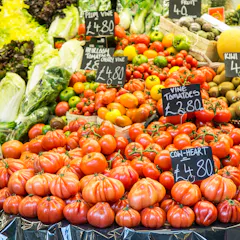
Food and energy are not optional.
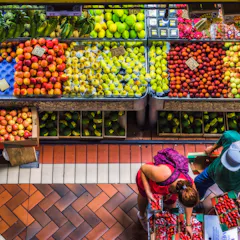
The expansion of global food supply chains can reduce food security, while improving regional food systems can improve food security.

While green technologies can hypothetically make supply chains more efficient, enhanced efficiency often leads to more production and economic growth, not less.
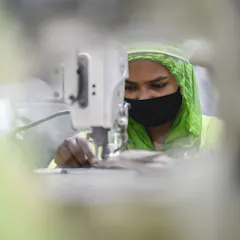
An innovative new strategy to address gender-based violence and harassment is showing promising early signs of effectiveness, but these gains are being undermined by ‘America First’ policies.

There has been an unprecedented surge in government intervention through industrial policies. It doesn’t benefit consumers.

Canadian supply chains have become the epicentre of these looming disruptions. The country urgently needs to strengthen its supply chain resilience.

When firms say they have found no evidence of modern slavery, that should ring alarm bells.
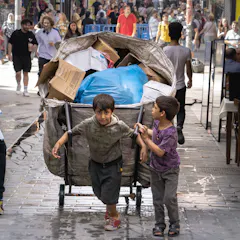
More information and transparency would help companies understand where the products they need come from.

Global semiconductor manufacturing is already under geopolitical stress, but climate change ups the ante.
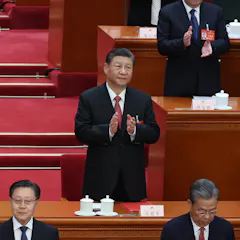
China is facing many economic obstacles, but Beijing remains optimistic about growth.
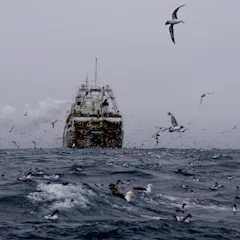
Canada is an outlier in its failure to hold buyers and retailers accountable for labour abuse in seafood supply chains.

The Iran-backed Houthi rebels have the power to significantly destabilise global trade by endangering maritime activity in the Red Sea.
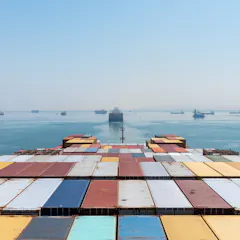
An Iran-aligned group has attacked ships in the Red Sea that it believes are heading to Israel, causing several companies to pause or divert shipments.

A US-led naval taskforce has deployed in the Red Sea and is considering strikes on rebel positions in Yemen.

The UK, eurozone and US inflation stories have diverged, which means each economy is now fighting a distinct battle with prices rises, which could require very different weapons.
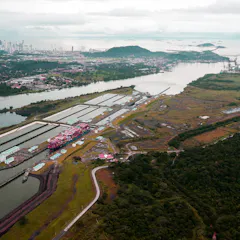
Central America is a long way from Australia but a drought in the region is having an impact on the availability and price of some products.

A new study suggests disclosure laws to prevent forced labour in the clothing industry are a form of window dressing designed to ease the conscience of consumers rather than protecting workers.

If we have learned anything from the fight against modern slavery, it is that addressing the issue takes extensive time, resources and long-term commitments.
Top contributors
-

Associate Professor, University of Sydney Business School, University of Sydney
-
Professor of International Relations and International Development, Department of International Relations, University of Sussex
-
Professor of International Security, School of Global Affairs, Lancaster University
-
Associate Dean, School of Business and Law, Edith Cowan University
-
Professor Emeritus, School of Labour Studies, McMaster University
-
Bernard T. Ferrari Professor of Business, Johns Hopkins University
-
Distinguished SFU Professor of Global Supply Chain Governance, Simon Fraser University
-
Distinguished Professor of Supply Chain Management, Northeastern University
-
Co-director of the NYU Center for Business and Human Rights and the Jerome Kohlberg Professor of Ethics and Finance at NYU Stern, New York University
-
Senior Research Fellow – Supply Chain Strategy, Deakin University
-
Professor, UTS Business, University of Technology Sydney
-
Professor, School of Journalism and Communication, Chinese University of Hong Kong
-
Director of Advisory Board, Centre for Risk Studies, Cambridge Judge Business School
-
Professor of Management, Farmer School of Business, Miami University
-
Professor of International Management & Sustainability, King's College London; Independent Social Research Foundation