
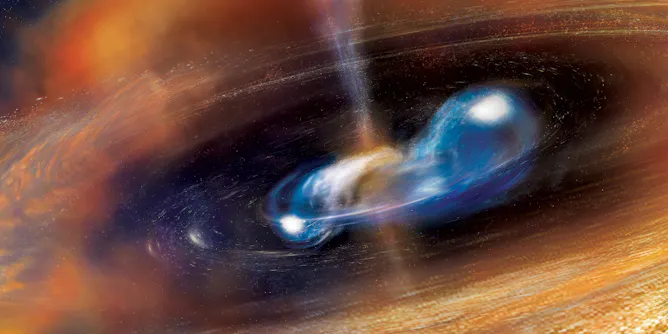
Gamma-ray bursts occur when a massive star explodes or when two neutron stars merge. A newly discovered burst has puzzled astronomers, as it lasted much longer than astronomers would have expected.
Articles on Supernovas
Displaying 21 - 40 of 50 articles

Radio telescopes produce enormous amounts of data, and we need immense computing power to produce even a single image like this one.
It’s long been a mystery how black holes form, now astronomers are on the verge of cracking it.
The discovery of an ancient star in the Milky Way’s halo is providing evidence for another source that would have produced the galaxy’s heavy elements.
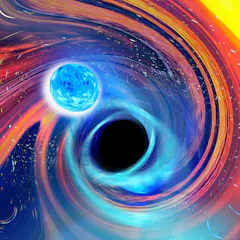
Gravitational waves reveal the demise of super-dense neutron stars spiralling into their black hole companions - the first time such strange and exotic star systems have ever been observed.
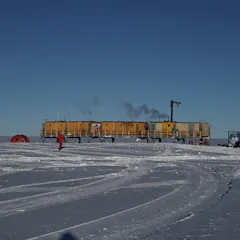
Traces of radioactive iron from the ocean floor, Antartica and the Moon reveal several waves of dust from distant stars over the past 10 million years.
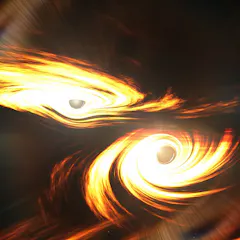
New discovery settles a wager between astrophysicists: black holes can merge repeatedly.
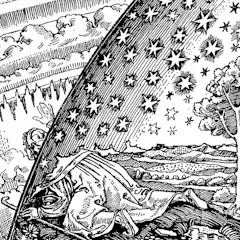
Albert Einstein may have been the ultimate example of a visionary genius, but that did not stop him from twice losing his way due to beliefs that were perhaps not so scientific.
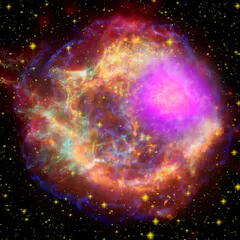
When scientists created the Higgs particle with protons, they needed the 10km-wide Large Hadron Collider. A muon machine could achieve it with a diameter of just 200 metres.
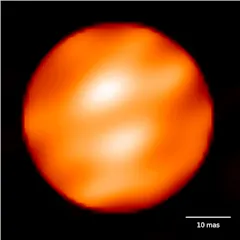
If Betelgeuse explodes, it will become as bright as the full moon in a matter of days and be visible during day time.
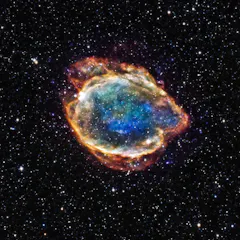
The rate of the universe’s expansion is in dispute. But a new kind of measurement offers hope.
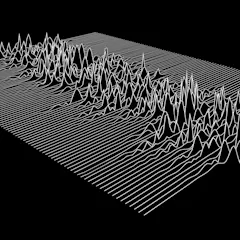
When you look at the squiggly lines on Joy Division’s famous album cover, you’re seeing a record of lightning in outer space.
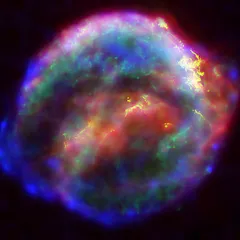
By studying old and dead stars, we can discover what will happen to our sun in the far, far future. And it won’t end with a big explosion.
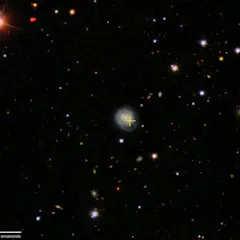
Odd event could be explained by a star being ripped apart by a black hole.

Are there stars other than the Sun that might explode soon close to us? Yes, there are! As long as by ‘soon’ we mean within a million years.

There are lots of places where it’s much, much hotter than the Sun. And the amazing thing is that this heat also makes new atoms - tiny particles that have made their way long ago from stars to us.
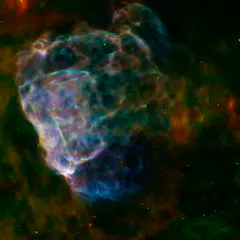
A massive star, with a radius 500 times that of our sun, exploded. But the supernova fizzled – it was weak and dim. Figuring out what went wrong led to insights about how rare binary star systems form.
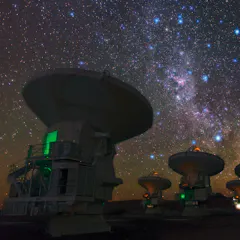
The ‘oldest known nova’ (a star explosion) in the sky was actually not a nova, astronomers show.
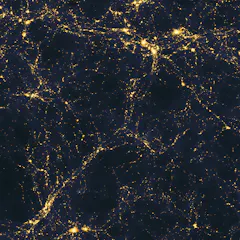
Our brain cells do look a lot like a map of the universe – but that doesn’t mean they’re the same thing.
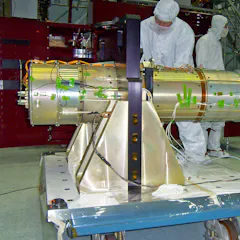
The Swift Observatory passed a milestone: 1 million snapshots of the universe. These exquisite and revealing pictures have captured the births and deaths of stars, gravitational waves and comets.
Top contributors
-

Senior Curator (Astronomy), Museums Victoria Research Institute; The University of Melbourne
-
Lecturer in Astronomy, Nottingham Trent University
-
Professor of Astrophysics, University of Manchester
-
Honorary Lecturer, Nuclear Physics, Australian National University
-
CSIRO
-
PhD Candidate, University of Hertfordshire
-
Senior Research Scientist, UCL
-
Research scientist, CSIRO
-
Professor of Astronomy, Macquarie University
-
Dean of Science, University of California, Santa Cruz
-
Graduate student of Astronomy, California Institute of Technology
-
Postdoctoral Researcher in Astronomy, Stockholm University
-
Research scientist & Head of Science Operations and Support, e-MERLIN/VLBI National Radio Astronomy Facility, Jodrell Bank Centre for Astrophysics, University of Manchester
-
Astrophysicist/Cosmologist, Australian National University
-
Associate Professor, Department of Earth Sciences, Carleton University