

Many people with eating disorders die from suicide. Improving perception of internal body states, or interoception, can help everyone better care for their own bodies.
Articles on Suicide risk
Displaying 21 - 40 of 53 articles

Rather than asking ‘who is at risk?’ of suicide we should also ask ‘when is a person at risk?’ Our preliminary research shows this has promise.

Our global review of research into the link between financial crises and mental health highlights three key challenges: stigma, stress and social roles

An increase in anti-Asian hate incidents during the pandemic contributed to a rise in depression among Asian and Asian American college students, a study found.

The 988 Suicide & Crisis Lifeline is for anyone experiencing suicidal thoughts, emotional distress, substance abuse issues or mental health problems.

Carers can be left to figure it out for themselves, without support. Here’s what can help.

New research points to feelings of failure, hopelessness, loneliness and sadness as some of the potential reasons Black young people are considering or carrying out suicide at unprecedented rates.

Vivian can’t believe her luck when she inherits a clifftop house – but the house comes with unexpected responsibilities.

You can make an enormous difference by asking someone the right questions and being there for them.

The rate of suicide attempts in children and adolescents increased by 22 per cent during the pandemic compared to before the pandemic.

Sen. John Fetterman’s admission to a hospital for mental health treatment has set off an important national discussion about the need to reduce stigmas around mental illness.
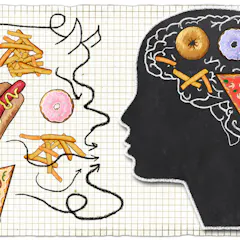
The mortality rate of people with eating disorders is six times higher than the general population, and they are five times more likely to attempt suicide. However, few people seek treatment.

Researchers who analyzed every sports bet placed online since 2018 found that young adults are the fastest-growing group of bettors, with more than 70% of them placing in-game bets.

Public policies should be looking to increase awareness of the link between alcohol and suicide and to assess and treat problematic alcohol use as a way to prevent suicide.

Self-blame was found to be associated with experiencing suicidal thoughts.

Imposing outright social media bans can do more harm than good.

Fetal alcohol spectrum disorder (FASD) is a multifaceted disorder. There are complex reasons why this population may be at higher risk for suicide, suicide attempts and suicidal ideation.

Youth suicides in the US have increased by around 50% over the past decade – gun availability is a big part of that trend.

Care leavers are over-represented in the justice system. Rising rates of self-harm show an urgent need for greater mental health support.

Individuals who experience suicidal thoughts can show signs of this in the language they use. We analysed more than 100 suicide notes to find these language patterns.
Top contributors
-

Assistant Professor of Social Work, Policy, and Practice, University of Chicago
-
Program Coordinator, School of Criminology & Criminal Justice, Arizona State University
-
Research Analyst at the Center for Violence Prevention and Community Safety, Arizona State University
-
Senior Fellow in Social Work, University of Tasmania
-
Lecturer in Public Health, University of the West of Scotland
-
Professor of Emergency Medicine, University of Colorado Anschutz
-
Professor and Head of Social Work, University of Tasmania
-
Clinical Psychologist and Professor in the Department of Psychology and Neuroscience, Dalhousie University
-
Director of the Center for Violence Prevention and Community Safety, Arizona State University
-
Senior Research Assistant, Disrupting Violence Beacon., Griffith University
-
Associate Professor, Department of Psychology, and Director, Mental Health Strategy, University of Calgary
-
Associate Professor of Psychological Sciences, Auburn University
-
Pro Vice-Chancellor (Research), The University of Western Australia
-
Assistant Professor, McGill Group for Suicide Studies, Department of Psychiatry, Faculty of Medicine and Health Sciences, McGill University
-
Professor of Psychology, University of St. Thomas