

“No-zero” grading policies are becoming more common in US schools. South Carolina is the first state to ban these policies.
Articles on student grades
Displaying all articles

Even when grades rise, we shouldn’t assume that every rise is unearned or indefensible. The full picture is messier than that.

Across the US, parents are leading the charge to limit cellphone use in schools.

Parents need to directly hear from teachers and administrators via open houses or parent advisory councils to lift the fog of confusion and concern surrounding this change.

A scholar of grading explains how teachers can do a better job of reporting what grades represent, and what they are for.
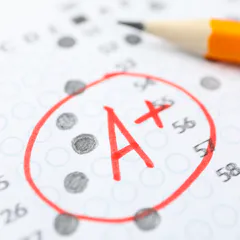
Both teachers and our media landscape contribute to how youth make sense of what is expected of them, and who are bound to excel in which fields.
COVID-19 has challenged teachers’ abilities to provide students with chances to learn and to report on student learning.
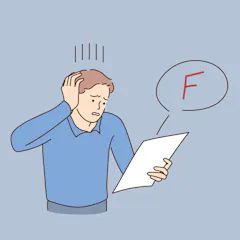
Grades may be a crude incentive for students aspiring to the highest performance, but they have little influence on those who take satisfaction from the learning process.

Grades don’t actually measure learning, and they can increase students’ stress and decrease their motivation. A college professor explains an alternative to grading students’ work.
Top contributors
-

Associate Professor of Teaching and Leadership, University of North Dakota
-
Professor, Jean Augustine Chair in Education, Community & Diaspora, York University, Canada
-
Senior Research Fellow, Deakin University
-
Adjunct Professor, Faculty of Education, University of British Columbia
-
Distinguished Professor, Faculty of Education, Brock University
-
Professor of English, University of Richmond
-
Deputy Vice-Chancellor, Education, Murdoch University; Professor of Measurement, Assessment and Evaluation, Murdoch University
-
Senior Research Fellow, University of Waikato
-
Deakin Distinguished Professor and Co-Director, Centre for Research on Assessment and Digital Learning, Deakin University
-
Associate Professor of Public Communication and Culture Studies, University of Michigan-Dearborn
-
Assistant Professor, Faculty of Education, University of Winnipeg
-
Professor (Assessment and Digital Learning), Deakin University
-
Associate Dean, School of Graduate Studies & Professor, Faculty of Education, Queen's University, Ontario