
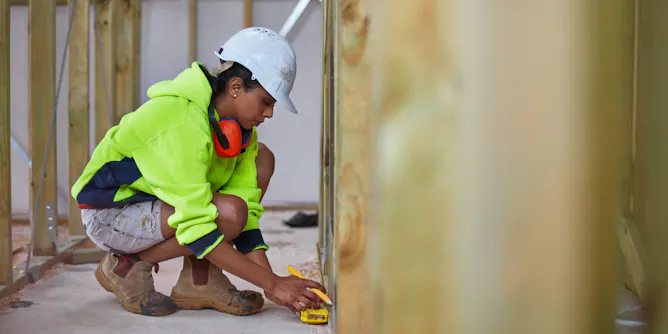
Free TAFE has opened the door to thousands more Australians. But getting people through the door is only half the job.
Articles on Education equity
Displaying 1 - 20 of 38 articles
“No-zero” grading policies are becoming more common in US schools. South Carolina is the first state to ban these policies.

Only 4% of Mogadishu’s schools are run by the government.

Trump’s February 2025 ‘Dear Colleague’ letter instructed all schools that receive federal funding to rid their programming and policies of all DEI ideology, or else risk losing money.
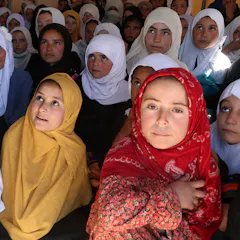
If the ban on girls’ education in Afghanistan persists, consequences could include higher rates of abuse, the spread of extremism and billions of dollars in economic loss.
Canada’s international student cap threatens inclusion in higher education, but social financing — a way for private capital to address social issues — can address this issue.

A scholar of grading explains how teachers can do a better job of reporting what grades represent, and what they are for.

A scholar explains why schools can’t focus only on closing pandemic-related learning gaps.

CC BY-NC-ND9.11 MB (download)
Learning online provides opportunities but making sure all students can access this is key.

NAPLAN’s arrival promised inequities decreased partly from parent involvement in their child’s progress. But working class parents don’t see NAPLAN as a tool for them, and hardly find it valuable.
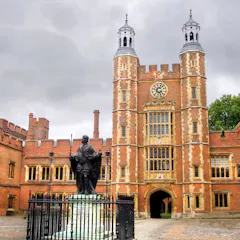
Many Australians have long have called for the government to stop funding private schools. Now the UK’s Labour party wants to get rid of private schools altogether. Could we do that here?

In examining and addressing opportunity gaps for racialized students in schools, school boards must learn to account for present-day and historical inequities.

The Supreme Court long ago rejected the idea of a federal right to education. Can a series of new lawsuits convince the court to change its mind?

Inequality for those left behind is a necessary byproduct of rewarding those who excel.
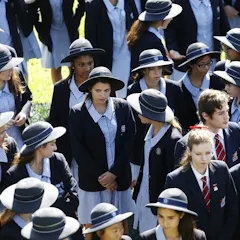
The federal government has argued consistently that more money does not lead to better educational outcomes. But is that right?
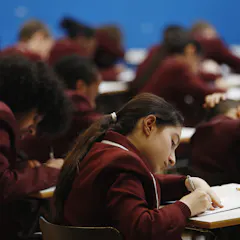
Students who have traditionally struggled at GCSE are now outperforming their peers.

We need to change the school admissions code.
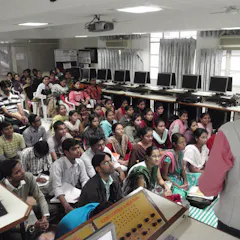
India has invested hugely in to reforming its higher education sector – Australia must view this as an opportunity to capitalise on this growth through partnerships and training schemes.

Universities need to change to become more equitable learning spaces. But what’s the best way to measure their transformation, identify gaps and emphasise successes?
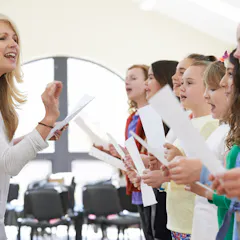
Disadvantaged pupils know what they’re missing when it comes to extra-curricular activities.
Top contributors
-

Professor of Education, Furman University
-
Associate Professor of Teaching and Leadership, University of North Dakota
-
Assistant Professor, Economics Department, University of Warwick
-
Director of Education, Wales Institute of Social and Economic Research Data and Method, Cardiff University
-
Emerita Professor of Psychology in Education, Department of Psychology and Human Development, UCL
-
Professor in the School of Economics, University of Surrey
-
Professor of Education, University of Nottingham
-
Professor of Higher Education and Human Development, University of the Free State
-
Casual Academic, University of Technology Sydney
-
Professor, School of Education, University of Southern Queensland
-
Lecturer in International Development, King's College London
-
Honorary Fellow, Melbourne Business School
-
Professor of Education, Jesus College, University of Cambridge
-
Professorial Fellow, Jumbunna IHL, University of Technology Sydney
-
Reader in Education, University of Leicester