

High school students can skip exams and do an ‘enabling program’ in years 11 and 12. This can qualify them for certain undergraduate degrees.
Articles on University admissions
Displaying 1 - 20 of 60 articles

Even when grades rise, we shouldn’t assume that every rise is unearned or indefensible. The full picture is messier than that.
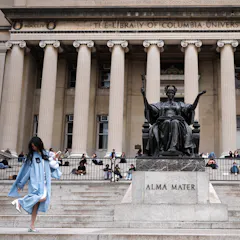
While Columbia University can afford to pay the government $200 million in order to unfreeze federal grants and contracts it was awarded, many other universities and colleges could not.

In September, many universities are making early offers to Year 12 students. This is a contentious practice but research shows it can provide much-needed support to young people.

Design flaws in the application process can see school leavers miss out on studying their most preferred degree, even if they are eligible to do it.

Scholars explain what affirmative action is – and isn’t – as well as what its effects are, and why, among others, the military has supported it for decades.

COVID-19 has challenged teachers’ abilities to provide students with chances to learn and to report on student learning.

New research shows university students who gained entry via bridging programs outperform others who gain admission through ATARs and other means. They are also more likely to complete their degree.

Students matching the ‘traditional’ applicant’s profile see university as a stepping stone to a good job. Those from less-well-represented groups care more about higher education’s intrinsic value.

The COVID-19 pandemic has dramatically accelerated a growing shift to test-optional admissions policies or scrapping entrance tests altogether.

Exams are the currency of the education marketplace.

The ATAR is mainly used as an efficient way for universities to decide which students can be offered a place in a certain course.

Only 16% of predicted grades are accurate and the current system penalises disadvantaged students and those from minority backgrounds.

Why a recent report, backed by university staff, argues that institutions should start offering students places after they’ve received their A-level results.
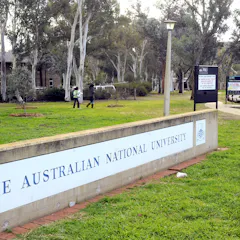
From 2020, ANU will require students to meet co-curricular requirements alongside ATAR. This significant policy shift is meant to improve equity of access, but won’t change much.

In 2017, around 60% of domestic undergraduate university offers were reported as non-ATAR, meaning there’s a diversity of pathways to higher education.

Students should consider all their options and remember the ATAR is just one measure that doesn’t necessarily dictate how well they will do in future.

For colleges and universities that lack the multi-billion-dollar endowments of schools like Harvard, the mere threat of legal action may be enough to put an end to race-conscious admissions policies.

‘Positive discrimination’ policies around the world are on the rise. What might other countries teach the U.S. about attaining racial, economic and gender equality in higher education?

Scholars argue that the complaint of bias against Harvard reflects a flawed understanding of affirmative action policies.
Top contributors
-

Vice Chancellor's Postdoctoral research fellow, RMIT University
-
Professor of Educational Foundations, Policy and Practice, University of Colorado Boulder
-
Lecturer, Teachers and Teaching Research Centre, School of Education, University of Newcastle
-
Senior Lecturer in Sociology and Social Policy, School of Applied Social Sciences, Durham University
-
Deputy Vice-Chancellor, Education, Murdoch University; Professor of Measurement, Assessment and Evaluation, Murdoch University
-
Associate Dean, School of Graduate Studies & Professor, Faculty of Education, Queen's University, Ontario
-
Professor of Production Economics and Director of Research, the Business School, University of Huddersfield
-
Professor of Education, The University of Texas at Austin
-
Professor of Art History and Museum Studies, School of Fine Art, History of Art and Cultural Studies, University of Leeds
-
Associate Professor of Ethnic Studies, University of Colorado Boulder
-
Post Doctoral Fellow, Colorado State University
-
Distinguished Professor, Faculty of Education, Brock University
-
Lecturer of Psychology, University of Hull
-
Associate Professor of Education, University of Southern Maine
-
Professorial Teaching Fellow in Marketing, University of Surrey