
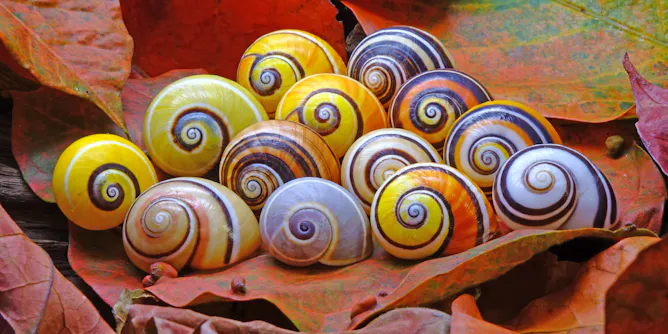
To get a grip on the biodiversity crisis, we’ll need to understand how wildlife is threatened in our own backyard.
Articles on Species
Displaying 41 - 60 of 110 articles
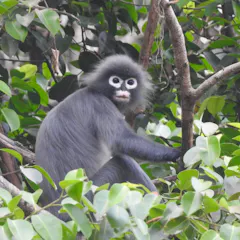
How scientists discovered the ‘Popa langur’ was a separate species of just 200 monkeys.

We studied a rocky shore to see how global changes are playing out within habitats.
A public debate recently erupted among global taxonomists. Strongly-worded ripostes were exchanged. A comparison to Stalin was floated. But eventually, they worked it out.

The extraordinary story of a stingray, its discovery and its uncertain fate in the Yemen war.
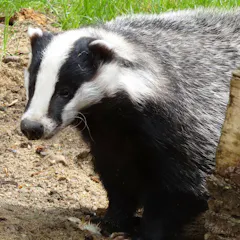
All animals plays a role in nature, and in times of biodiversity loss and climate change, hunting “common” species such as foxes and badgers is irresponsible .

What criteria should be used to determine whether a food is natural? What if gene-editing techniques produce changes indistinguishable from those that evolve naturally? Is the food still natural?
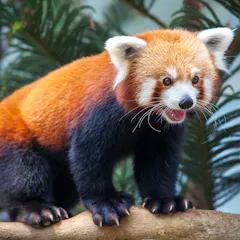
Should scientists keep both species genetically-separate and ‘pure’, even if that risks extinction?
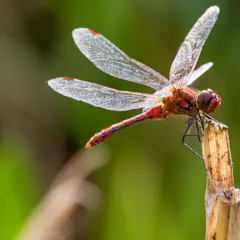
While many surveys show the numbers of wildlife falling, there is good news for some species – including pondskaters and various mosses and lichen.
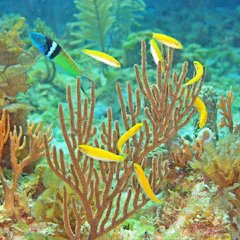
When a male bluehead wrasse is removed from the group he dominates, the largest female changes sex, rapidly transforming ovaries into sperm-producing testes. Molecular research shows how.
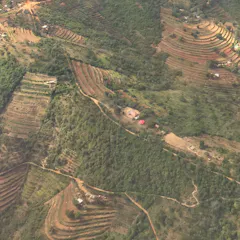
Most of Kenya’s biodiversity needs protecting outside protected areas in human‐dominated landscapes that are undergoing rapid change.
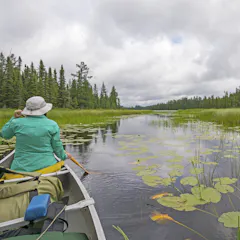
Scientists have a new approach to understanding how pollution threatens species at risk in Canada.
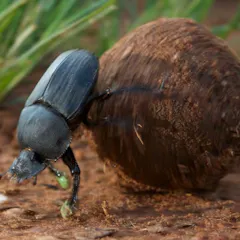
Dung beetles are largely invisible. And yet without their vital activities, the world would have a lot more faeces in it.
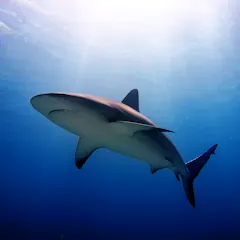
A landmark report found more than one million species at risk of extinction – but even the “safe” ones may not be so safe.
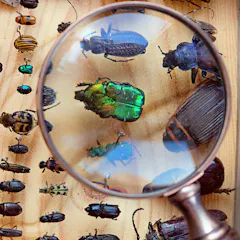
New species are being discovered all the time, which only adds to the problem of knowing how many there are on the planet today. It also helps to know what we mean by species.
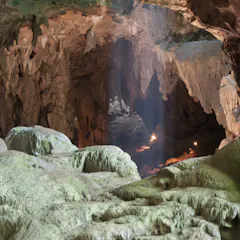
Reports say that a new species of ancient human has been identified in a cave in The Philippines. But only a few bone and teeth fossil fragments have been found, so far.
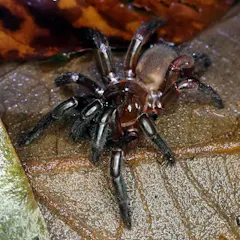
Trapdoor spiders that build unique burrows are found only in small areas of Queensland. But they don’t travel very far from their location, and that could put them at risk.
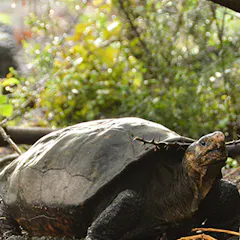
From the reappearance of giant bees to sightings of clouded leopards – can we ever be certain that a species has died out?
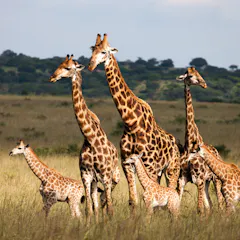
It can actually be very tricky to define a species, but in the 1900s, scientists found a pretty good way.
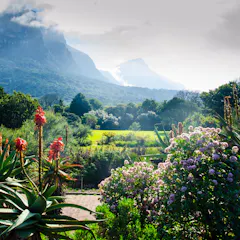
The colonial history of botanical gardens encouraged pride in indigenous flora and culture.
Top contributors
-

Professor of Conservation and Sustainable Livelihoods, Charles Darwin University
-
Adjunct Assoc. Professor, The University of Western Australia
-
Director of the Australian National Insect Collection, CSIRO
-
Director, Environment Institute, Adelaide University
-
Jenny Graves is a Friend of The Conversation.
Distinguished Professor of Genetics and Vice Chancellor's Fellow, La Trobe University
-
Emeritus Professor, University of Cape Town
-
Professor in Conservation Science, School of the Environment, The University of Queensland
-
Researcher of Ecology and Zoology, Universidad Nacional Autónoma de México (UNAM)
-
Department of Genetics, Universidade Federal do Rio Grande do Sul (UFRGS)
-
Senior Lecturer in Evolutionary Biology, Cardiff University
-
Adjunct Senior Research Fellow, The University of Western Australia
-
Professor of Zoology at the University of Fort Hare, University of Fort Hare
-
Senior Lecturer in Zoology, University of Hull
-
Professor, Biological Sciences Department, University of Cape Town
-
Professor, University of the Witwatersrand