
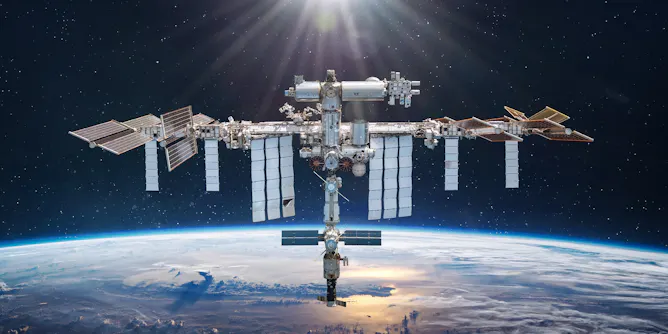
How will they bring the structure back safely? And where will the surviving components crash?
Articles on Space exploration
Displaying 141 - 160 of 357 articles
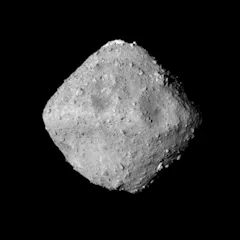
The Hayabusa2 mission brought a piece of asteroid Ryugu back to Earth, where it has helped scientists resolve a long-standing puzzle.
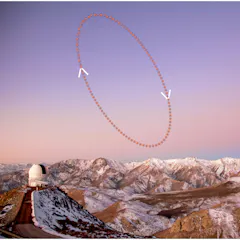
There may be many more asteroids in the same orbit as Earth, some of which we might be able to mine.

Webb is NASA’s largest and most powerful ever space telescope – set to investigate the formation of the furthest galaxies from Earth.

Humanity as a whole owns the Solar System in a shared fashion. It cannot be claimed by one person, or one country, or one company.
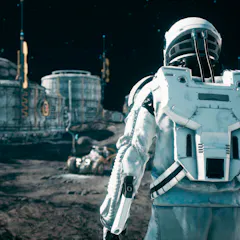
A space station on the Moon could be built out of lunar concrete.

International space law doesn’t explicitly prohibit anti-satellite missile tests — which makes uproar over Russia’s actions all the more significant.
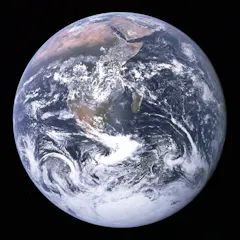
Photographing the full Earth from space could provide a profound and timely reminder of its vulnerability in the face of climate change.

A 10kg rover, due to land on the Moon by 2024, will be fitted with an advanced robotic arm design and manufactured in Australia.

Many Silicon Valley entrepreneurs cooperate closely behind the scenes.

As the space race is resumed, and expanded to include private corporations, it is more important than ever to lay the groundwork for peaceful collaboration.

What did Mercury look like as BepiColombo swung by?

As space exploration takes off, it will become increasingly important to study and understand sex, intimacy, desire and pleasure off-Earth.

Billionaires Jeff Bezos and Elon Musk are in a space race, but their endeavours reflect a colonial mentality. This comes at the expense of finding solutions for our current environmental challenges.

In 1970, Gil Scott-Heron penned a spoken word song called ‘Whitey on the Moon’ that criticized the 1969 Moon landing. A hip-hop scholar explains why the song still reverberates today.

China’s space programme is going from strength to strength.
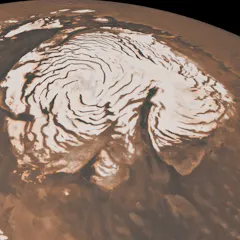
New results show why and how water is disappearing from Mars atmosphere.
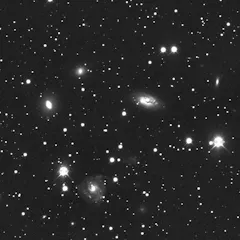
More than 60 images capturing huge expanses of sky are sent to us from Chile. Within them we can see thousands of bright spots. What do we find when we look closer?
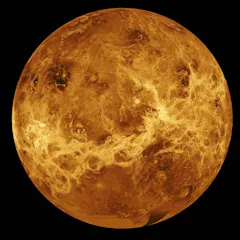
Nasa’s sending its first missions to Earth’s twin since 1990.
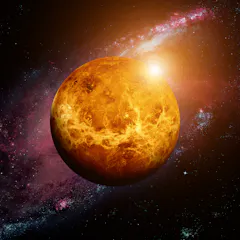
Venus wouldn’t attract much attention if it were outside our solar system. Its skies are filled with sulphuric acid, its land abounds with extinct volcanoes and its surface is mostly red hot lava.
Top contributors
-

Senior Lecturer in Physics, Nottingham Trent University
-
Professor of Planetary and Space Sciences, The Open University
-
Postdoctoral research associate, University of Oxford
-
Professor of Planetary Geosciences, The Open University
-
Associate Professor in Archaeology and Space Studies, Flinders University
-
Lecturer in Astronomy, Nottingham Trent University
-
Professor of Physics, Deputy Director (Solar System) at the Mullard Space Science Laboratory, UCL
-
Professor (Astrophysics), University of Southern Queensland
-
Scientist, Max Planck Institute for Solar System Research
-
Postdoctoral Fellow, Faculty of Law & Justice, UNSW
-
Professor of Robotics, Head of Centre for Robotics Research, King's College London
-
Professor of Planetary Science, University of Leicester
-
Emeritus Professor of International Law, Western Sydney University
-
Full Professor, Former Director, Institute of Air and Space Law, McGill University
-
Senior Instrument Scientist, Australian Nuclear Science and Technology Organisation