
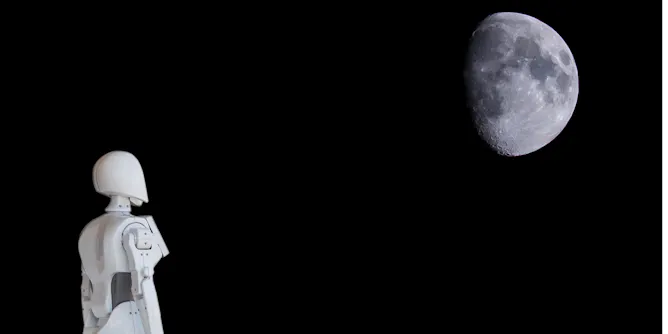
The future of lunar exploration and space travel will be possible only through advances in robotic design and implementation.
Articles on Space exploration
Displaying 221 - 240 of 357 articles

The new era of space exploration is characterized by an emphasis on diversity and international cooperation. But there’s a lot of work to do before there’s gender equality in STEM fields and at NASA.

Fifty years ago, on July 11, 1969, David Bowie released Space Oddity. With its adventurous orchestration, unsettling harmonics and melancholy narrative, the now classic song captured a moment.
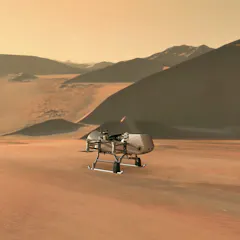
Titan may host primitive lifeforms and could tell us how life arose on our own planet.
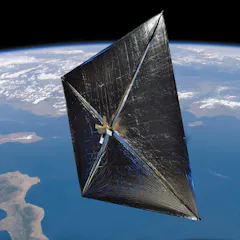
Scientists are hoping to turn tiny spacecraft into starships by coupling them with large solar sails.

CC BY-ND6.81 MB (download)
A new podcast series from The Conversation exploring the last 50 years of space exploration and the 50 years to come.
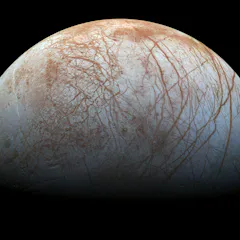
Whether anything could live in Europa’s subsurface ocean depends on what kind of salt it contains. Now scientists have found out.
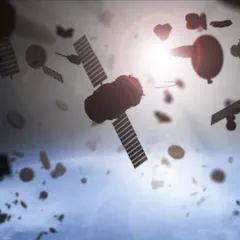
There needs to be an international approach regarding the management and disposal of space junk.
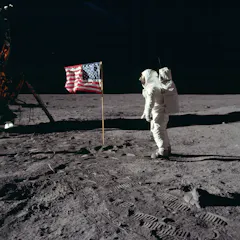
A new study suggests that we should limit ourselves to developing just one eight of the solar system.
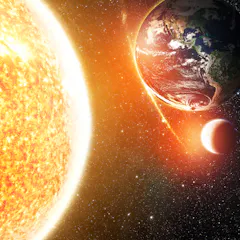
Even if we can prevent a global warming apocalypse, our planet won’t be safe forever – the sun will one day expand. So should we try to move the Earth to a wider orbit?

Israel’s first moon mission failed to land successfully on the moon’s surface.
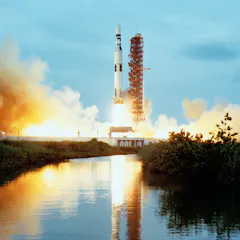
There is currently no launch vehicle capable of launching astronauts to the moon in one go.
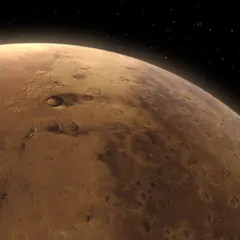
For the first time, an instrument orbiting Mars and a rover on the surface have detected methane simultaneously – raising hopes for finding life on the red planet.
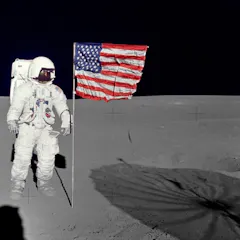
This year the Apollo 11 mission turns 50 - but what does the future hold for the Moon? The ephemeral shadows cast by human artefacts may soon be joined by more permanent scars of lunar mining.
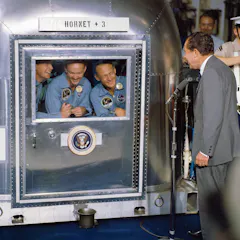
Objects left on the Moon are not just abandoned rockets and rovers. There is a lot of historic and sentimental memorabilia. Some of it hints at a mission that the first Moonwalkers almost forgot.

To prepare for future Mars missions, scientists collect samples and simulate communications conditions from volcano parks on Earth.
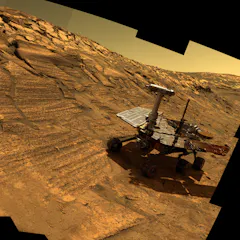
Rovers including ‘Rosalind Franklin’ will pick up where Opportunity left off – trying to answer the question of whether there is, or ever has been, life on Mars.
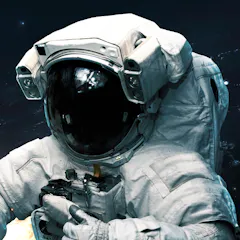
Here’s what NASA scientists discovered when an astronaut went into space and his twin remained on Earth.
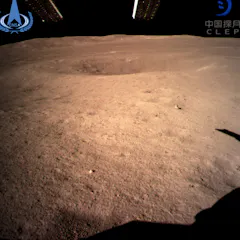
The moon’s far side looks redder than its near side. An expert explains what the actual colour is.
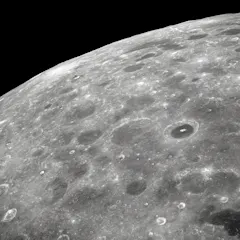
China has become the first to land on the far side of the moon. And unlike previous uncrewed moon landings, it relied on sophisticated technology rather than luck.
Top contributors
-

Senior Lecturer in Physics, Nottingham Trent University
-
Professor of Planetary and Space Sciences, The Open University
-
Postdoctoral research associate, University of Oxford
-
Professor of Planetary Geosciences, The Open University
-
Associate Professor in Archaeology and Space Studies, Flinders University
-
Lecturer in Astronomy, Nottingham Trent University
-
Professor of Physics, Deputy Director (Solar System) at the Mullard Space Science Laboratory, UCL
-
Professor (Astrophysics), University of Southern Queensland
-
Scientist, Max Planck Institute for Solar System Research
-
Postdoctoral Fellow, Faculty of Law & Justice, UNSW
-
Professor of Robotics, Head of Centre for Robotics Research, King's College London
-
Professor of Planetary Science, University of Leicester
-
Emeritus Professor of International Law, Western Sydney University
-
Full Professor, Former Director, Institute of Air and Space Law, McGill University
-
Senior Instrument Scientist, Australian Nuclear Science and Technology Organisation