
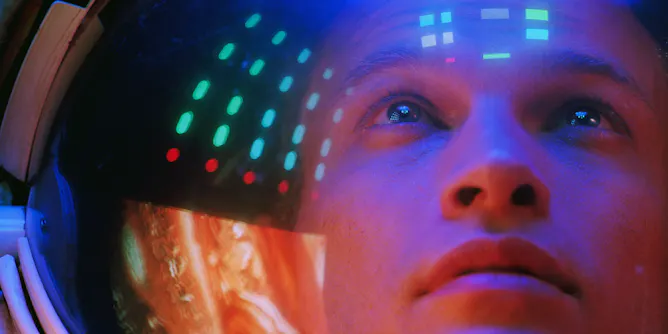
Spacecraft are just a small part of what it takes for humans to become an interplanetary species. A political science professor explains how there is much more to creating a spacefaring society.
Articles on Space exploration
Displaying 121 - 140 of 357 articles
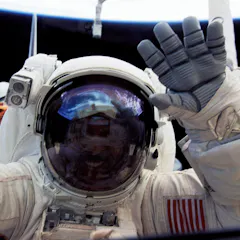
The European Space Agency has recruited the world’s first-ever disabled astronaut. But we’re still a long way from space being accessible to all.
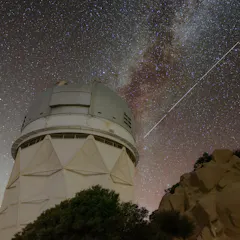
The stars, planets and Milky Way we see at night are part of a wilderness shared across the globe and across centuries. But does BlueWalker 3 herald a night sky polluted with bright satellites?
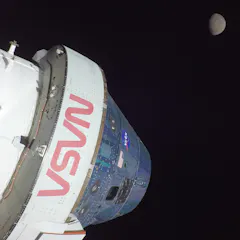
Artemis-1 is on its way back to Earth, successfully completing its maiden flight.

The days of freeze-fried astronaut ice cream are long behind us. What will humans eat on Moon colonies in the future? Carefully engineered space gardens could be the answer.
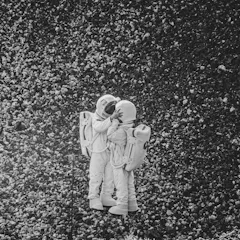
If history is any indication, space exploration will need to contend with and prevent sexual harassment and assault during missions and training.
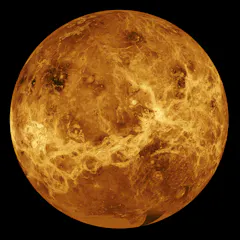
Some scientists are keen to send humans to Venus on a flyby.
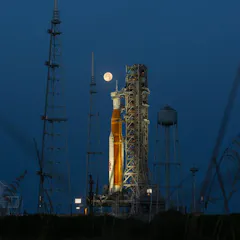
Artemis I launch has been ‘scrubbed’ a couple of times now. Why is a launch window so important, and what does scrubbing mean, anyway?
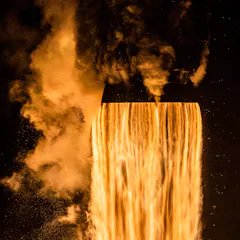
Everyone celebrates the feats of engineering that go into space exploration – but without chemistry, astronauts wouldn’t even be able to breathe.
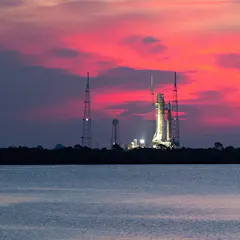
Lunar mining and geopolitical squabbles are set to play key roles in humanity’s return to the Moon.
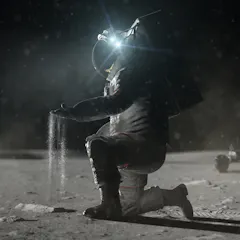
Why is humanity going back to the Moon after 50 years? Because we can, and we should.
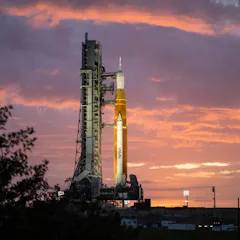
Will humans be back on the Moon by 2025? It depends on how well the imminent launch of Artemis-1 goes.
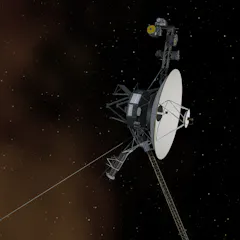
In the void of interstellar space, the most distant emissary of humankind carries a message that will last for billions of years.
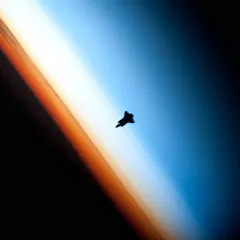
A new publication clarifies how existing legal frameworks apply to space exploration and development. The McGill Manual also highlights the catastrophic implications of conflict in space.
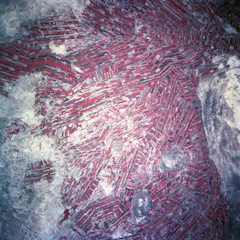
Technologies being developed for growing food in space have contributed to advances in agriculture and crops on Earth.
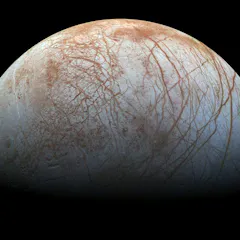
There may be life on Jupiter’s moon Europa or Saturn moon’s Enceladus.
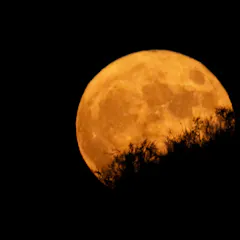
Take note, future colonisers: you may be able to grow stuff in certain places on the Moon.
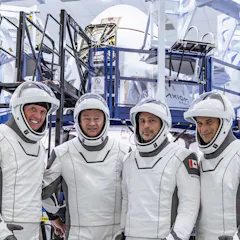
If the mission goes well, private company Axiom Space will move on to building a space station.
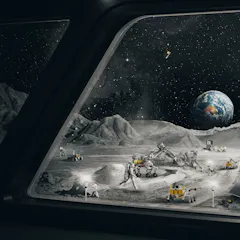
In Australia, space defence gets billions of dollars in funding, and commercial projects get hundreds of millions. Space science gets only $2 million a year.
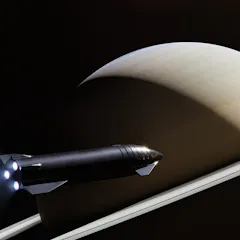
There has never been a dedicated mission sent to the “ice giants”, Uranus and Neptune. But there may be one on the horizon.
Top contributors
-

Senior Lecturer in Physics, Nottingham Trent University
-
Professor of Planetary and Space Sciences, The Open University
-
Postdoctoral research associate, University of Oxford
-
Professor of Planetary Geosciences, The Open University
-
Associate Professor in Archaeology and Space Studies, Flinders University
-
Lecturer in Astronomy, Nottingham Trent University
-
Professor of Physics, Deputy Director (Solar System) at the Mullard Space Science Laboratory, UCL
-
Professor (Astrophysics), University of Southern Queensland
-
Scientist, Max Planck Institute for Solar System Research
-
Postdoctoral Fellow, Faculty of Law & Justice, UNSW
-
Professor of Robotics, Head of Centre for Robotics Research, King's College London
-
Professor of Planetary Science, University of Leicester
-
Emeritus Professor of International Law, Western Sydney University
-
Full Professor, Former Director, Institute of Air and Space Law, McGill University
-
Senior Instrument Scientist, Australian Nuclear Science and Technology Organisation