
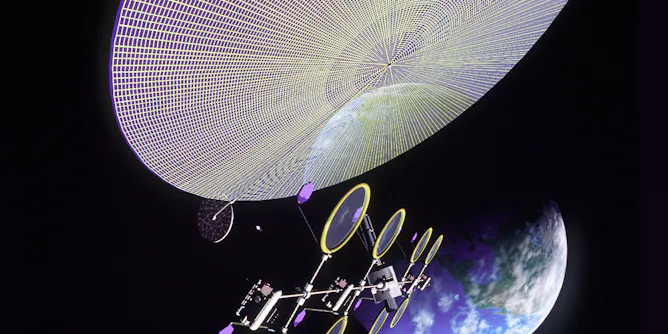
How solar power stations in orbit could become a reality in the coming decades.
Articles on Space exploration
Displaying 181 - 200 of 357 articles

SpaceX’s satellites will populate the night sky, affecting how we observe the stars. And this is just the beginning of private satellite mega-constellations.
With a new president in the White House and NASA’s chief administrator resigning we can expect changes to space policy.
After two decades as a home to astronauts, the International Space Station still has plenty to teach us about how humans can live away from Earth.
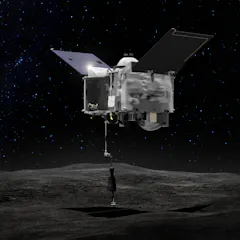
Bennu will tell us about our own origins as much as about the origin of asteroid Bennu.
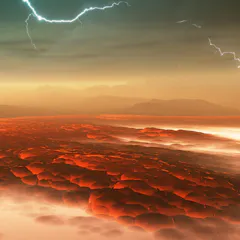
Considering what we know about the key ingredients for life’s formation on Earth, here are three explanations for how this process may have occurred on our sister planet.
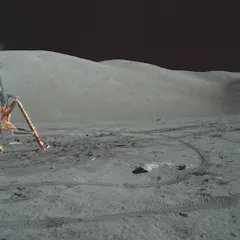
When it comes to managing the tussle for resources on the Moon, we might take lessons from New Zealand environmental law and TikTok ‘witches’.
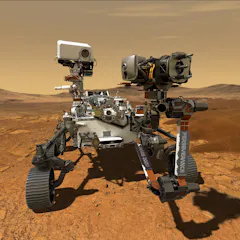
The Perseverance rover onboard Mars
2020 is our best bet for finding life on the red planet.
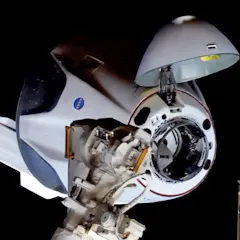
Extreme velocities and temperatures makes the return flight to Earth the most perilous part of a space mission.
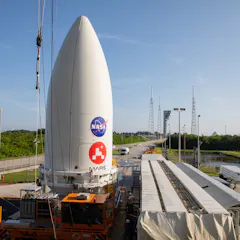
Australian scientists have been working on NASA’s latest Mars mission for years.
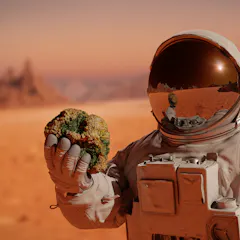
Bacteria can become more deadly and antibiotic-resilient in space. And while more research is needed to figure out how severe the risks are, they could be catastrophic.
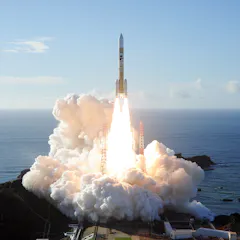
In just a few years, the Hope mission has boosted UAE’s economy and science capacity.
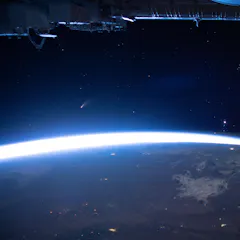
Neowise has an orbit of almost 6800 years, meaning that the last generation of people to see it would have lived during the 5th millennium BC.

A new country launches a mission to Mars. A space expert explains what this means for the Middle East and the African continent.
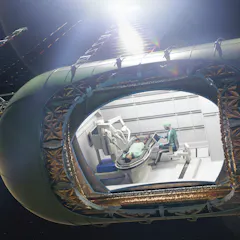
Space agencies are seeking new ways to be prepared for a surgical emergency on a mission to Mars.
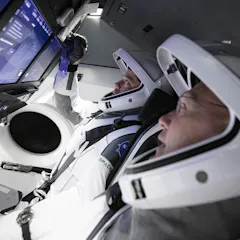
Empathy and scientific knowledge will be key for astronauts looking to travel to Mars.
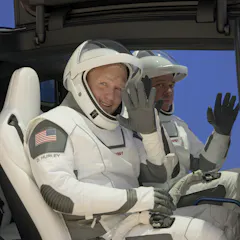
To intercept the ISS, the capsule must match the station’s speed, altitude and inclination.
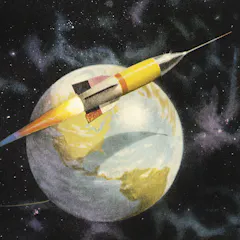
An update of 50-year-old regulations has kickstarted research into the next generation of rockets. Powered by nuclear fission, these new systems could be the key to faster, safer exploration of space.
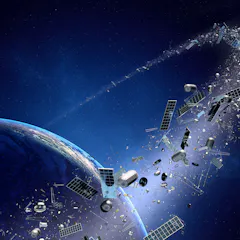
SpaceX recently launched 60 satellites into orbit around Earth as part of its Starlink programme.
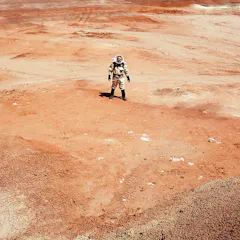
Understanding isolation’s effects on regular people, rather than those certified to have ‘the right stuff,’ will help prepare us for the future, whether another pandemic or interplanetary space travel.
Top contributors
-

Senior Lecturer in Physics, Nottingham Trent University
-
Professor of Planetary and Space Sciences, The Open University
-
Postdoctoral research associate, University of Oxford
-
Professor of Planetary Geosciences, The Open University
-
Associate Professor in Archaeology and Space Studies, Flinders University
-
Lecturer in Astronomy, Nottingham Trent University
-
Professor of Physics, Deputy Director (Solar System) at the Mullard Space Science Laboratory, UCL
-
Professor (Astrophysics), University of Southern Queensland
-
Scientist, Max Planck Institute for Solar System Research
-
Postdoctoral Fellow, Faculty of Law & Justice, UNSW
-
Professor of Robotics, Head of Centre for Robotics Research, King's College London
-
Professor of Planetary Science, University of Leicester
-
Emeritus Professor of International Law, Western Sydney University
-
Full Professor, Former Director, Institute of Air and Space Law, McGill University
-
Senior Instrument Scientist, Australian Nuclear Science and Technology Organisation