
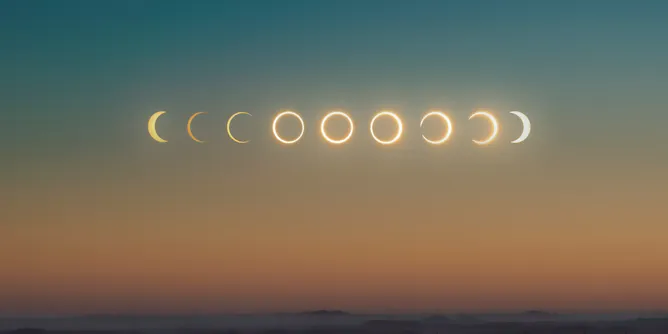
Eclipses have long fascinated and intrigued people, and anticipation of the total solar eclipse on April 8 is no exception. The beauty, history, mythology and science of eclipses justify the hype.
Articles on Space
Displaying 361 - 380 of 1098 articles
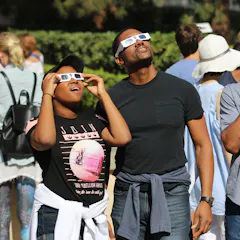
A total solar eclipse is a beautiful phenomenon worth seeing, but worth seeing safely.
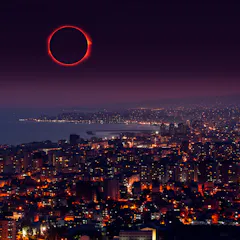
The sky is becoming more cluttered with satellites and space junk. This is affecting astronomical study, but will only have a minor effect — if any — on the viewing of the solar eclipse.
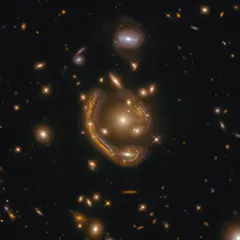
Observations during historical solar eclipses confirmed Einstein’s theory of gravity, and led to the predictions of black holes.
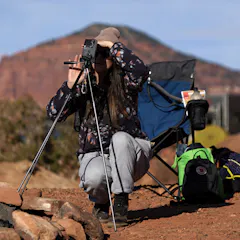
Your phone can’t take a perfectly clear picture of a solar eclipse like a professional camera can, but there are lots of other creative directions you can take to capture the rare moment.

Some ancient texts record what were likely dying stars, faintly visible from Earth. If close enough, these events can disturb telescopes and even damage the ozone layer.
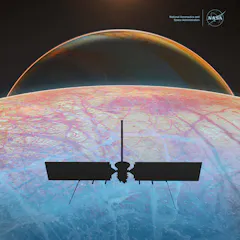
Europa Clipper will contain a plaque that celebrates humanity’s relationship with water and a decades-old tradition of searching for life outside Earth.
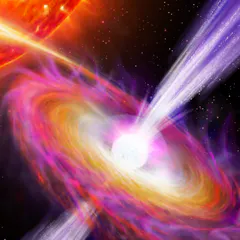
Powerful jets are launched from the most massive objects in our universe, but we don’t fully understand how. This measurement gets us a step closer to solving the mystery.
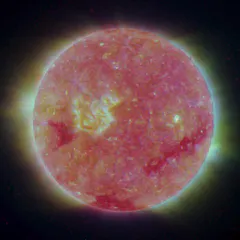
The solar corona can be seen during the solar eclipse on April 8. Astronomers are still trying to figure out the mysteries of the corona, including why it’s so hot.
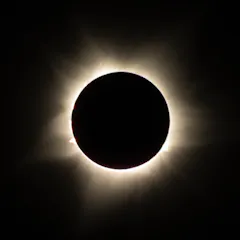
The eclipse will allow scientists to get rare measurements of the Sun’s atmosphere.
Floating crystals can pause the stellar aging process, providing a final energy source to otherwise dead stars.
Eclipses have inspired myths, predictions and scientific discoveries. The total solar eclipse occurring on April 8 provides a once-in-a-lifetime opportunity to engage with science and the cosmos.
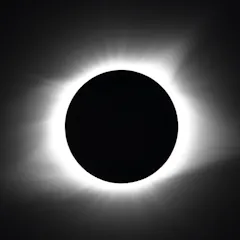
Many people will see a dazzling eclipse this April, but these events are possible only because of the sizes and precise distances between Earth, the Moon and the Sun.
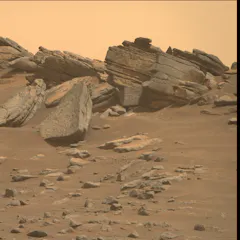
Determining whether or not life exists on another planet is an extraordinarily complicated – and expensive – scientific endeavor.
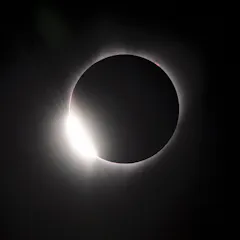
Mentions of total solar eclipses in ancient history help researchers pinpoint precise dates of notable events.
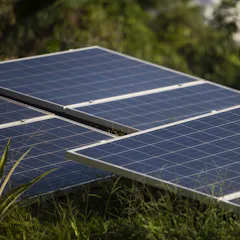
When the Moon blocks the Sun during an eclipse, utility suppliers have to pull power from the grid to make up for gaps in solar energy.
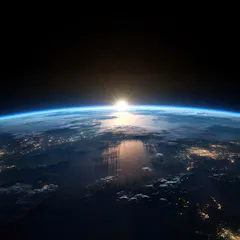
If we need to use forensic techniques in space, we’ll need to understand how things behave differently in microgravity.
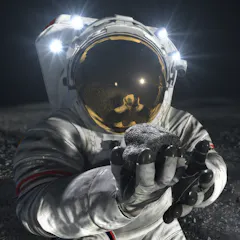
The next generation of spacesuit needs to do more than simply protect an astronaut from the vacuum of space.
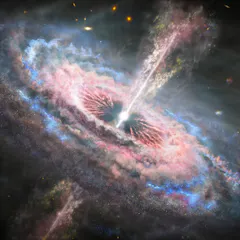
The discovery raises big questions about widely accepted models of galaxy formation.
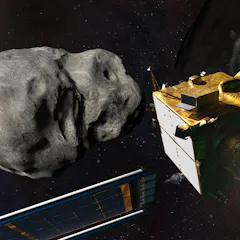
The mission provided details about how to deflect an asteroid should one threaten Earth in future.
Top contributors
-

University Distinguished Professor of Astronomy, University of Arizona
-
Professor of Strategy and Security Studies, Air University
-
Professor (Astrophysics), University of Southern Queensland
-
Professor of Planetary and Space Sciences, The Open University
-
Associate Professor in Archaeology and Space Studies, Flinders University
-
Associate Professor in Astronomy, Monash University
-
Reader in Astrophysics, Keele University
-
Emeritus Professor of International Law, Western Sydney University
-
Senior Lecturer in Physics, Nottingham Trent University
-
Associate Dean of Innovation and Engagement, Swinburne University of Technology
-
Professor of Air and Space Law, University of Mississippi
-
Associate Professor, Astronomy, University of Regina
-
Kevin Orrman-Rossiter is a Friend of The Conversation.
Sterrenkenner, History & Philosophy of Science, The University of Melbourne
-
Professor of Physics and Astronomy, USC Dornsife College of Letters, Arts and Sciences
-
Lecturer in Astronomy, Nottingham Trent University