
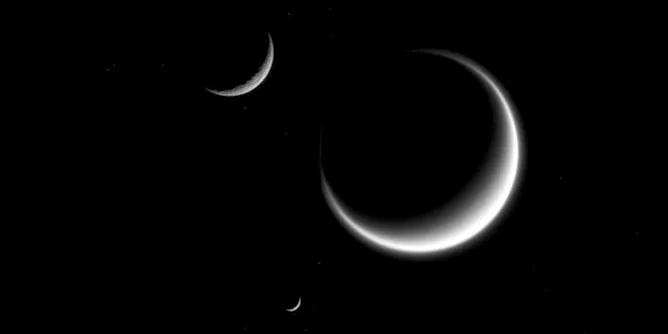
It’s not a competition, but if it were, Saturn would be winning.
Articles on Space
Displaying 321 - 340 of 1098 articles

Spacecraft exteriors that automatically heal from radiation damage would change the game − one material shows promise.
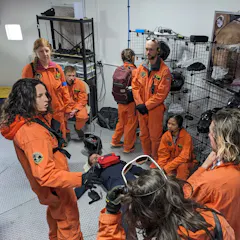
Future space missions will fly farther and longer than ever before – which means crew members may need more involved medical care in space.
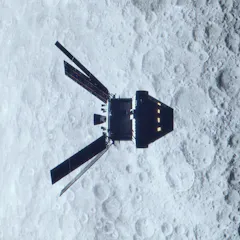
There’s intense competition between the US and China to establish bases on the Moon.
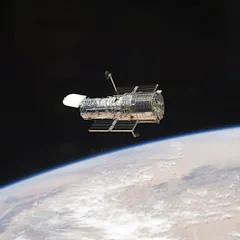
Hubble’s technical issues continue. But through some clever engineering, the telescope can continue operations with just 1 gyroscope.
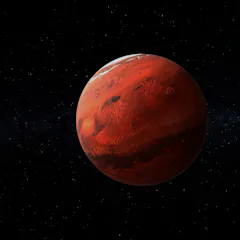
Aquaponics could help feed Martian colonies in the future and offer a sustainable food system on Earth.
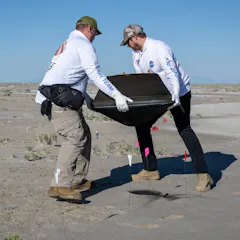
Scientists don’t often have the time to get all their equipment set up to study incoming meteors from space. Instead, they can study capsules from space missions as ‘artificial meteors.’
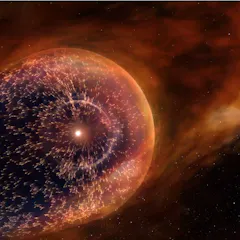
An interstellar probe could help scientists answer fundamental questions about how the Sun influences Earth, space and other planets in the solar system.
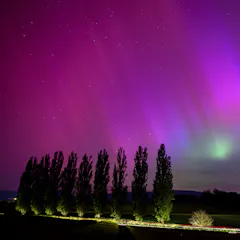
Here’s what’s going on to cause more widespread northern and southern lights.
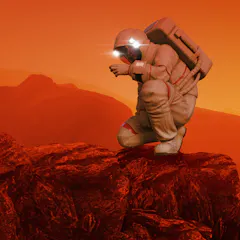
It’s hard to look for something you’ve never seen before – and that might not even exist. But you have to start somewhere.
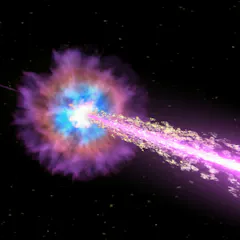
Analysis of two major cosmic blasts deepens the mystery of where the universe’s ‘heavy’ elements come from.

The best spots on the Moon for lunar bases are the same spots where scientists want to build telescopes − can these two interests coexist?
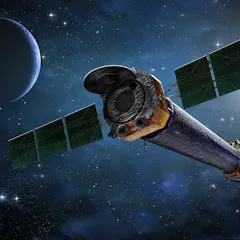
2024 marks 25 years since NASA’s Chandra X-ray Observatory started detecting X-rays from energetic astronomical events.
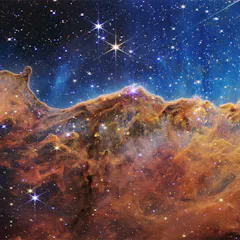
You have the US space program to thank for some of the technology in your phone and laptop.
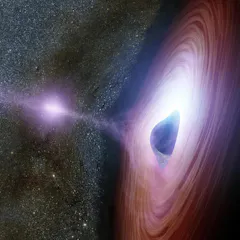
Studying theoretical, fast-spinning black holes is helping physicists understand more about the elusive black holes out in the universe.
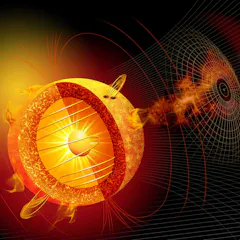
Solar storms can play havoc with electrical grids, satellites and railway lines.
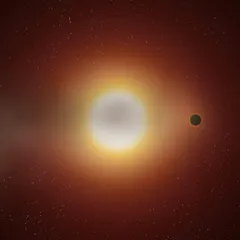
Research on one exoplanet that’s rapidly losing its atmosphere is hinting to scientists why exoplanets tend to look a certain way.
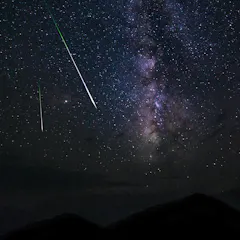
When rocks from space fall towards Earth, they usually don’t do any damage – here’s why.
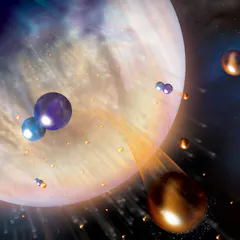
Studying Venus’ water loss can help scientists better understand how planets go from potentially habitable to incapable of supporting life.
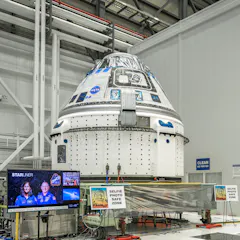
Starliner is only the second vehicle to launch astronauts from US soil since the retirement of the shuttle in 2011.
Top contributors
-

University Distinguished Professor of Astronomy, University of Arizona
-
Professor of Strategy and Security Studies, Air University
-
Professor (Astrophysics), University of Southern Queensland
-
Professor of Planetary and Space Sciences, The Open University
-
Associate Professor in Archaeology and Space Studies, Flinders University
-
Associate Professor in Astronomy, Monash University
-
Reader in Astrophysics, Keele University
-
Emeritus Professor of International Law, Western Sydney University
-
Senior Lecturer in Physics, Nottingham Trent University
-
Associate Dean of Innovation and Engagement, Swinburne University of Technology
-
Professor of Air and Space Law, University of Mississippi
-
Associate Professor, Astronomy, University of Regina
-
Kevin Orrman-Rossiter is a Friend of The Conversation.
Sterrenkenner, History & Philosophy of Science, The University of Melbourne
-
Professor of Physics and Astronomy, USC Dornsife College of Letters, Arts and Sciences
-
Lecturer in Astronomy, Nottingham Trent University