
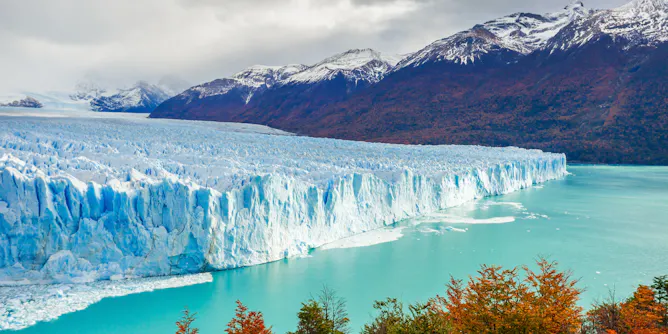
Glaciers aren’t sterile wastelands – they’re chock-full of microscopic life.
Articles on Southern ocean
Displaying 41 - 60 of 92 articles
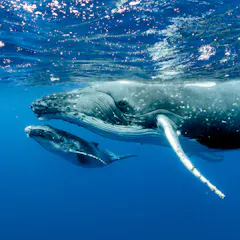
Australia is considering removing humpback whales from the threatened species list after their numbers rebounded in recent decades. But the mammals face new threats.

Whales are rediscovering their old haunts in the Arctic and Southern oceans after centuries of hunting.
Oceans 21 is a Conversation international series examining the history and future of the world’s ocean.
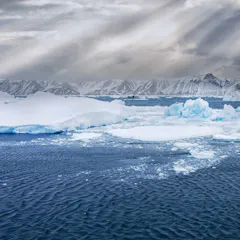
The Southern (Antarctic) Ocean is our planet’s primary storage of heat and carbon, and it’s home to extraordinary life forms, from tiny algae and spineless creatures to penguins, seals and whales.

‘Antarctic cities’ residents care deeply about the continent, with environmental concerns outweighing economic priorities. Asked about its future, they feel a mix of hope, pessimism and sadness.
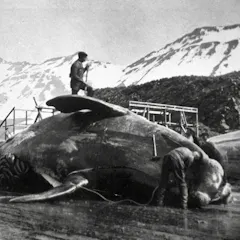
For 200 years, a small number of countries have exploited the marine wildlife of Antarctica, often with devastating impact on their populations.
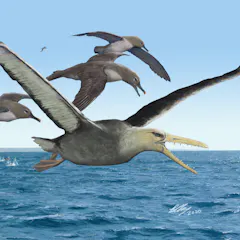
Paleontologists have discovered fossil remains belonging to an enormous ‘toothed’ bird that lived for a period of about 60 million years after dinosaurs.
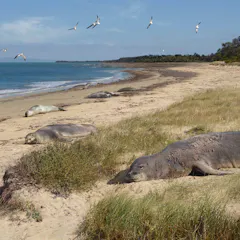
Our new research has more than doubled the known fossil record of seals in Australia.
As the world warmed from the last ice age, a rise in carbon dioxide levels stalled for nearly 2,000 years. That’s always puzzled scientists, but now they think they know what happened.
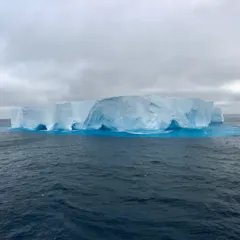
Climate models have been overestimating how much sunlight hits the Southern Ocean. This is because the clouds there are different from clouds anywhere else. Bacterial DNA helped us understand why.

Climate change is changing Antarctic krill habitat. The repercussions for the Southern Ocean food web are huge.

Scientists were struggling to keep track of illegal fishing in international waters and the seabirds it threatened. Then they had an idea.
The Southern Ocean, as artists have uncovered, is also a treasure trove of cultural narratives.
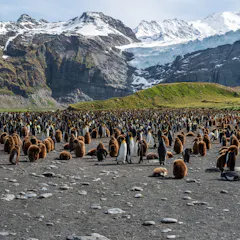
Polar regions may be becoming more profitable, but these “benefits” come with far more severe costs.
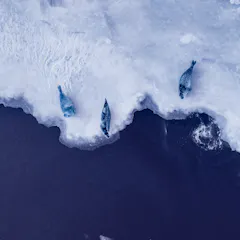
New research shows that warming by more than 2°C could be a tipping point for Antarctica’s ice sheets, resulting in widespread meltdown and changes to the world’s shorelines for centuries to come.
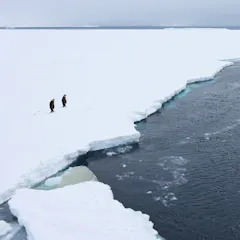
The Antarctic Circumpolar Current provides a barrier to heat that keeps warm subtropical waters away from Antarctica. Yet, there are a few places where the heat gets through.
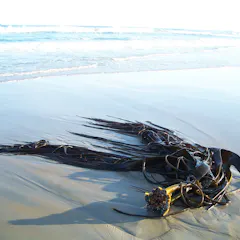
A chance discovery of some kelp that floated for 20,000km before washing up on an Antarctic beach has opened up a new chapter in our understanding of the currents that swirl around the Southern Ocean.

Preliminary results of a study have shown microplastics have reached in a newly revealed Antarctic environment.
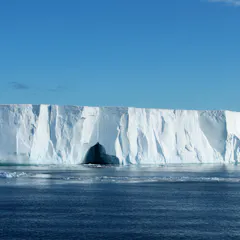
Since 1995, several ice shelves off the Antarctic Peninsula have abruptly disintegrated. A new analysis suggests that these events are triggered when ice shelves lose their buffer of floating ice.
Top contributors
-

Antarctic Law Researcher, Institute for Marine and Antarctic Studies and the Antarctic Climate and Ecosystems CRC, University of Tasmania
-
Professor in Oceanography and Public Engagement, Utrecht University
-
Professor in Marine Science, University of Otago
-
Professor in Ocean Physics, University of Auckland, Waipapa Taumata Rau; Earth Sciences New Zealand
-
Professor of Applied Mathematics, The University of Melbourne
-
Director of the ARC Centre of Excellence for Our Future Oceans and Scientia Professor in Oceanography, UNSW
-
Professor in Glaciology, University of Otago
-
Senior Curator, Vertebrate Palaeontology, Museums Victoria Research Institute
-
Professor, Institute for Marine and Antarctic Studies, University of Tasmania
-
Adjunct Professor, Institute for Marine and Antarctic Studies, University of Tasmania
-
Professor in Cloud Microphysics, Monash University
-
Adjunct Senior Lecturer, University of Tasmania
-
Associate Professor in Environmental History, University of Tasmania
-
Postdoctoral research associate, University of Tasmania
-
Research Scientist, CSIRO