

With location regulations no longer in force, fishing boats are harvesting thousands of tons of krill from very few areas, increasing competition with penguins, seals, whales and other marine life.
Articles on Krill
Displaying 1 - 20 of 24 articles
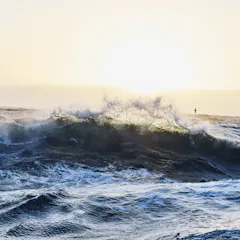
Could marine heatwaves in the cold Southern Ocean be making animals and birds migrate? It’s possible – but we need better monitoring to know.

With the loss of sea ice, tiny filter feeders known as ‘salps’ can thrive, while shrimp-like krill lose out.
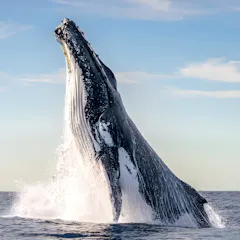
The findings are a window into the rich inner lives of whales – and allow us to check the health of the ocean.
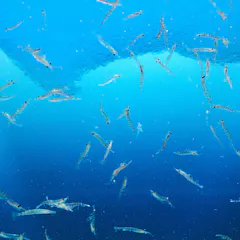
For the first time, we used a computer model of ocean currents to show that krill waste products don’t need to reach great depths to achieve carbon storage for at least 100 years.
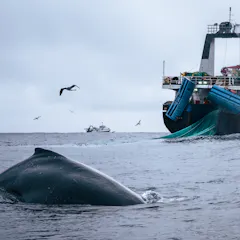
The Southern Ocean’s krill-rich waters attract multiple species of filter-feeding whales – and, increasingly, fishing boats.

The machine learning model can work in the absence of video data, identifying prey capture events from new acceleration and depth data.
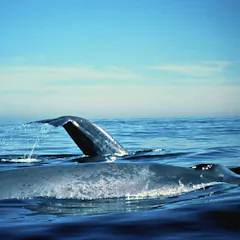
This marine ecosystem is so important it’s one of the main reasons the federal government has greatly reduced the area available for offshore wind farms in the region.
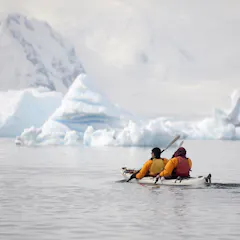
In our market-driven world, calculating the economic value of the environment can be a useful tool in garnering support for environmental protection.
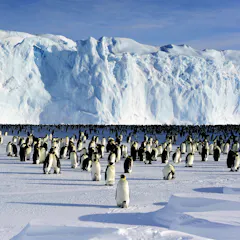
The first comprehensive assessment of trends in Southern Ocean ecosystems reveals an urgent need to address climate change. The summary for policymakers can guide decision-makers.

Antarctic minke whales are elusive and hard to track – but a new study of their behaviour offers clues to their evolution and the limits of their filter-feeding behaviour.
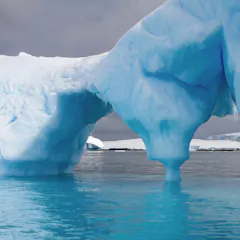
The findings underscore the urgency of limiting global warming to below 1.5°C, to avert the most catastrophic climate harms.
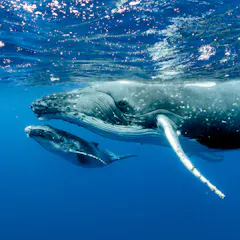
Australia is considering removing humpback whales from the threatened species list after their numbers rebounded in recent decades. But the mammals face new threats.
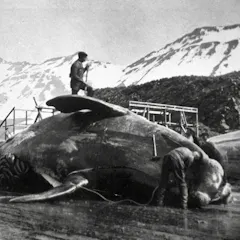
For 200 years, a small number of countries have exploited the marine wildlife of Antarctica, often with devastating impact on their populations.
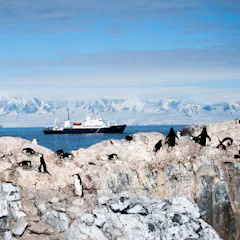
More than 280 women in STEMM call for a marine protected area to be established in the waters of the Western Antarctic Peninsula.

Climate change is changing Antarctic krill habitat. The repercussions for the Southern Ocean food web are huge.
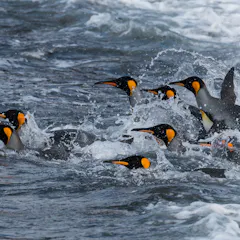
This study provides the first evidence that penguins emit sounds underwater when they hunt.

How did whales that feed on tiny prey evolve into the largest creatures on Earth? And why don’t they get even bigger?
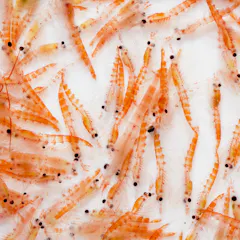
These small shrimp-like creatures are more than just whale food.
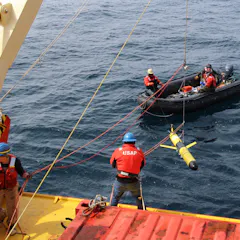
Sending autonomous vehicles to the Southern Ocean can be fraught with anxiety, especially if one of them doesn’t make radio contact when it’s supposed to.
Top contributors
-

Professor of Marine Ecology, Plymouth Marine Laboratory
-
Transdisciplinary Researcher & Knowledge Broker, CSIRO
-
Postdoctoral Research Associate, University of Liverpool
-
Catchment Biogeochemist, UK Centre for Ecology & Hydrology
-
Senior Lecturer, Department of Life Sciences, Imperial College London
-
Research Scientist, Stanford University
-
Professor, Nelson Mandela University
-
Physical oceanographer, CSIRO
-
Postdoctoral fellow, Nelson Mandela University
-
Adviser, Antarctica and Marine Systems, Science & Policy, University of Tasmania
-
Post doctoral research fellow, University of Cape Town
-
Research Fellow in Marine Science and Manager Whales & Climate Program, Griffith University
-
Associate Professor, Oceans Ice and Climate, University of Tasmania
-
Senior Research Fellow in Antarctic and island conservation science, Queensland University of Technology
-
Honorary Research Associate in BioSciences, The University of Melbourne