
The important question in a democratic setting is who gets to pay taxes and how they connect to the well-being of its citizens.
Articles on South Africa's economy
Displaying 1 - 20 of 53 articles
Past initiatives to entice public servants to take early retirement have done little to reduce the cost of government.
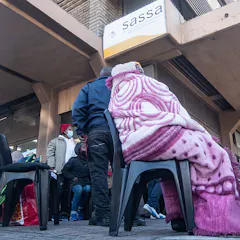
Many grant recipients are young, unemployed, and not necessarily loyal to the governing ANC like older generations.
A third of South Africa’s farming income depends on irrigation. Disruptions in power supply put huge chunks of the country’s agricultural fortunes at risk.

Most farmworkers were not even aware that the farm they worked on was Fairtrade certified.
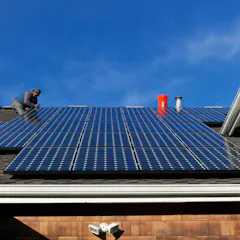
Making the green energy transition a success requires governments to pay attention to environmental factors and socioeconomic imperatives.

There’s a case to be made for combining cash grants and job-search assistance services.
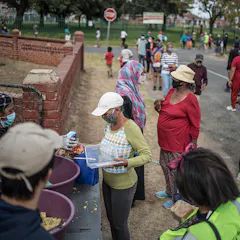
Social grants are the largest source of support for many vulnerable groups. They are the government’s primary response to poverty, food insecurity and inequality.

Security companies suggest that criminals take advantage of the fact that many home and business security systems get compromised during power outages.

The government’s approach to redistributing farmland has been mostly ineffective. Failure can be attributed to limited implementation, poor institutional capacity and corruption.

Political and social instability in the country, as seen in frequent mass protests and xenophobia, threaten the flow of African tourists.
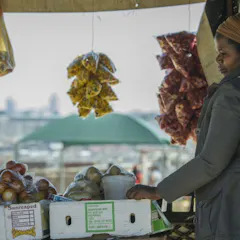
An unfunded expansion of the social transfer system could lead to even worse economic outcomes — the medicine should not be worse than the disease.
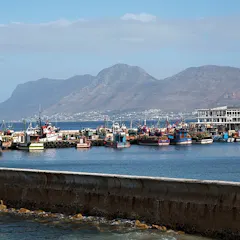
The trend globally is for countries to be explicit about their maritime interests, underpinned by a sound security strategy.
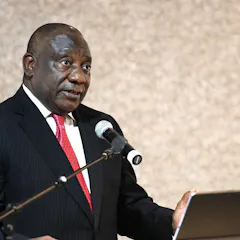
Ramaphosa’s presidency has been dogged by several controversies related to his business interests.
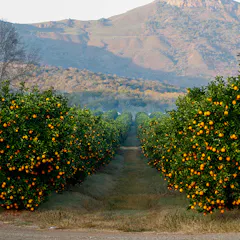
The new rules are de facto non-tariff barriers to trade. They increase trade costs for South Africa’s citrus industry.

Subsidies to shield the general population from oil price increases do not automatically reduce poverty and inequality.
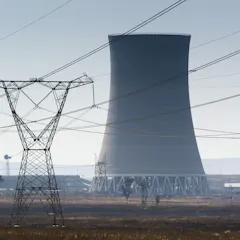
International experience suggests South Africa can benefit by focusing on a simple restructuring of its power utility, allowing well-run state-owned entities to flourish.
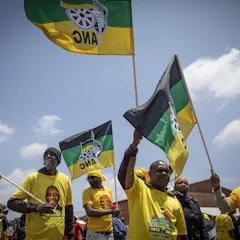
The deliberations were characterised by disingenuous, counter-factual policy pronouncements, and de facto denials of the ANC’s culpability in causing many of the current problems facing the country.
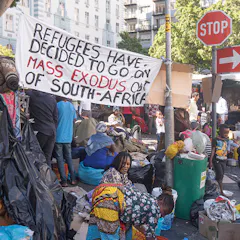
Despite regular incidents of anti-migrant violence, peaceful and mutually beneficial relationships between South Africans and migrants can and do exist.
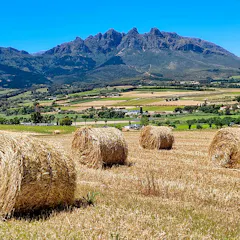
Land reform had not been held back by the constitution but by capacity constraints and a lack of political will.
Top contributors
-

Professor of Social Development Studies, University of Johannesburg
-
Professor of Sociology, University of the Witwatersrand
-
DSTI/NRF Research Chair in Welfare and Social Development, University of Johannesburg
-
Senior Researcher, UNESCO 'Oliver Tambo' Chair of Human Rights, University of Fort Hare, University of Fort Hare
-
Professor of Political Studies, University of Johannesburg
-
Research Fellow, Institute of Development Studies
-
Professor: International Business & Strategy, Wits Business School, University of the Witwatersrand
-
Lecturer on Sociology, Harvard University
-
Associate professor, University of Johannesburg
-
Professor in Political Science, University of South Africa
-
Senior Fellow, Department of Agricultural Economics, Stellenbosch University
-
Senior lecturer in Taxation, University of Pretoria
-
Research Associate, Stellenbosch University
-
Senior lecturer, School of Economics, University of Cape Town, University of Cape Town
-
National Director, Black Sash