

Social security reforms are needed that include support for the long-term and chronically unemployed and informal workers.
Articles on South Africa's economy
Displaying 21 - 40 of 53 articles

The sums aren’t adding for South Africa on either the spending or revenue side. It’s a problem that’s developed over time with no action being taken.

The ANC retains its determination to rule yet lacks the capacity to do so effectively. The only way out of the dilemma is its defeat in an election.
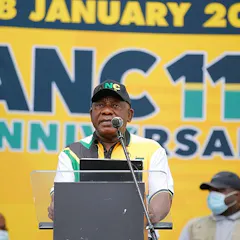
South Africans are led by a dithering president at the helm of an inept political party which has already passed its sell by date.
A graduated and carefully calibrated approach to increases in VAT is preferable to large scale, once-off increases.
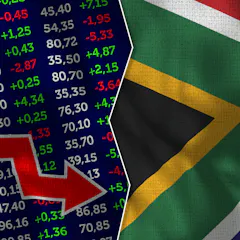
There’s no convincing evidence that listing on the alternative stock exchange promotes growth and sustainability for small and medium sized firms.

It is becoming increasingly clear that South Africa’s policymakers can no longer ignore the country’s obligations in terms of international, regional and national human rights law.
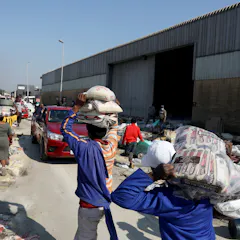
The democratic transition in 1994 was the result of an ‘elite pact’ that changed the country’s politics, but did little to undermine the foundations of white economic power.
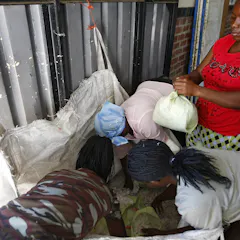
Racial and gender disparities in access to work are entrenched features of the South African labour market.
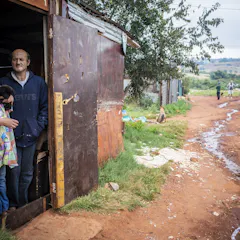
There is no substance to the view that poor people are lazy and prefer to live on handouts from the state rather than seek work.

The new governing elite mistakenly believes that the goal of a democratic South Africa is simply to extend to everyone what whites enjoyed under apartheid.

Rob Davies is critical of economic policy, starting with the Mandela administration. He reserves particular criticism for its macroeconomic policy framework introduced in 1996.

Unlike most politicians but typical of a negotiator, South Africa’s president has not put his plans on the table for public scrutiny.
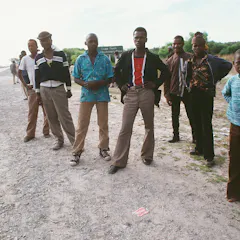
Relying solely on job placement as an indicator of successful intervention misses out on outcomes that are equally important, or more so, amid high structural unemployment.
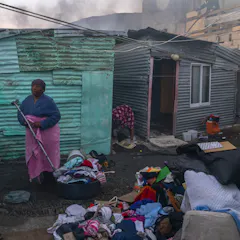
Whites lived well under apartheid and it is not absurd for black leaders to want all to live in the same way.
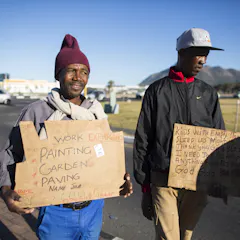
The COVID-19 pandemic has worsened unemployment and poverty, showing the need for the government to permanently expand income support to working-age adults.
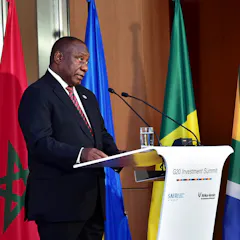
While South Africa should pay careful attention to all its existing trade and economic relations, particular attention should go to its intra-African economic relations.
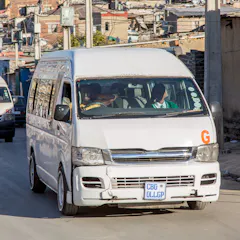
Metropolitan municipalities are best placed to administer operating subsidies for minibus taxis.
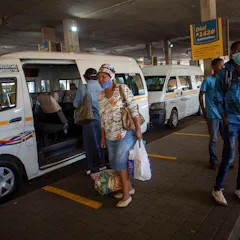
The role of government should be to improve and reorganise this sector to address the needs of users. The proposed national operational subsidy is an opportunity to do precisely that.

It is vital that the latest move by government towards restructuring succeeds in making the industry safe, reliable and viable, contributing to the country’s economy.
Top contributors
-

Professor of Social Development Studies, University of Johannesburg
-
Professor of Sociology, University of the Witwatersrand
-
DSTI/NRF Research Chair in Welfare and Social Development, University of Johannesburg
-
Senior Researcher, UNESCO 'Oliver Tambo' Chair of Human Rights, University of Fort Hare, University of Fort Hare
-
Professor of Political Studies, University of Johannesburg
-
Research Fellow, Institute of Development Studies
-
Professor: International Business & Strategy, Wits Business School, University of the Witwatersrand
-
Lecturer on Sociology, Harvard University
-
Associate professor, University of Johannesburg
-
Professor in Political Science, University of South Africa
-
Senior Fellow, Department of Agricultural Economics, Stellenbosch University
-
Senior lecturer in Taxation, University of Pretoria
-
Research Associate, Stellenbosch University
-
Senior lecturer, School of Economics, University of Cape Town, University of Cape Town
-
National Director, Black Sash