
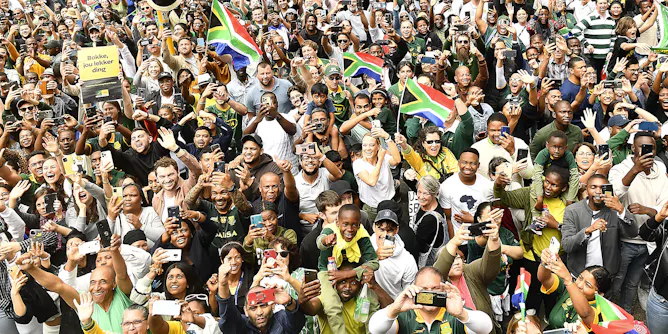
South Africa’s government of national unity forged after the 2024 elections refutes the claim that there are two antagonistic political camps.
Articles on inequality in South Africa
Displaying 1 - 20 of 42 articles
Unless the economic benefits resulting from having the government of national unity become socially inclusive, it might well collapse.

South Africa’s civil service has failed to implement policies to eradicate poverty, inequality and unemployment.

Efforts have been made to change the patterns of inequality in South Africa. But not enough has been done. Race-based inequality is still a real problem.
Inner city occupations and shack settlements alike are the inevitable consequence of the fact that huge populations of people have to get by without a living wage.
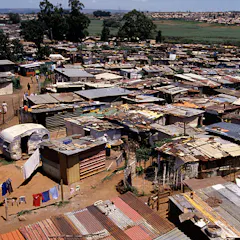
On the positive side, good progress has been made on gender equality and fewer people are dying of unnatural causes.

Fifty years ago the council was created to fight for marginalised communities to participate fairly in sports. Their dream remains unfulfilled.
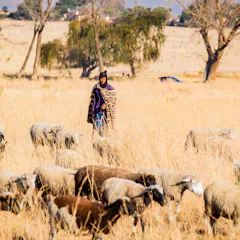
South Africa’s land reform programme is designed for a socio-economic context that doesn’t exist.
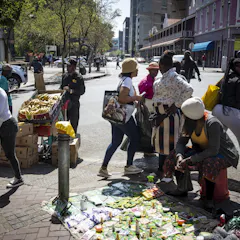
The city’s street trading management approach is mainly restrictive. Relocations, harassment and confiscation of of traders’ stock are common.

Subsidies to shield the general population from oil price increases do not automatically reduce poverty and inequality.
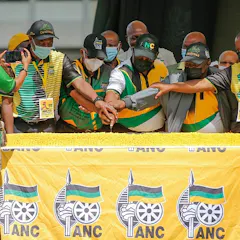
Non-racialism is one of the unexamined dogmas of the governing ANC, which has never fully understood how white racism functions.
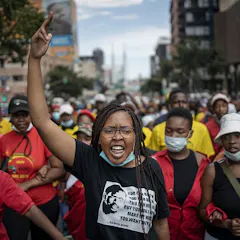
South Africans are increasingly dissatisfied with democracy because of its failure to address inequality.

A liaison group with large financial institutions has worked in the US and the Netherlands.

There’s a crucial need to connect the most vulnerable people with public services in order to tackle systemic poverty and disadvantage. An integrated approach is key.
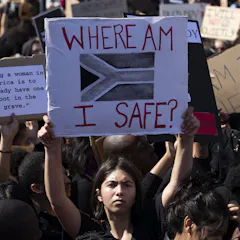
The problem of gender-based violence and femicide in South Africa is structural and fuelled by inequalities that transect race, class, gender, sexuality and age.
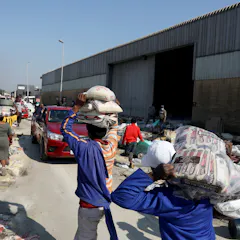
The democratic transition in 1994 was the result of an ‘elite pact’ that changed the country’s politics, but did little to undermine the foundations of white economic power.
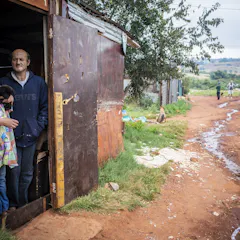
There is no substance to the view that poor people are lazy and prefer to live on handouts from the state rather than seek work.
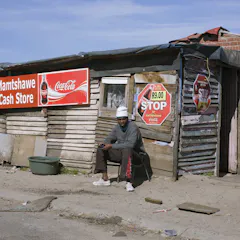
Many unemployed young people are engaged in a variety of economic activities. These may not necessarily be recognised as a form of self employment or informal employment.
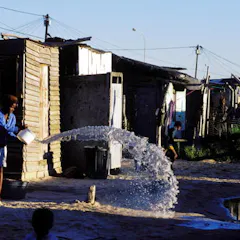
The new governing elite mistakenly believes that the goal of a democratic South Africa is simply to extend to everyone what whites enjoyed under apartheid.
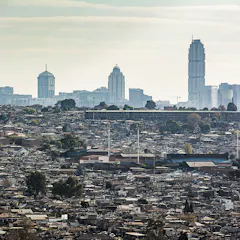
In the country’s insider politics, the majority who try to survive outside the formal economy are talked about, but are never heard.
Top contributors
-

Professor of Political Studies, University of Johannesburg
-
Professor of Social Development Studies, University of Johannesburg
-
DSTI/NRF Research Chair in Welfare and Social Development, University of Johannesburg
-
Professor of Sociology, University of the Witwatersrand
-
Distinguished Reserach Professor, Southern Centre for Inequality Studies, University of the Witwatersrand
-
Lecturer, University of the Western Cape
-
Professor of Urban Governance, University of the Witwatersrand
-
Professor/Senior Research Fellow, Centre for Advancement of Scholarship, University of Pretoria
-
Associate Professor Sport History, Stellenbosch University
-
Senior Researcher, UNESCO 'Oliver Tambo' Chair of Human Rights, University of Fort Hare, University of Fort Hare
-
Senior Researcher, Gauteng City-Region Observatory
-
Pro Vice-Chancellor, Climate, Sustainability and Inequality and Director, Southern Centre for Inequality Studies, University of the Witwatersrand
-
Chief Researcher: Gauteng City-Region Observatory, Wits University and University of Johannesburg, University of the Witwatersrand
-
Postdoctoral Fellow, University of South Africa
-
Associate professor, University of Johannesburg