
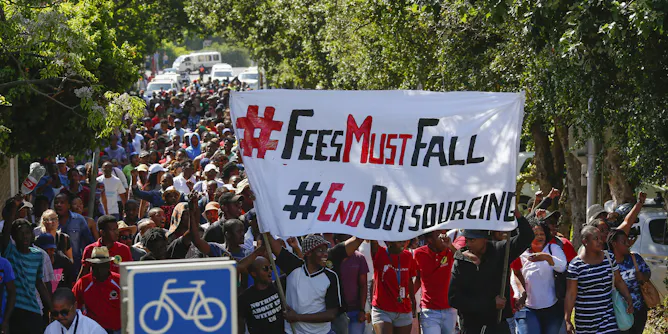
South African students’ demands for free university education are not going away. Nor are the country’s economic realities.
Articles on South African universities
Displaying 81 - 100 of 147 articles

It is arrogant and hypocritical for ranking institutions to declare that they’re building Africa’s legacy or its global partnerships on the continent’s behalf.
In South Africa there’s a value judgment attached to students who take part in universities’ English for Academic Purposes programmes. This shouldn’t be the case.
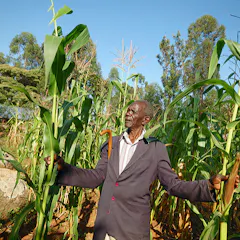
Decolonisation of the curriculum doesn’t have to mean the destruction of Western knowledge, but it’s decentring. Such knowledge should become one way of knowing rather than the only way.

Sections of South Africa’s student movements regard transformation as a complete failure. Responding to this perceived failure, some have adopted an anti-democratic stance.
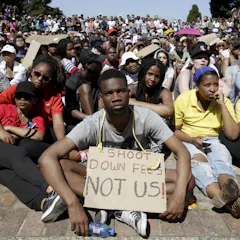
The huge problem of youth unemployment in South Africa appears to be getting worse. New research will hopefully amplify their voices and inform more realistic interventions to combat the monster.
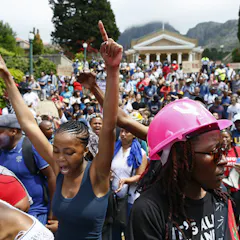
Women students have not been afraid to embrace the label of feminist, leading a wave of university protests in South Africa during 2015 and 2016.
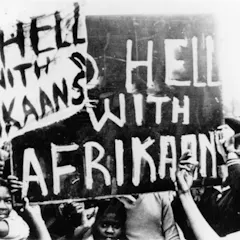
Forty years after the students uprisings of 1976, South Africa is again in the midst of a political movement led by students.They have changed the tenor and shape of political discussion around education.
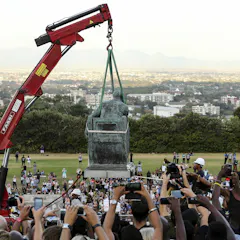
There is a risk that because of fatigue, frustration and silencing the important moment created by South Africa’s student movements will pass by with no proper, long-term structural change.
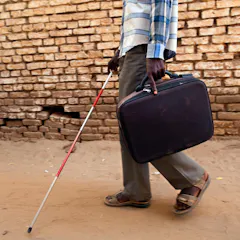
Students with disabilities find that they must accommodate themselves to institutional contexts which they find profoundly disabling.
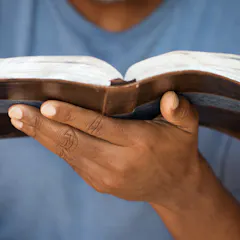
Curriculum transformation has to happen. But it has to go further than simply borrowing ideas and concepts.

Sexual harassment is a pernicious problem at universities. But not much is known in South Africa about students sexually harassing academics.
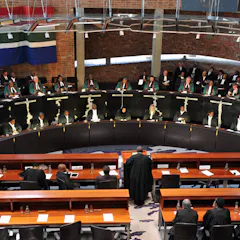
For law faculties, the transformative vision embodied in South Africa’s constitution provides a potent driver for change. So what does a transformed law faculty look like?
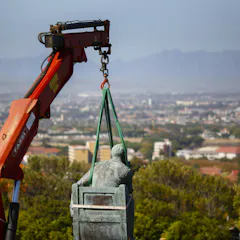
Calls for the decolonisation of countries, institutions, the mind and of knowledge are not new. In South Africa, these changes are crucial and long overdue. But they must be carefully thought through.

Financial institutions in Africa are worried that universities aren’t producing graduates with relevant skills for the industry.
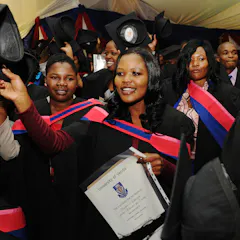
Student funding processes must be opened up to public scrutiny and participation if they’re to succeed.
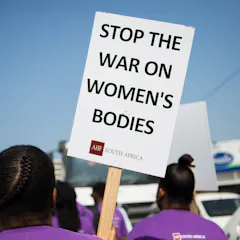
Anti-rape protests at a South African university have far bigger implications for the country’s ongoing fight against rape culture and patriarchal gender norms.

Is it defamatory to ‘name and shame’ alleged rapists? Absolutely, according to South African law – and those who share that information on social media are liable too.
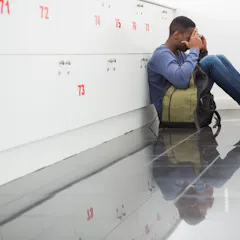
Students from poorer backgrounds feel anxious, ashamed and stressed in the middle-class environment of a university.
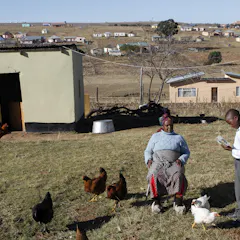
Students who move from rural areas to cities to pursue university degrees grapple with what it means to “leave behind” their home languages.
Top contributors
-

Professor, University of Cape Town
-
Professor of Higher Education, Rhodes University, South Africa, Rhodes University
-
Research Associate in Higher Education Policy and Planning, Ali Mazrui Centre for Higher Education Studies, University of Johannesburg
-
Senior Research Associate, University of Johannesburg
-
Professor of Political Studies, Rhodes University
-
Previous Vice President of the Academy of Science of South Africa and DSI-NRF SARChI chair in Fungal Genomics, Professor in Genetics, University of Pretoria, University of Pretoria
-
Academic Staff Development Lecturer, Centre for Higher Education Development, University of Cape Town
-
Professor/Senior Research Fellow, Centre for Advancement of Scholarship, University of Pretoria
-
Professor of Teaching and Learning, University of Johannesburg
-
Associate Professor of Higher Education Studies. Head of Department of the Centre for Higher Education, Research, Teaching and Learning, Rhodes University
-
Senior Researcher in Labour Studies and Education, University of Johannesburg
-
Associate Professor in Higher Education Studies, University of Cape Town
-
Researcher, Nelson Mandela University
-
Professor of Higher Education, University of KwaZulu-Natal
-
Head of Department, University of Johannesburg