
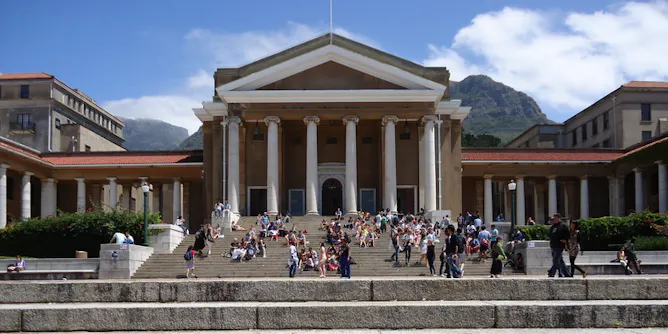
When students are genuinely listened to and understood, and their proposed solutions to problems are taken seriously, real change can happen in university faculties.
Articles on South African universities
Displaying 61 - 80 of 147 articles

When several South African universities merged, it was hoped this would improve access and equality. It had the opposite effect.
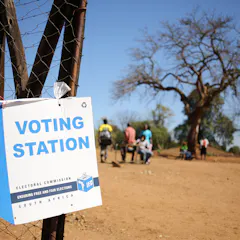
There are several different ways to approach democracy. Polls, elections and referenda all feature, but they’re not the only way to deepen democracy.

Economic models suggest that South Africa’s GDP would fall, inequality would deepen and unemployment would rise if university graduates don’t enter the labour market in 2017.
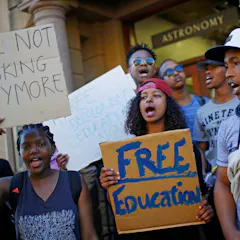
A “buy now, pay later” model is well suited to financing higher education. Commercial bank loans are not viable. Government-backed loans with income-contingent repayment are the fair solution.
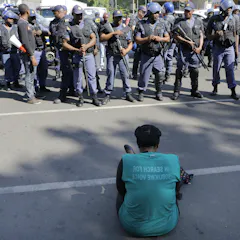
Clashes between student protesters and armed security (whether public or private) compel South Africans to consider the role of use of force in the context of protests.
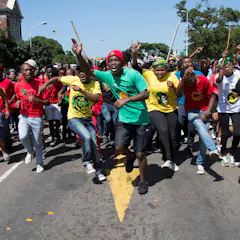
There is a very real risk that South Africa’s major research projects will stumble and the whole research machine will be shut down by ongoing student protests.
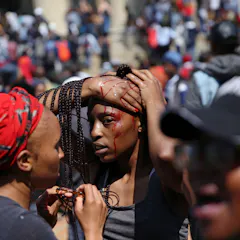
Protest movements become radicalised by two factors: escalating policing and competitive escalation between political adversaries and other protesting groups.

Universities are so busy trying to make ends meet that there’s no time to listen to their communities’ stories. It’s crucial to develop safe spaces where tough conversations can happen.
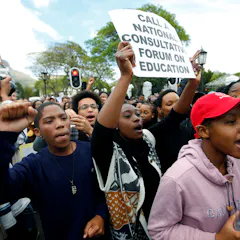
It’s unlikely that student protests are directly affecting South African universities’ rankings. Instead, decades of government underfunding in higher education may be at least partly to blame.
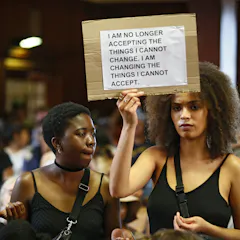
South Africa’s higher education minister has dealt with fee increments for 2017 but sidestepped students’ fundamental issue: an ongoing call to make higher education free for all.
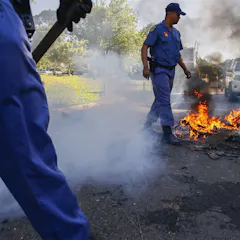
South Africa’s universities have been told to set their own fee increases for 2017. That’s good news for institutions, but it hasn’t been well-received by many students.

The system of apartheid is long gone. But its legacy of poor funding for historically black universities - and of planning that banished black universities to cities’ margins - remains.
A row between South Africa’s finance minister and the country’s Directorate for Priority Crime Investigations has prompted academics to pen an open letter asking President Jacob Zuma to intervene.

Decolonising the curriculum is far more nuanced than replacing theorists and authors. Universities first need to define how they approach the development and dissemination of curricula.

MOOCs are an opportunity for African universities to bring the continent’s thinkers and theories to the world. They also have great benefits for full-time students to experience a flipped classroom.

The decolonisation debate in South Africa’s universities raises critical issues about the relationship between power, knowledge and learning.
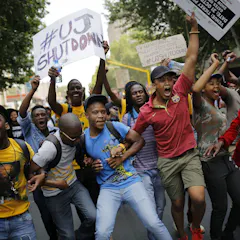
Academia is being asked to do less for more, and universities are at financial breaking point. This has implications for all South Africans.

South African universities are under enormous financial pressure. They also face a fresh round of student protests ahead of a decision on next year’s fees. Hard choices need to be made.

Much of academic philosophy, even on the African continent, is openly and unashamedly in love with the idea of the West as destiny.
Top contributors
-

Professor, University of Cape Town
-
Professor of Higher Education, Rhodes University, South Africa, Rhodes University
-
Research Associate in Higher Education Policy and Planning, Ali Mazrui Centre for Higher Education Studies, University of Johannesburg
-
Senior Research Associate, University of Johannesburg
-
Professor of Political Studies, Rhodes University
-
Previous Vice President of the Academy of Science of South Africa and DSI-NRF SARChI chair in Fungal Genomics, Professor in Genetics, University of Pretoria, University of Pretoria
-
Academic Staff Development Lecturer, Centre for Higher Education Development, University of Cape Town
-
Professor/Senior Research Fellow, Centre for Advancement of Scholarship, University of Pretoria
-
Professor of Teaching and Learning, University of Johannesburg
-
Associate Professor of Higher Education Studies. Head of Department of the Centre for Higher Education, Research, Teaching and Learning, Rhodes University
-
Senior Researcher in Labour Studies and Education, University of Johannesburg
-
Associate Professor in Higher Education Studies, University of Cape Town
-
Researcher, Nelson Mandela University
-
Professor of Higher Education, University of KwaZulu-Natal
-
Head of Department, University of Johannesburg