

There are other ways to conduct meetings and present lectures. Could adopting, adapting or even just understanding more about these help universities to release colonialism’s grip on their practices?
Articles on South African universities
Displaying 41 - 60 of 147 articles
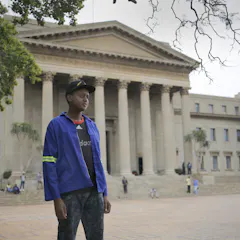
Students from South Africa’s public school system battle to cope with the rigorous demands of any university degree without genuine, committed support.

There’s no doubt South African universities need to undergo a real shift. But are the country’s current intellectual and academic forces up to the task?

It’s important that South African teachers, lecturers and professors develop curricula that build on the best knowledge skills, values, beliefs and habits from around the world.
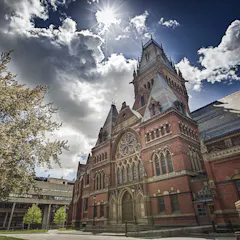
If universities work together they are more likely to find creative solutions to problems. Collaboration will allow them to benefit from the global academic community’s collective wisdom.
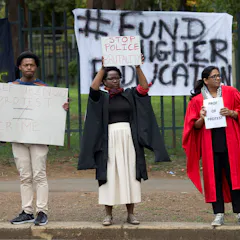
With the impasse between South African universities and students over free higher education a forum has been set up to look at possible reforms.
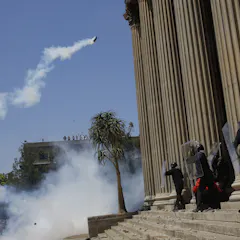
It’s easy to understand why the government treats each student demand as distinct. But these are complex issues and they are intertwined.

Many students with disabilities feel excluded from daily university life and the assumption is that they, not the institutions, must change.

The push for decolonisation could ironically end up trapping universities in a colonised curriculum.
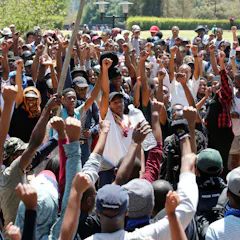
2017 promises to be another tough year as South African universities head into the uncertain terrain of further addressing and healing the divisions that have been exposed.

There are a few questions that can be posed and unpacked if universities are to move towards genuine decolonisation.

More than two decades after apartheid ended, South African universities still tend to offer a view of the country and continent that is rooted in colonial and apartheid thinking.
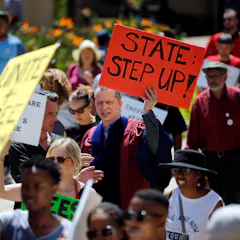
South Africa must address the root factors contributing to nationwide protests in the higher education sector or face dire consequences

If researchers pose the right questions about transformation, this can lead to better answers, stronger policies and, ultimately, real change.
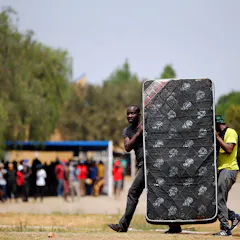
Social justice is not just a phrase for protesting students. Instead it is something that defines them.
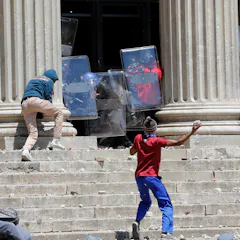
Demands being made by protesting students in South Africa purport to support the poor. But the most marginalised young people in the country will not benefit from free higher education.
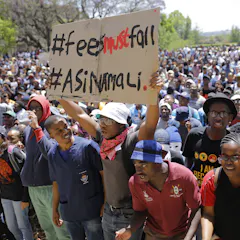
There has been a great deal of research, planning and talking to come up with solutions to South Africa’s higher education funding crisis. Some of these plans must now be put into action.
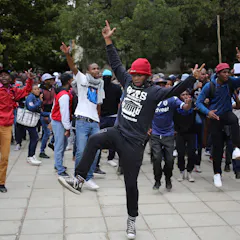
Student protesters have demonstrated good leadership in some spheres but come up short in other areas. This suggests that universities ought to focus more on how they teach leadership.
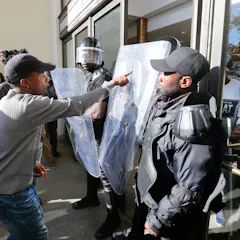
Peacekeeping is not easy. But for South Africa’s universities to begin working towards solutions, it is crucial that their communities give peace a chance.

Many young academics and those who might be considering an academic career will be horrified by what’s unfolding at South Africa’s institution. Will bright minds be lost?
Top contributors
-

Professor, University of Cape Town
-
Professor of Higher Education, Rhodes University, South Africa, Rhodes University
-
Research Associate in Higher Education Policy and Planning, Ali Mazrui Centre for Higher Education Studies, University of Johannesburg
-
Senior Research Associate, University of Johannesburg
-
Professor of Political Studies, Rhodes University
-
Previous Vice President of the Academy of Science of South Africa and DSI-NRF SARChI chair in Fungal Genomics, Professor in Genetics, University of Pretoria, University of Pretoria
-
Academic Staff Development Lecturer, Centre for Higher Education Development, University of Cape Town
-
Professor/Senior Research Fellow, Centre for Advancement of Scholarship, University of Pretoria
-
Professor of Teaching and Learning, University of Johannesburg
-
Associate Professor of Higher Education Studies. Head of Department of the Centre for Higher Education, Research, Teaching and Learning, Rhodes University
-
Senior Researcher in Labour Studies and Education, University of Johannesburg
-
Associate Professor in Higher Education Studies, University of Cape Town
-
Researcher, Nelson Mandela University
-
Professor of Higher Education, University of KwaZulu-Natal
-
Head of Department, University of Johannesburg