
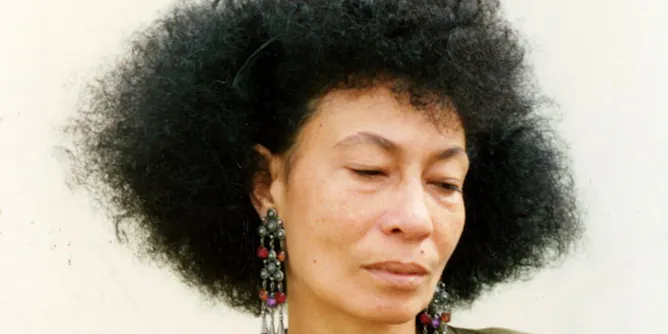
Admitting the variety, embracing the fractures, this was the lesson of all of Wicomb’s writing.
Articles on Post-apartheid
Displaying 1 - 20 of 107 articles
His characters – tramps, discarded people, poor people, people on the fringes – are connected with all the people we know of today who are refugees.

There has been a growing recognition that psychology, as a discipline, must engage more deeply with local contexts.

Deep South, a small publisher with big influence, has expanded its website with easy-to-access information about its poets and their work.
He explored the darker realities of South African life in three novels before his untimely passing at the age of 30.

After three decades of democracy, the status of Afrikaans at formerly Afrikaans universities remains the subject of considerable debate.
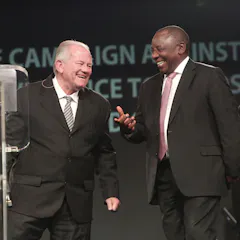
He had enormous charisma and love for South Africa - he also had enormous wealth and made some questionable political choices.
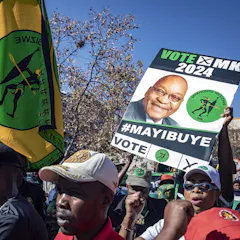
Former president Jacob Zuma’s MK Party borrows the slogan “mayibuye” from the liberation party to make a point about the ruling African National Congress.

The cycle of opportunity and prestige for historically advantaged institutions leaves historically Black institutions on the back foot.

Social media is a lifeline for community radio, helping it grow by being shaped by young listeners.
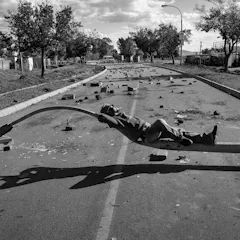
The winner of the prestigious Deutsche Börse photography prize documents everyday life in a powerful and creative way.
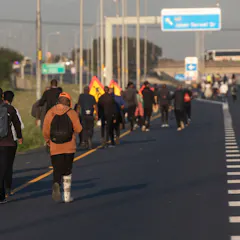
Who the taxi strike affected, where and how shows the violent reality of the city’s spatial injustice.

Despite some positive shifts, the staffing situation at public higher education institutions remains polarised in terms of race and gender.
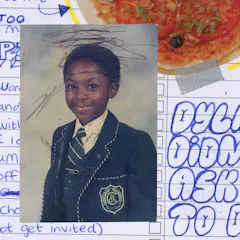
Opening the Encounters documentary festival in South Africa, the film has received international praise.

Smart, capable students struggled to navigate cultural and language norms in university accounting classrooms.
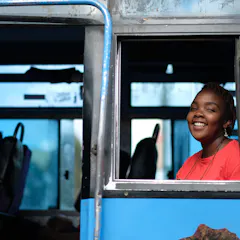
These vibrant writers embrace the open road and claim spaces that were denied them during apartheid.

The beats are fresh but the performances are second rate and lacking star quality.

The study analysed the content of six news outlets from 1994 to 2014, looking at how core socio-economic issues were reported.
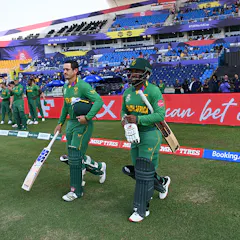
It’s important to guard against empty gestures. Taking the knee represents a start. But on its own it won’t bring meaningful change to the lives of black people.
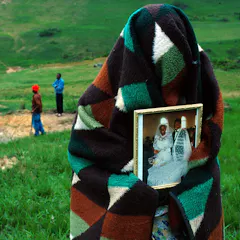
In both countries, neglect and misinformation at the highest levels of government led to undue tragedy.
Top contributors
-

Professor of Law, New York Law School
-
Professor of Public Affairs, Tshwane University of Technology
-
South African Research Chair in Teacher Education; Director of Centre for International Teacher Education (CITE) & Professor of International Education and Development Policy (University of Sussex, UK), Cape Peninsula University of Technology
-
Professor and Head of Department of Political and Conflict Studies, Nelson Mandela University
-
Chief Research Specialist in Democracy and Citizenship at the Human Science Research Council and a Research Fellow Centre for African Studies, University of the Free State
-
Emeritus Professor, Poverty, Land and Agrarian Studies, University of the Western Cape
-
Professor of English Language Teaching and Literacy Development, Rhodes University
-
Distinguished Reserach Professor, Southern Centre for Inequality Studies, University of the Witwatersrand
-
NRF Accredited & Senior Researcher; Lead Coordinator of the South-South Educational Collaboration & Knowlede Interchange Initiative, Cape Peninsula University of Technology
-
Professor, Sociology, University of the Western Cape, Nelson Mandela University
-
Professor of Public Theology in the Department of Beliefs and Practices, Faculty of Theology, at the Vrije Universiteit Amsterdam (Free University of Amsterdam), Vrije Universiteit Amsterdam
-
Director and Professor of Education, University of Washington
-
Postdoctoral Research Fellow, University of the Witwatersrand
-
Senior lecturer, University of Pretoria
-
Professor of Sociology, University of the Witwatersrand