

Quantitative indicators fall short of recognising and rewarding the many aspects on which a healthy scholarly ecosystem depends.
Articles on South African universities
Displaying 1 - 20 of 147 articles
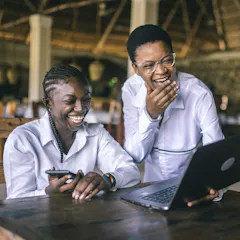
While the experience of transitioning from higher education to entrepreneurship was challenging, participants were able to draw heavily from informal networks to build and grow.

Linguistic, social, family and cultural backgrounds play a crucial role in shaping students’ experiences.

In her new position, Nobuhle Nkabane inherits a portfolio rife with challenges.
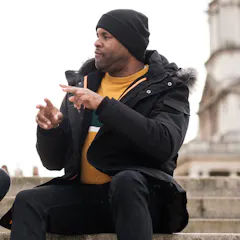
Some students with hearing difficulties feel lonely and excluded from daily campus life.

Academic literacy is a mode of reasoning that aims to develop university students into deep thinkers, critical readers and writers.
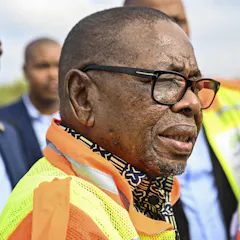
The system has allowed many students who would otherwise not access higher education to do so, but it is fraught with problems.

There’s a motivated, enthusiastic younger generation of scholars in South Africa who need support and mentoring.

If universities want to be truly inclusive, that must extend to people with disabilities, whether they are students or staff.

E-textbooks have potential to enhance inclusivity and engagement in engineering education.

Fewer graduates means fewer data analysis experts to aid in knowledge creation and innovation.

The cycle of opportunity and prestige for historically advantaged institutions leaves historically Black institutions on the back foot.

Despite some positive shifts, the staffing situation at public higher education institutions remains polarised in terms of race and gender.

Lecturers need to be adept at both the theories of online learning and the technology used to do it.

Smart, capable students struggled to navigate cultural and language norms in university accounting classrooms.

Where both capacity and integrity are weak, dysfunction is inevitable.
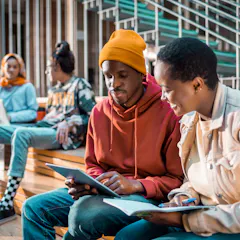
A good supervisor can make all the difference for a PhD candidate on their tough academic journey.
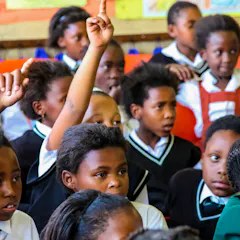
Student teachers saw certain incidents in their classrooms as a learning process that caused them to act, respond and reflect so they could maintain quality teaching.
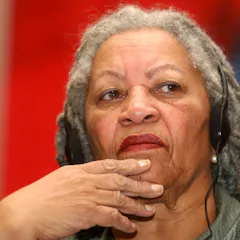
In some ways, perhaps Morrison is even more relevant in South African universities today than she’s ever been.
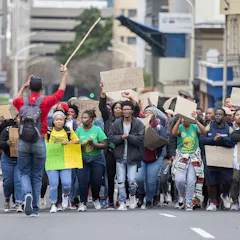
More than ever, South African universities need a new social contract that charts a way forward and begins to heal divisions.
Top contributors
-

Professor, University of Cape Town
-
Professor of Higher Education, Rhodes University, South Africa, Rhodes University
-
Research Associate in Higher Education Policy and Planning, Ali Mazrui Centre for Higher Education Studies, University of Johannesburg
-
Senior Research Associate, University of Johannesburg
-
Professor of Political Studies, Rhodes University
-
Previous Vice President of the Academy of Science of South Africa and DSI-NRF SARChI chair in Fungal Genomics, Professor in Genetics, University of Pretoria, University of Pretoria
-
Academic Staff Development Lecturer, Centre for Higher Education Development, University of Cape Town
-
Professor/Senior Research Fellow, Centre for Advancement of Scholarship, University of Pretoria
-
Professor of Teaching and Learning, University of Johannesburg
-
Associate Professor of Higher Education Studies. Head of Department of the Centre for Higher Education, Research, Teaching and Learning, Rhodes University
-
Senior Researcher in Labour Studies and Education, University of Johannesburg
-
Associate Professor in Higher Education Studies, University of Cape Town
-
Researcher, Nelson Mandela University
-
Professor of Higher Education, University of KwaZulu-Natal
-
Head of Department, University of Johannesburg