
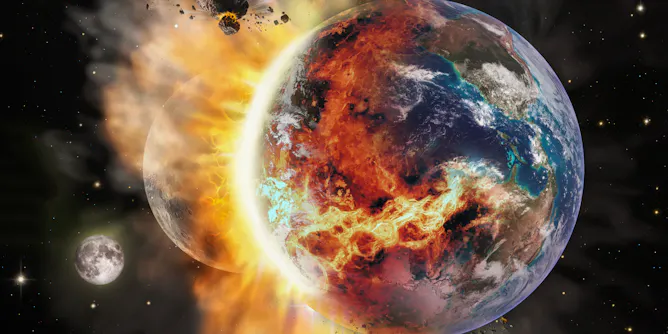
Believe it or not, this sort-of happened before in Earth’s history – and now we have the Moon.
Articles on Solar system
Displaying 101 - 120 of 290 articles
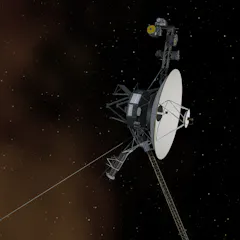
In the void of interstellar space, the most distant emissary of humankind carries a message that will last for billions of years.
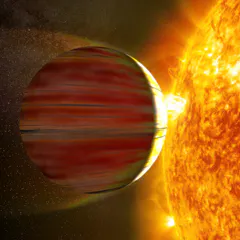
The unusual planetary system has a host star orbited by two giants. One has an incredible odd route around its star. And the other (unlike our own gas giants) is hellishly hot.
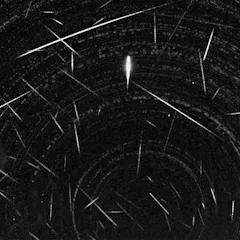
When the meteor exploded into pieces above New Zealand, it produced a shock wave strong enough to be picked up by earthquake seismometers. But any fragments have likely dropped into the ocean.
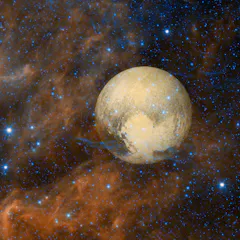
A curious kid asks: Why does it matter if Pluto is a planet or a dwarf planet?
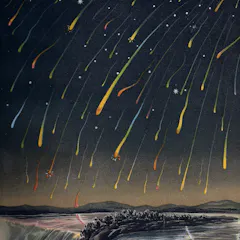
Could the Tau Herculid meteor shower put on a spectacular show next week? Only time will tell.
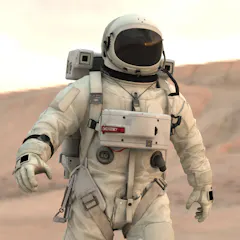
Mars is the fourth planet from the Sun and one of our closest neighbors in space. But it’s not a very welcoming place for an Earthling to visit.

Current trends suggest that powerful nations are defining the rules of resource use in space and satellite access in ways that will make it hard for developing nations to ever catch up.

The dwarf planets in our Solar System are cold, dark, far away and full of surprises.
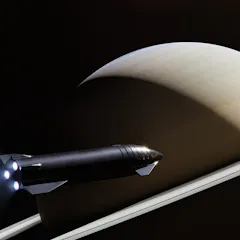
There has never been a dedicated mission sent to the “ice giants”, Uranus and Neptune. But there may be one on the horizon.
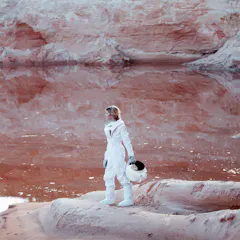
Humans might one day be able to live somewhere else in the Universe.
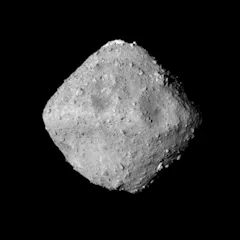
The Hayabusa2 mission brought a piece of asteroid Ryugu back to Earth, where it has helped scientists resolve a long-standing puzzle.

We may be on the brink of discovering whether water and organic material, which enabled life on Earth, came from asteroids.
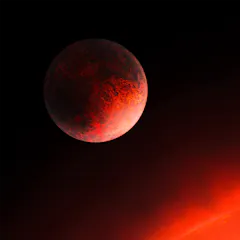
Most of what we know about planets outside our Solar System relates to gas-giant planets. A new study has identified and characterised a smaller exoplanet.

Tiny pieces of an asteroid have revealed an unlikely origin for much of the water in Earth’s oceans.
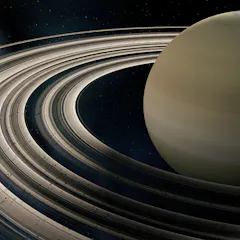
Saturn, Jupiter, Neptune and Uranus all have rings.
The fastest things ever made by humans are spacecraft, and the fastest spacecraft reached 330,000 mph – only 0.05% the speed of light. But there are ways to go faster.
It can get very cold in space.
Such a mission could be developed soon, allowing astrophysicists to take selfies of the solar system and use the Sun’s gravity as a lens to peer deep into space.

The sky on other planets doesn’t look the same as the sky on Earth does. And that’s because of the different gases in Earth’s atmosphere.
Top contributors
-

Professor (Astrophysics), University of Southern Queensland
-
Professor of Planetary Geosciences, The Open University
-
Senior Curator (Astronomy), Museums Victoria Research Institute; The University of Melbourne
-
Associate Professor in Archaeology and Space Studies, Flinders University
-
Professor of Planetary and Space Sciences, The Open University
-
Associate Professor in Astronomy, Monash University
-
Program Manager / Adjunct Research Fellow, Swinburne University of Technology
-
Postdoctoral Researcher in Radio Astronomy, University of Sydney
-
Postdoctoral research associate, University of Oxford
-
Scientist, Max Planck Institute for Solar System Research
-
Senior Instrument Scientist, Australian Nuclear Science and Technology Organisation
-
Lecturer, School of Science, Computing and Engineering Technologies, Swinburne University of Technology
-
Associate Dean of Innovation and Engagement, Swinburne University of Technology
-
PhD Candidate, University of Southern Queensland
-
Research Associate, Curtin University