
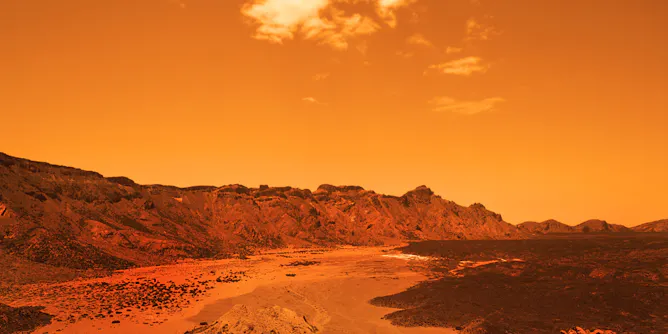
Planetary analogues are sites on Earth that are so extreme that they replicate those of celestial bodies in our solar system.
Articles on Solar system
Displaying 81 - 100 of 290 articles
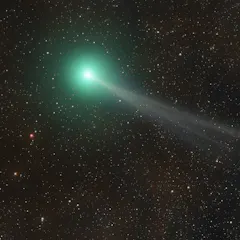
There’s a chance Nishimura might brighten unexpectedly – but it’s a slim one.

A new study of the meteorite Erg Chech 002 makes it one of the most precisely dated space objects and changes our understanding of how elements were spread around the cloud of dust that formed the Sun and planets.
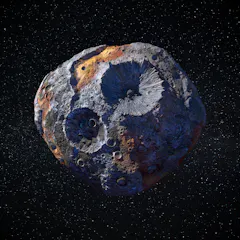
Liftoff to the distant asteroid is scheduled for Oct. 5, 2023 – the beginning of a six-year journey to one of the most unusual objects in the solar system.
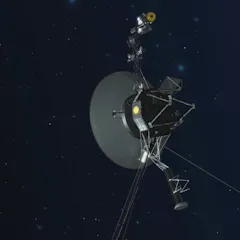
The Voyager 2 spacecraft is 20 billion kilometres away and has lost track of Earth. A radio dish near Canberra is the only channel for re-establishing communication.

If an astronaut were to die on Mars, neither cremation nor burial would be good options.
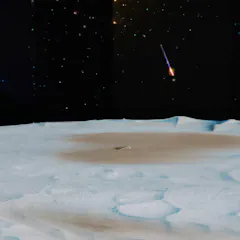
There are suspicions that our solar system could harbour another large planet much further away than Pluto.
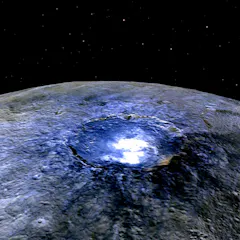
If we could go sightseeing across our cosmic neighbourhood, these would be some of the best highlights.
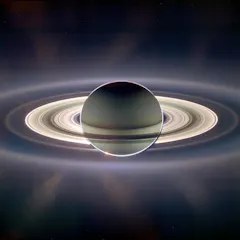
New research suggests Saturn’s rings may be surprisingly young.
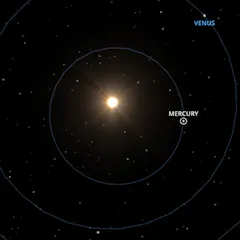
There’s nothing weird happening with Mercury. In fact, most days of the year there’s at least one planet in retrograde.
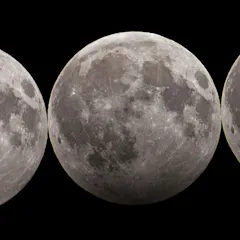
Not all lunar eclipses are alike. An astronomer explains the science behind the slight dimming of the Moon on May 5, 2023.

The current race to the Moon is opening up opportunities for lunar astronomy.

One of Jupiter’s moons, Ganymede, could contain more water than the Earth.
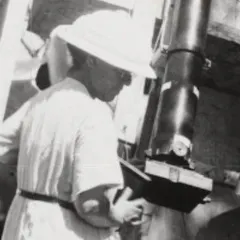
History might give you the impression astronomical discoveries were only done by men. But women were participating in scientific expeditions of eclipses too, even though it wasn’t easy.
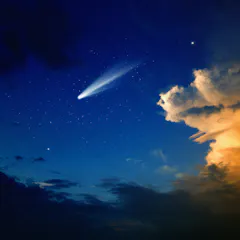
The newly discovered comet C/2023 A3 Tsuchinshan-ATLAS is anticipated to be spectacularly bright late next year. But it’s important to temper our expectations.

In 2021, searchers recovered a meteorite that fell over the UK just hours earlier. Scientists have now reconstructed its story.
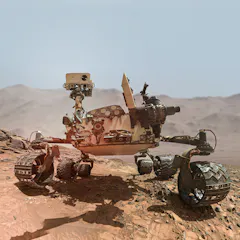
Our Mars rovers might not be sensitive enough to detect signs of life. But lessons from Antarctica might make future missions more successful.
The Solar System as we know it doesn’t really make sense without a ninth planet. So then why can’t we find it?
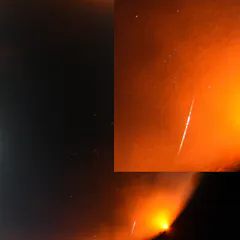
Within hours of its landing, samples of the Winchcombe meteorite had been recovered and its origins tracked back beyond Mars to the asteroid belt.
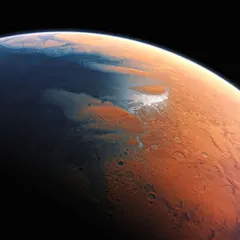
A study has found that microorganisms living on Mars billions of years ago may have left the planet uninhabitable.
Top contributors
-

Professor (Astrophysics), University of Southern Queensland
-
Professor of Planetary Geosciences, The Open University
-
Senior Curator (Astronomy), Museums Victoria Research Institute; The University of Melbourne
-
Associate Professor in Archaeology and Space Studies, Flinders University
-
Professor of Planetary and Space Sciences, The Open University
-
Associate Professor in Astronomy, Monash University
-
Program Manager / Adjunct Research Fellow, Swinburne University of Technology
-
Postdoctoral Researcher in Radio Astronomy, University of Sydney
-
Postdoctoral research associate, University of Oxford
-
Scientist, Max Planck Institute for Solar System Research
-
Senior Instrument Scientist, Australian Nuclear Science and Technology Organisation
-
Lecturer, School of Science, Computing and Engineering Technologies, Swinburne University of Technology
-
Associate Dean of Innovation and Engagement, Swinburne University of Technology
-
PhD Candidate, University of Southern Queensland
-
Research Associate, Curtin University