
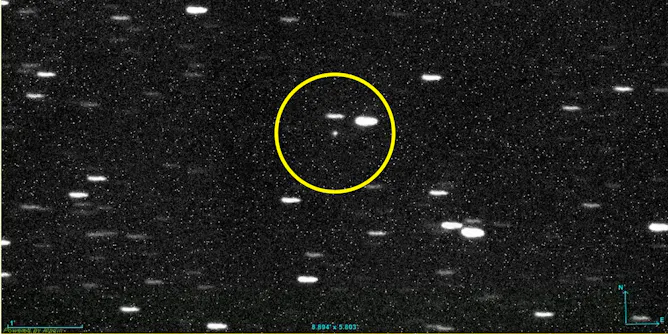
An object dubbed 3I/ATLAS is only the third interloper from outside the Solar System seen in all of human history.
Articles on Solar system
Displaying 21 - 40 of 290 articles
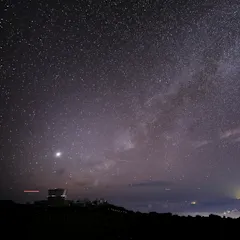
Over the next few days, astronomers will pull together evidence to determine whether the object is a comet.
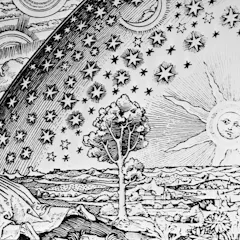
In the 19th century, astronomers could see Mars through telescopes, but not clearly. Some used their imaginations to fill in what the blurry images couldn’t convey.

The speed of light is the fastest anything can travel. What happens to a photon from a galaxy 25 million light years away on its journey toward Earth?
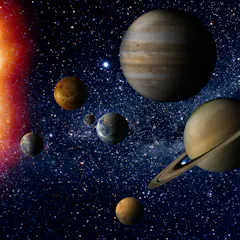
The biggest planets hogged a lot of the raw materials and were fully formed first.
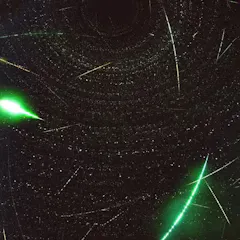
Water-rich meteorites contain key ingredients for life, yet they barely appear in meteorite collections. Recent research using shooting stars may explain why.
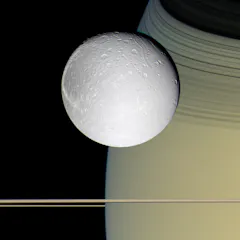
The number of known moons in our Solar System has been rising for centuries, but astronomers say it has probably peaked – for now.
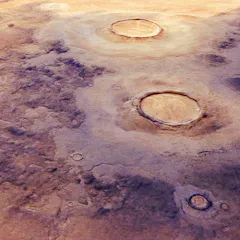
The discovery indicates water may have remained stable on Mars for much longer than scientists thought.
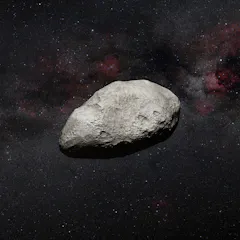
The chances of asteroid 2024 YR4 hitting Earth are small but fluctuating.
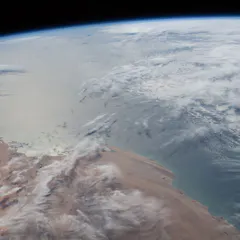
At the very beginning of its history, Earth was dry. How did it become a blue planet? A new theory could provide an answer.
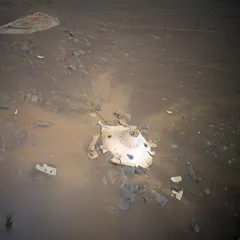
The US wants to put a flag on Mars. But there’s a risk it could carry unwanted stowaways that might compromise future scientific investigations.
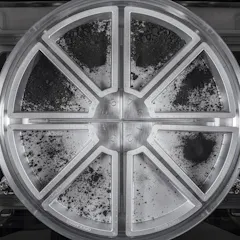
Two new studies show a briny, carbon-rich environment on the parent body of the Bennu asteroid was suitable for assembling the building blocks of life.
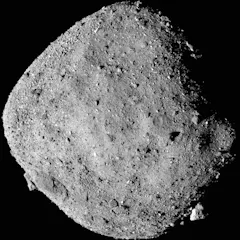
New findings reveal that a NASA mission traveled to an asteroid that may have once been covered in salty lakes containing organic molecules.
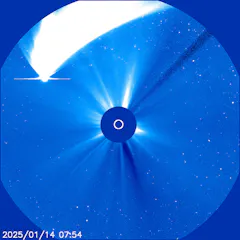
Comet C/2024 G3 (ATLAS) will be visible just after sunset in the coming nights.
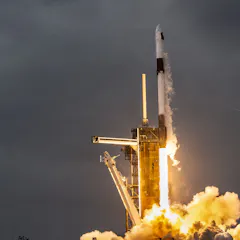
A rocket needs to overcome the force of gravity to leave Earth behind.
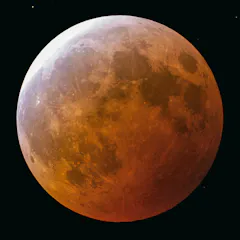
In 2025 we will see Saturn’s rings ‘disappear’, the Moon turning red, meteor showers and more.
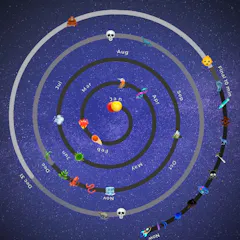
The dinosaurs went extinct on Christmas Day.
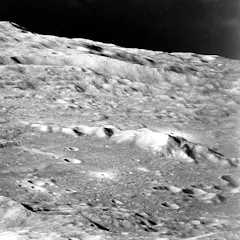
An extreme heating event may have interfered with scientists’ attempts to figure out the Moon’s age by dating lunar rock samples.

In 2017, astronomers found an object they’d never seen before. Now, it’s part of a growing category of elusive ‘dark comets’ – and we might find more soon.
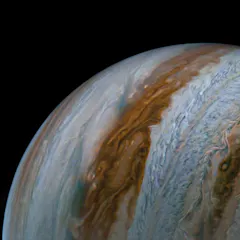
Jupiter’s composition is more similar to that of the Sun than that of the Earth.
Top contributors
-

Professor (Astrophysics), University of Southern Queensland
-
Professor of Planetary Geosciences, The Open University
-
Senior Curator (Astronomy), Museums Victoria Research Institute; The University of Melbourne
-
Associate Professor in Archaeology and Space Studies, Flinders University
-
Professor of Planetary and Space Sciences, The Open University
-
Associate Professor in Astronomy, Monash University
-
Program Manager / Adjunct Research Fellow, Swinburne University of Technology
-
Postdoctoral Researcher in Radio Astronomy, University of Sydney
-
Postdoctoral research associate, University of Oxford
-
Scientist, Max Planck Institute for Solar System Research
-
Senior Instrument Scientist, Australian Nuclear Science and Technology Organisation
-
Lecturer, School of Science, Computing and Engineering Technologies, Swinburne University of Technology
-
Associate Dean of Innovation and Engagement, Swinburne University of Technology
-
PhD Candidate, University of Southern Queensland
-
Research Associate, Curtin University