

AI models are designing new metal alloys that have been 3D-printed and tested in the lab. The results are then fed back into the AI to accelerate alloy discovery.
Articles on 3-D printing
Displaying 1 - 20 of 131 articles
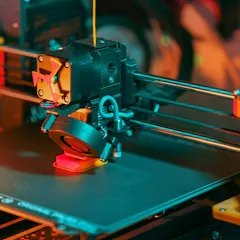
Police struggles to track down the makers of illegal 3D-printed guns. But a new forensic chemistry method can help.
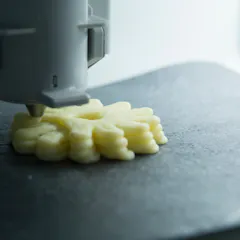
Knowledge, awareness and hands-on experience with 3D-printed foods could influence consumer attitudes.

Precise and flexible 3D manufacturing techniques make it possible to individually tailor everything from prosthetics to drugs.

3D printing in outer space and on alien planets comes with otherworldly challenges.

This unsung research area involves 3D-printing smart materials that can change shape when they come into contact with stimuli like heat or light.
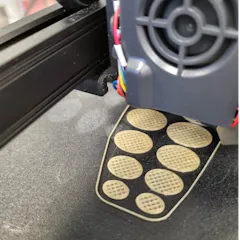
One size doesn’t fit all – customising your medicines with 3D printing could be a game changer, especially for people with complex medical needs.

Scientists used Lego to build a bioprinter capable of printing human tissue samples.

Organ models that more accurately capture finer details could reduce surgical error and lead to personalized implants.

Glass is produced from sand, is easy to recycle, and can be used to make concrete without any complex processing.

Using recycled plastic to wire planes could reduce their emissions while cutting down on waste from the 3-D printing industry.

The world needs to protect 30% of the ocean by 2030. We won’t achieve this goal without using new technology to patrol and preserve marine protected areas.

The rocket engines that lauched Apollo 11 towards the moon had 5,600 parts each. 3D-printed equivalents have just 40.

The shipping sector’s emissions are equivalent to some industrial countries: here’s some innovative ways to help reduce them.
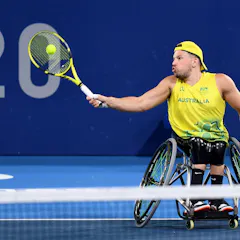
Most sporting equipment is designed with typical able-bodied athletes in mind, whereas custom equipment to meet a particular Paralympian’s needs can be expensive. 3D printing offers a third way.
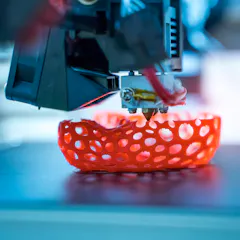
How do you turn your 3D plastic printer into a food printer? You just print the required parts.
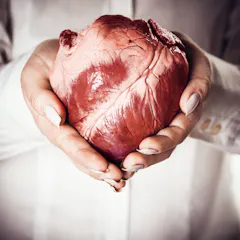
Printing organs could reduce the need for human donor organs. And 3D printed organs using a patient’s own cells would increase successful organ transplants by reducing the risk of rejection.
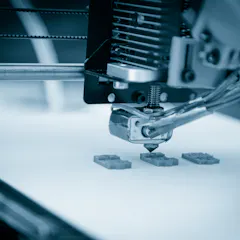
Nigeria could close the skills gap in the manufacturing sector by including 3D printing in the curriculum of engineering programmes.
A new report from the GovLab and the French Development Agency (AFD) examines how development practitioners are experimenting with emerging forms of technology to advance development goals.
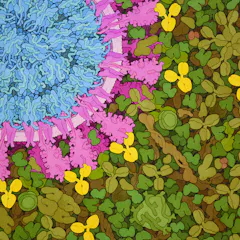
A biologist explains what proteins do in viruses, how they interact with human cells, how the vaccine delivers mRNA into the cell and how antibodies protect us.
Top contributors
-

John M. Thompson Chair in Information Technology and Innovation and Professor, Western University
-
Head of Research Compute Services, The University of Melbourne
-
Lecturer, Adelaide University
-
Senior lecturer, University of Wollongong
-
Former Academic Research Fellow, Khalifa University
-
Assistant Professor in Additive Manufacturing Management, University of Nottingham
-
Senior Lecturer, Department of Mechanical Engineering, University of Sheffield
-
Professor in Intellectual Property and Innovation Law, Queensland University of Technology
-
Research Fellow, University of Wollongong
-
Associate Professor of Chemical and Biomolecular Engineering, The University of Melbourne
-
SHARP Professor, Vitalities Lab, Centre for Social Research in Health and Social Policy Centre, and the ARC Centre of Excellence for Automated Decision-Making and Society, UNSW
-
Research Engineer, The University of Melbourne
-
VC Postdoctoral Fellow, RMIT University
-
Professor of Intellectual Property and Innovation Law; Director Centre for Intellectual Property Policy and Managament (CIPPM), Bournemouth University, Bournemouth University
-
Senior Research Fellow and Adjunct Lecturer, The University of Queensland