
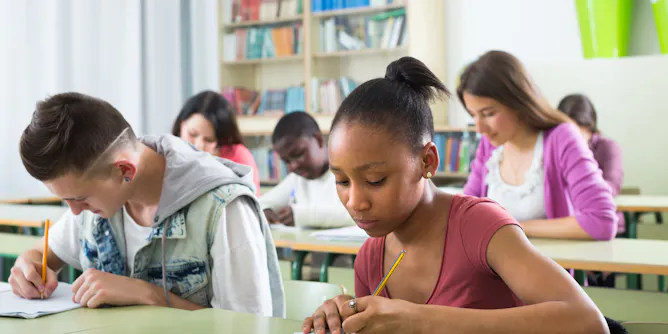
Losing your parents or growing up in poverty can add years to your biological age.
Articles on Socioeconomic status
Displaying 21 - 39 of 39 articles

Although fewer Australian teens planned on going to university or TAFE than 15 years ago, figures were still higher than the OECD average.

Estimating parents’ capacity to contribute to their children’s schooling is both vital and politically sensitive. Schools with well-off parents get much less funding from government.

Children’s access to quality childcare is, more than ever, dependent on whether the government views their parents as deserving or not.

Why a bricklayer is more likely to die before a banker.
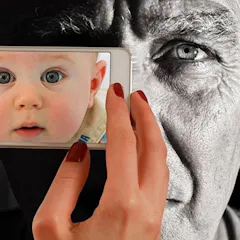
Childhood adversity doesn’t just affect our choices – according to new research, it also weakens the body’s fundamental ability to stay healthy in old age.

Western Australia has huge amounts of sunshine and wind, yet only 7% of its energy comes from renewables. What’s more, most households in the poorest suburbs are still locked out of the solar panel boom.

There’s growing evidence the location and density of bottleshops influences the health and well-being of locals, particularly in disadvantaged areas.
Public health experts traditionally expect that the poorer you are, the more likely you are to be unwell and die before your time. But newly available data on cancer rates show that’s not always true.

The National Broadband Network was meant to provide greater equity of digital access. So far, it’s not looking good.
People in some of the most unequal countries in the world think theirs is the paradigm of meritocracy. Can the data help explain this phenomenon?

New analysis shows access to grammar schools is highly skewed by a child’s socioeconomic status.

Leaving school early more than doubles your risk of heart attack, according to a new Australian study.

The government’s focus on treating chronic disease neglects the importance of obesity and the benefits of preventive health measures tailored to gender and socioeconomic circumstances.

The Democrats’ policy platforms address the fundamental issue of Internet haves and have-nots in the U.S. But research suggests just hooking people up to broadband won’t solve the problem.
Nick Clegg has hailed the success of the coalition’s policies in closing the gap between richer and poorer students. Is he right?

Whether a child’s family is well-off or struggling for money has long been linked with their success at school. The gap between parents’ income and their children’s achievement is evident in kindergarten…

Bullying is the repeated and systematic abuse of power with the aim of causing intentional harm. Examples of bullying have been found in all societies, including among modern hunter-gatherers and in ancient…
Canadian students from low socioeconomic backgrounds perform better than Australian students in a similar situation, researchers…
Top contributors
-

Associate Teaching Professor of Business and Economics, Georgetown University
-
Associate Professor of Engineering, Georgia Institute of Technology
-
Professor, School of Health Sciences, University of Newcastle
-
Professor of Biological and Social Epidemiology,, University of Essex
-
Professor of Health Equity, Stretton Health Equity, School of Public Health, Adelaide University
-
Associate Professor, Australian National University
-
Professor of Education, Jesus College, University of Cambridge
-
Senior research psychologist, Department of Psychology, University of North Florida
-
Professor Sport & Exercise Medicine, UCL
-
Senior Research Fellow in public health and public policy, Adelaide University
-
ARC Laureate Fellow and Professor of Health Equity, Planetary Health Equity Hothouse, School of Regulation and Global Governance, Australian National University
-
Professor of Psychology, University of Warwick
-
Research Fellow, National Centre for Epidemiology and Population Health, Australian National University
-
Clinical Associate Professor, University of Sydney
-
Research Fellow, University of Bristol