

Moving can change the conditions that shape health, so health and social policy must plan for a mobile population.
Articles on Social determinants of health
Displaying 1 - 20 of 144 articles

Teenage pregnancy makes visible the pressures, relationships and reproductive conditions that shape young people’s lives across southern Africa.

While the National Food Security Strategy does include important food systems initiatives, it fails to address the root causes of food insecurity or its health consequences.

More than 15,000 families in Michigan have received cash support from Rx Kids. Participants say the program helps them pay bills and maintain their health.

When Indigenous people are displaced from or denied access to Country, measurable declines in mental health, physical health and emotional wellbeing follow.

Research has moved past the question of whether we can live longer. The new question is whether we’re willing to invest — seriously, equitably and early — in the things that will help us live better.

Are you straight, lesbian, gay, bisexual, pansexual, asexual or another sexual orientation? The census wants to know. Here’s why.

Yoga helps with health and wellbeing and is recommended to NHS patients in the UK, but new research shows people who could benefit most find it hardest to access.
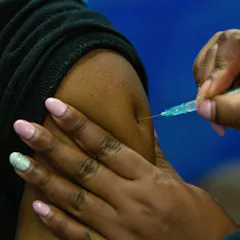
Different social realities lead to different forms of vaccine hesitancy.

Epigenetic aging clocks allow scientists to study how populations age. They aren’t intended for individuals to make health decisions.

Every city is different but they can learn from each other.

Research showed that older women used safer methods of abortion. Fully safe methods did not dominate in any region of Ghana.

Health inequality is not only about who reaches a health facility. It is also about what happens once patients are inside the consultation room.

Look for physical activity that brings you joy. Make it the thing you look forward to rather than dread.

Young adults can take basic but powerful steps to address risk factors that set the stage for heart disease.

People who can’t afford to treat tooth decay may live with pain and have missing teeth – and they’re more likely to face discrimination.
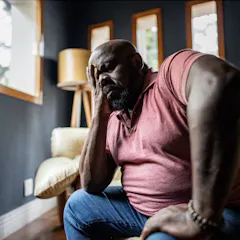
The number of Australians who say they experience bodily pain has risen over the past two decades. Gender, age and income all make a difference.

Campaigns designed to help us cut back on alcohol don’t always reach those most at risk of harm. Here’s what we should be doing instead.

Healthy eating is strongly influenced by social connections and different settings. But aging often brings losses to social connections, which could put healthy eating at risk.

Some patients with a terminal illness seem to be able to ‘hold on’ until after an anticipated holiday or event. This might be less about staying positive and more about being supported in your goals.
Top contributors
-

Full Professor and Associate Vice-President, Research, Mount Saint Vincent University
-
ARC Laureate Fellow and Professor of Health Equity, Planetary Health Equity Hothouse, School of Regulation and Global Governance, Australian National University
-
Professor of Public Health, The University of Melbourne
-
Professor, University of Sydney; RMIT University
-
Emeritus Professor, National Centre for Epidemiology and Population Health, Australian National University
-
Professor of Health Equity, Stretton Health Equity, School of Public Health, Adelaide University
-
Associate Professor, Turner Institute for Brain and Mental Health, Monash University
-
Perinatal and Pediatric Epidemiologist; Distinguished Professorial Fellow, The Kids Research Institute Australia
-
Caroline Homer is a Friend of The Conversation.
Deputy Director (Gender Equity, Diversity and Inclusion), Burnet Institute
-
Adjunct Senior Lecturer, School of Public Health and Community Medicine, UNSW
-
Dean, Medical School, Curtin University
-
Paediatrician and Director of Generation Victoria (GenV) , Murdoch Children's Research Institute
-
Senior Research Fellow in public health and public policy, Adelaide University
-
Professor Population Nutrition, Deakin University
-
Adjunct Clinical Associate Professor Curtin Medical School Public Health Physician, Curtin University