

For decades, parents have fretted over ‘screen time,’ limiting the hours their children spend looking at a screen. But as times change, so does media… and how parents should (or shouldn’t) regulate it.
Articles on Smartphones
Displaying 241 - 260 of 371 articles
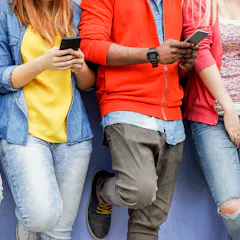
We don’t just hold our phones, we cradle them – and make films like this one with them.
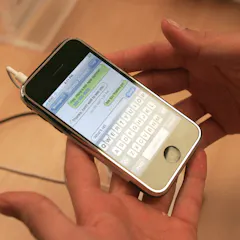
The iPhone changed the game not because of the technical details of the device, but rather as a result of its creators’ imagination and courage.

Digital social innovations are often associated with positive meanings, like openness and collaboration. But to better define the concept, it’s essential to disentangle it from its positive aura.
When smartphone apps get permission to access your location or other activity, they often share that data with other companies that can compile digital profiles on users.
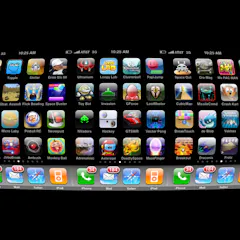
Name almost any app. Your data is probably being tracked.
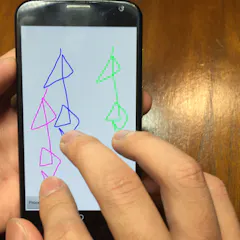
A simple idea that’s surprisingly secure: drawing your own unlock pattern on a touchscreen. Faster and easier to remember than a password, and much harder to guess or crack.

Have you ever checked your phone thinking you had felt it vibrate or heard it ring, only to see that no one tried to reach you? One researcher decided to study this phenomenon.
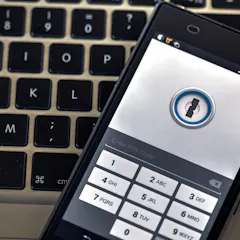
Following reports of travellers to the US being forced to unlock their phones for border officials, here are some steps you can take to prevent your personal data from being exposed.
Some have said that technology could lead to ‘a new ice age’ of social isolation. Not so fast, says the author of a new book about shyness.

Every crystal ball has a shelf life, even the most prescient.

The best way to protect a presidential device is to keep it off the internet altogether. If that’s not going to happen, how else can such a sensitive gadget be kept safe?

Woody Harrelson’s directorial debut, released this month, signals that we are in a new age of cinema.
Using sensors on smartphones and smartwatches can shed light on patients’ symptoms of depression, even identifying ones they didn’t notice or share with counselors.
A new diagnostic smartphone app is a modern move for the health provider.

The more often Americans used their phones to obtain information, the less they trusted strangers. How can this be, and what does it mean?
Apple’s world changing smartphone has had ten years of success, but thing didn’t look so good when it launched.
Developers working on apps to help monitor and improve our health could accidentally find themselves on the wrong side of the law.

The ruling in the Apple-Samsung case is ambiguous, ensuring the case will drag on for years more, potentially even ending up back in the Supreme Court.
How we use our smartphone can say a lot about our behaviour. But can such tech be trusted to track our mental health?
Top contributors
-

Professor of Psychology, San Diego State University
-
Professor & Director, Hub for Apple Platform Innovation (HAPI), School of Computing Technologies, RMIT University
-
Professor, Information and Communications Technology, CQUniversity Australia
-
Professor of Strategy, Frankfurt School of Finance and Management
-
Adjunct Senior Lecturer, Applied Ethics and CyberSecurity, Griffith University
-
Director of UWA Centre for Software Practice, The University of Western Australia
-
Professor, Computer Networking and Telecommunications, University of Salford
-
Assistant Professor of Psychology, Georgetown University
-
Lecturer in Software Engineering, Monash University
-
Professeur des universités physicien, Université Grenoble Alpes (UGA)
-
Associate Professor in Telecommunications Engineering, Swinburne University of Technology
-
Quality of life researcher and occupational therapist, The University of Queensland
-
Professor of Anthropology, UCL
-
Senior Lecturer in Networking, The Open University
-
Professor of Screen Media, King's College London