
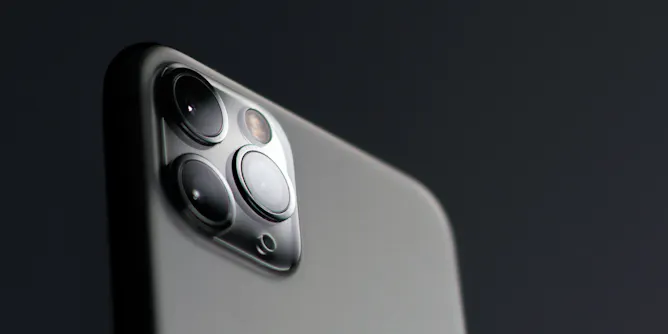
‘Pics or it didn’t happen’ is no longer a reliable test for what’s real.
Articles on iPhones
Displaying 1 - 20 of 142 articles

From Apple II to the iPhone, time and again this extraordinary company has anticipated the value of opening up computing to everyone.

Poor usability feels unforgivable for a company built on founder Steve Jobs’ mantra: ‘It works like magic’.

Behind teenagers’ refusal to answer the phone lies a global transformation in communication norms. Here are some explanations for parents… and everyone else.

Parental controls designed for children’s games can be confusing. They also don’t take into account how families may — or may not — communicate.

Digital nostalgic features like iPhone’s ‘Memories’ risk retraumatizing survivors of abuse. Tech companies should consider options for safer, more inclusive design of these features.

Apple is marketing its new AI features under the banner of Apple Intelligence.
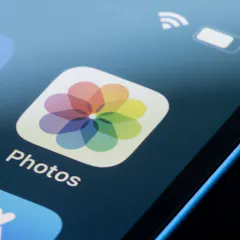
In April 2022, iPhone users were upset to learn about a restrictive feature on iPhones. The blocking of photos taken at sensitive locations raised concerns about how technologies manage our memories.

Is a cellphone ban, along with increased surveillance, the right way to deal with the impact of addictive and harmful technology in classrooms?

Apple’s plan for ‘spatial computing’ may redefine personal computing – and also facilitate trouble new kinds of surveillance.

Apple has been forced to switch connections in its iPhone after the EU adopted a single standard.
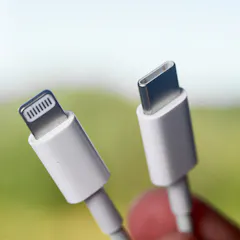
Apple just announced its latest suite of iPhones will not use the proprietary Lightning charger. This isn’t a surprise due to EU regulations announced last year.
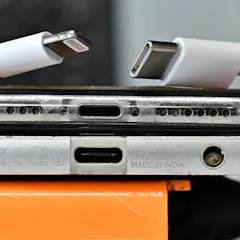
With Apple’s capitulation on the latest iPhone models, USB-C is poised to become the standard connector for all devices.

The iPhone already has an accelerometer, gyroscope, light meter, microphone, camera and GPS. Why does Apple now want you to tell it how you’re feeling?

New features on Apple iOS 17 aim to give users insights into their mental health, but they may also shape how people see themselves.

How technology is central to the show’s most dramatic and pivotal moments – and how it might define its legacy.

Wanning Sun spent nearly a decade talking to migrant workers at the Apple factory in China’s Shenzhen about their intimate lives – and how their relationships are affected by inequality.
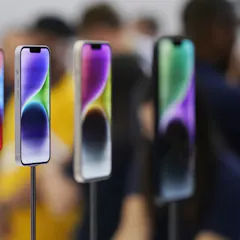
Despite the highest inflation rates in 40 years, Apple chose not to raise prices on its gadgets. More bizarre, the consumer price index suggests smartphones are 20% cheaper than a year ago.
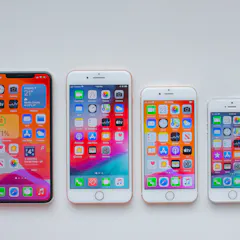
Despite its ‘innovator’ status, Apple usually wasn’t the first one to offer groundbreaking new features. But it knew how to adopt existing features in groundbreaking ways.

New federally funded mental health help line features easier access and more consistent regulation.
Top contributors
-

Director of UWA Centre for Software Practice, The University of Western Australia
-
Associate Professor, Informatics and Operations, Kingston University
-
Professor of Psychology, San Diego State University
-
Professor of Cyber Security Practice, Edith Cowan University
-
Senior Lecturer in Networking, The Open University
-
Harvard University
-
Associate professor, University of the Sunshine Coast
-
Senior Lecturer, University of Southern Queensland
-
Professor of Finance, International Institute for Management Development (IMD)
-
Lecturer in Software Engineering, Monash University
-
Professor & Director, Hub for Apple Platform Innovation (HAPI), School of Computing Technologies, RMIT University
-
Research Associate, University of California, Berkeley
-
Professor, Information and Communications Technology, CQUniversity Australia
-
Professor of Information Studies, Syracuse University
-
Research Professor of Business, University of California, Irvine