

In just five years, the number of mobile-money accounts in Ghana have jumped six-fold, providing fresh perspective on the country’s digital transformation.
Articles on Smartphones
Displaying 161 - 180 of 371 articles

Here is how our mobile phones compare with the computer that landed man on the moon in 1969.

If “Black Mirror” is one of the most fascinating and disturbing series of the last ten years, it is because of its main character: technology.

Darwin is one of the aspiring ‘smart cities’ that is adopting Chinese technology that can identify and track individuals. Add changes in Australian law, and we have the makings of a surveillance state.

Making technology such as a new smartphone that can you can roll, fold and bend requires new ways to manufacture.
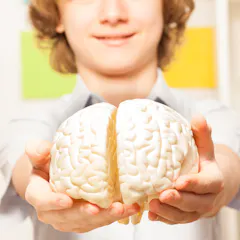
In his new book, Teen Brain, David Gillespie suggests anxiety and other problems are on the rise among teenagers due to smartphones and tablets. This could be true, but his claims are overblown.

Software makers including Apple have been creating apps aimed at limiting how much time we spend using our smartphones. A behavioral scientist explains how – and whether – they work.
We blame electronic devices for our increasingly sedentary behaviours. So why not harness them to study our movement patterns and tackle urgent health crises?

Climate extremes are killing Australian trees, but we don’t know where they’re dying. Scientists are asking the public to use their phones to help.

Some have called reports overblown, with others going so far as to call it a myth. But the data that continues to emerge tell a different story.

Smartphones are here to stay, so why don’t art teachers explore using them mindfully for visual and aural self-expression and to create intentional classroom communities?

Using smartphones and wearable devices to identify mental health symptoms and deliver psychotherapy will allow more people to access quality care, according to one psychiatrist.
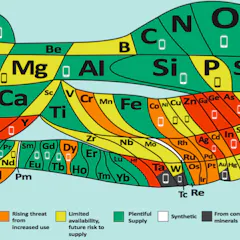
Exactly 150 years after Mendeleev’s classic formulation, it’s time for one for the resource-hungry 21st century.
There’s a lack of scientific evidence supporting claims that digital detoxes actually have any benefit to us.

Most tech companies make it difficult for users to say no to aggressive surveillance practices. But it is helpful to know about the default settings on your smartphone and how to change them.

Today’s smartphones have the technology to help you take amazing photographs – so long as you do it right.

Philip Pullman can help us understand what smartphones are doing to people – here’s how.
Some say the hysteria over screen time echoes parents’ worries that their kids were watching too much TV in the 1980s. But new studies show there’s nothing overblown about parents’ growing concern.

‘Heavy’ media multitaskers performed worse on attention and memory tests – and some even had structural brain differences.

Experts describe their research into how smartphones collect and share private personal information with tracking companies and advertisers.
Top contributors
-

Professor of Psychology, San Diego State University
-
Professor & Director, Hub for Apple Platform Innovation (HAPI), School of Computing Technologies, RMIT University
-
Professor, Information and Communications Technology, CQUniversity Australia
-
Professor of Strategy, Frankfurt School of Finance and Management
-
Adjunct Senior Lecturer, Applied Ethics and CyberSecurity, Griffith University
-
Director of UWA Centre for Software Practice, The University of Western Australia
-
Professor, Computer Networking and Telecommunications, University of Salford
-
Assistant Professor of Psychology, Georgetown University
-
Lecturer in Software Engineering, Monash University
-
Professeur des universités physicien, Université Grenoble Alpes (UGA)
-
Associate Professor in Telecommunications Engineering, Swinburne University of Technology
-
Quality of life researcher and occupational therapist, The University of Queensland
-
Professor of Anthropology, UCL
-
Senior Lecturer in Networking, The Open University
-
Professor of Screen Media, King's College London