
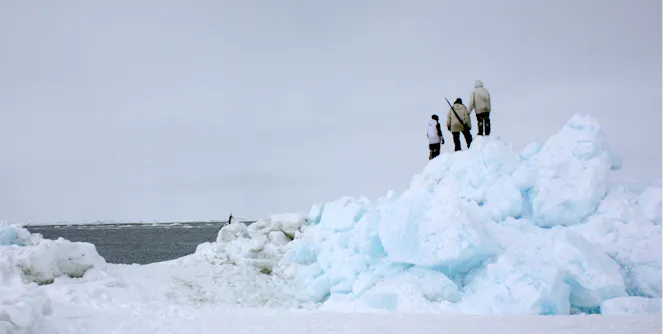
Sea ice is thinning at an alarming rate. Snow is shifting to rain. And humans worldwide are increasingly feeling the impact of what happens in the seemingly distant Arctic.
Articles on Shipping
Displaying 121 - 140 of 217 articles

For over a decade, the inclusion of oceans in climate talks has been piecemeal and inconsistent. And yet, the ocean is critical to help balance the conditions we need to survive.

As President Biden signs the bipartisan infrastructure bill, it’s important to determine which road, freight and information networks are the most vital to protect.

Shipping requires vast amounts of fuel, and the questions of which country is responsible for emissions makes reaching agreements a mammoth and glacial task.
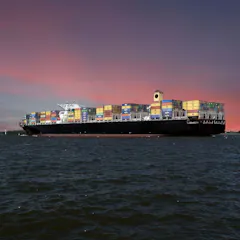
The global shipping sector delivers 90% of global trade and has a carbon footprint the size of Germany’s.
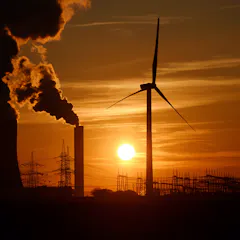
Clean energy innovation, giving up coal, cutting methane and getting China and India on board for net-zero can deliver progress at COP26.
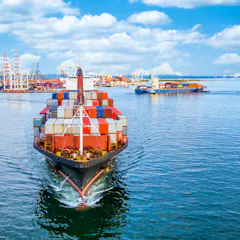
A recent survey of top executives at companies that operate at sea found environmental reporting practices were not a top priority and put the health of the marine environment at risk.

A closer look at how ice cover changed through the months offers some important insights into the role of climate change and why every year isn’t a record.
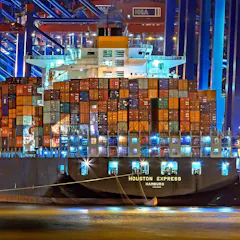
The shipping sector’s emissions are equivalent to some industrial countries: here’s some innovative ways to help reduce them.
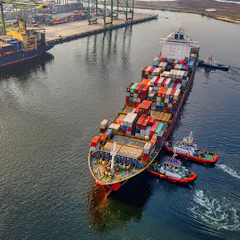
If shipping were a country, it would rank between Japan and Germany as the sixth-largest contributor to global carbon dioxide emissions.
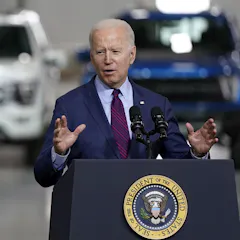
To cut enough greenhouse gas emissions, the world will need technologies that are still being developed, particularly for industries that are tough to clean up, like cement, steel and shipping.
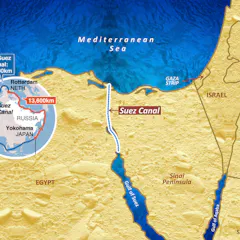
CC BY-NC-ND8.48 MB (download)
The Suez Canal’s history has been forged over a century by multiple entities and people. Its past has been marked by colossal stumbling blocks.

Russia is attempting to claim more of the Arctic seabed, an area rich in oil, gas and minerals. It’s also expanding shipping and reopening Arctic bases. Here are two things the U.S. can do about it.
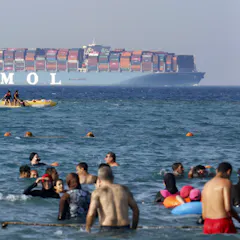
Before the container was standardized, loading and unloading goods was very labor-intensive, inefficient and costly.
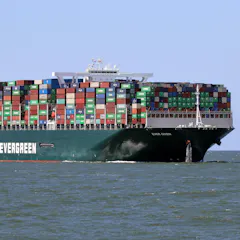
Driven by the promise of efficiency, container ships have grown to monstrous proportions over the past 15 years.
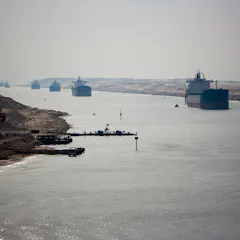
Direct implications for maritime security are unlikely. But there will be ripple effects in the shipping industry and in many commercial sectors.

Maritime salvage experts will use a variety of techniques to free the Ever Given from the Suez Canal.
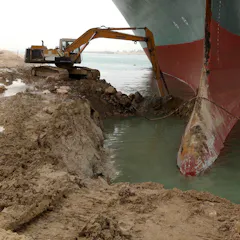
A bottleneck in the global shipping network will accelerate the move to more local production and shorter supply chains.
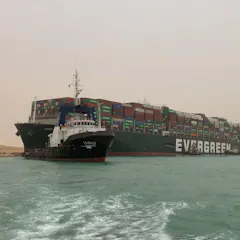
The Suez Canal is the ideal target for causing maximum disruption to global trade.

Geographers are documenting slave-built infrastructure, from railroads to ports, in use today. Such work could influence the reparations debate by showing how slavery still props up the US economy.
Top contributors
-

Senior Lecturer in Culture & Climate, The University of Melbourne
-
Lecturer in Sustainable Freight Transport and Logistics, University of Leeds
-
Eugene M. Isenberg Chair in Integrative Studies, UMass Amherst
-
Reader in Energy and Transport, UCL
-
Research Associate, Shipping and Climate Change, University of Manchester
-
Associate Professor in Operations and Supply Chain Management, UTS Business School, University of Technology Sydney
-
PhD (Maritime Security)
-
Professor of Climate Science and Energy Policy, University of Manchester
-
Assistant Professor in Circular Supply Chains, University of Bradford
-
Associate Professor of Business, University of Tennessee
-
Senior Lecturer in Ocean and Earth Science, University of Southampton
-
Professor of International Relations, University of Copenhagen
-
Associate professor, Royal Danish Defence College
-
Professeur émérite de géographie, Université de Montréal
-
Professor of Practice & Director, Fletcher Maritime Studies Program, The Fletcher School, Tufts University