
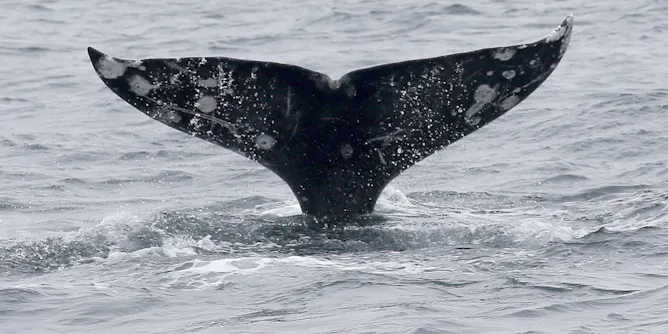
In the past, the gray whale population recovered fairly quickly. But data on baby whales show that isn’t happening, and a new study finds an alarmingly high mortality rate.
Articles on Sealife
Displaying all articles

Manatees along Florida’s coast are eating less seagrass and more algae than they did a few decades ago. This dietary shift could pose a new threat to the survival of the beloved species.
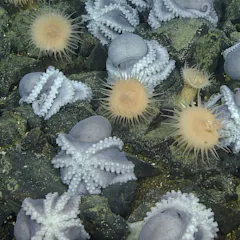
Thousands of pearl octopuses were discovered in 2018 lining thermal vents near a deep-sea volcano. Researchers now know why octopus moms gather there.
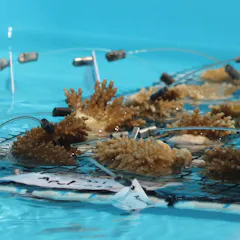
Ocean temperatures have hit record highs off the Florida Keys. Scientists and volunteer divers are racing to save these valuable creatures.
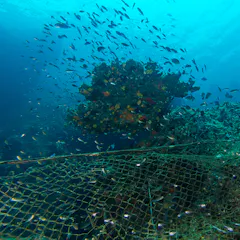
If ASEAN demands its member nations try to stop illegal and unregulated fishing, but without requiring matching financial commitments, we will continue to lose the battle against illegal fishing.
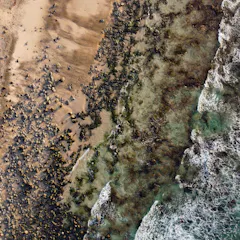
Australia’s coastline spans more than 33,000km – and there are myriad marvellous marine animals we share this space with.
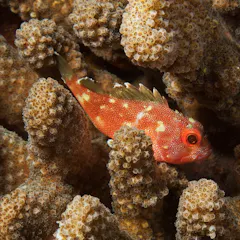
During a 2015 heat wave, scientists watched as a coral reef died before their eyes. By the end of the century, almost all the world’s corals will be gone if climate change continues at this pace.
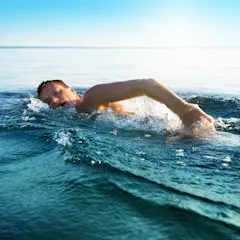
Ocean swimmers often wax lyrical about the benefits of a regular dip in the salt water.
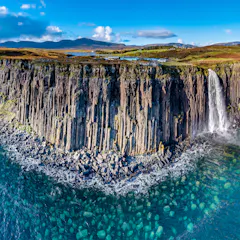
Maerl beds are the coral reefs of the British Isles. But like their tropical counterparts, they’re threatened by climate change.
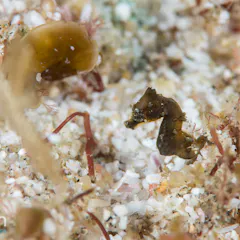
South Africa is home to four other seahorse species, but this was the first time a pygmy seahorse had been observed in South Africa, let alone Africa.

We don’t know for sure which one is smarter, because not everyone agrees on what “intelligence” means. Both have their own special behaviours and skills and we can’t say who is more intelligent.
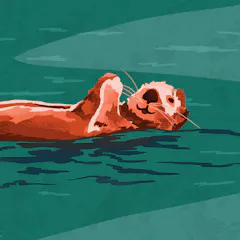
Sea otters can break the shell on a shellfish by hitting it against a stone resting on their belly. This can look like clapping. Some even have a favourite stone they carry around in their armpits.
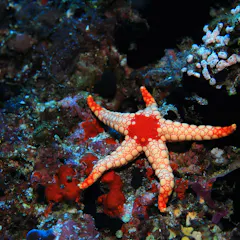
Nightvision, ejectable stomachs and regrowable arms mean starfish are more than meets the eye.
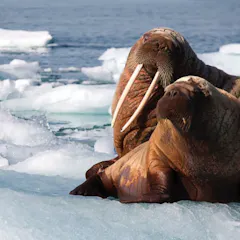
Besides wondrous creatures, new discoveries and spectacular filming, Sir David Attenborough’s follow up to The Blue Planet comes with a stark warning about the future
Top contributors
-

Senior Lecturer in Biology, The Open University
-
Associate professor, University of Rhode Island
-
Adjunct Research Associate, Monash University
-
Senior Lecturer in Earth Sciences, The Open University
-
Research Associate of Zoology and Entomology, Rhodes University
-
Senior Research Scientist in Marine and Estuarine Ecology, Southern Cross University
-
Lecturer in Biological Sciences, Macquarie University
-
Adjunct Assistant Professor, Faculty of Science and Engineering, Southern Cross University
-
Assistant Professor of Invertebrate Ecology at Moss Landing Marine Laboratories, San José State University
-
Associate Professor of Biological Sciences & Environmental Conservation, Clemson University
-
Professor and Deputy Vice-Chancellor (Research), University of Sydney
-
Professor and Chair of the Department of Marine Sciences, University of Miami
-
Adjunct Assistant Professor, Universitas Bakrie
-
Vice Chancellor's Senior Research Fellow, RMIT University
-
Postdoctoral Research Associate, University of Sydney