
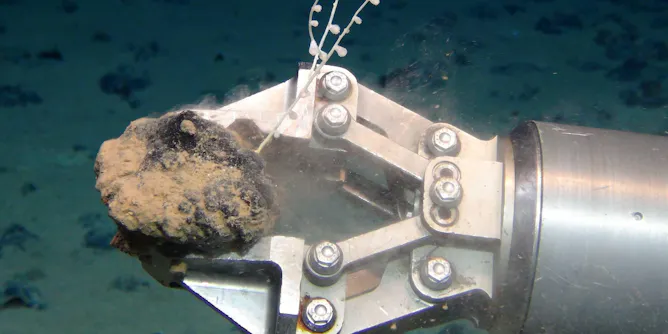
Critical minerals are found in several forms in the ocean, from potato-size nodules to brine pools. They are also in some of the least understood parts of our planet.
Articles on Ocean floor
Displaying all articles
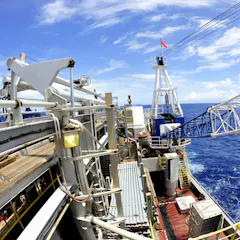
The National Science Foundation says that the JOIDES Resolution has become too costly to fund. But scientists say its $72 million annual budget pales compared with discoveries the ship has enabled.
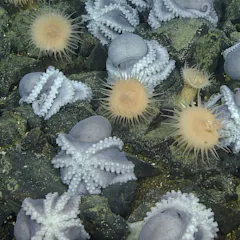
Thousands of pearl octopuses were discovered in 2018 lining thermal vents near a deep-sea volcano. Researchers now know why octopus moms gather there.

Scientists have detected a 30% slowdown of the deep ocean currents that form in Antarctica, with profound consequences for Earth’s climate, sea level and marine life.
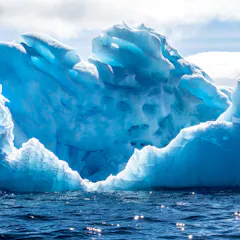
In a plot reminiscent of the 2004 movie The Day After Tomorrow?, Australian scientists are warning that the Southern Ocean’s deep “overturning” circulation is slowing and headed for collapse.

Sonar scans of the Indian Ocean floor south of Christmas Island have revealed a Tolkeinesque landscape of towering peaks, ashen uplands and ominous volcanic craters.

Born on July 30, 1920, geologist and cartographer Tharp changed scientific thinking about what lay at the bottom of the ocean – not a featureless flat, but rugged and varied terrain.
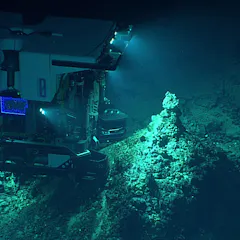
In some places, the ocean is almost 7 miles deep. Scientists exploring the ocean floor have found strange sea creatures, bizarre geologic formations and records of Earth’s history.
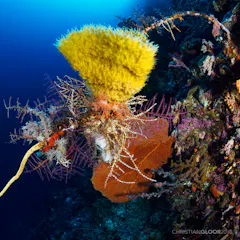
Companies are developing technologies to mine the deep sea, but environmental regulations have yet to be finalized.
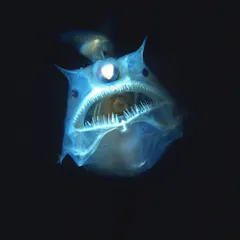
The pressure in the deepest part of the ocean can be 1,000 times greater than the pressure we experience at sea level – but creatures that live and visit there have some very special features.
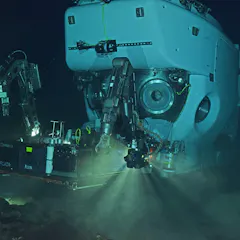
When you study volcanoes at mid-ocean ridges, doing fieldwork means becoming an aquanaut – diving thousands of feet to the ocean floor in the submersible Alvin, trading tight quarters for amazing views.
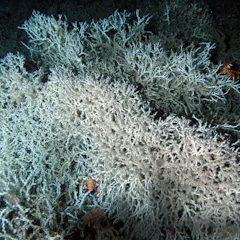
A massive new discovery this summer of miles of corals in deep waters off South Carolina shows how much we have yet to learn about life on the ocean floor.
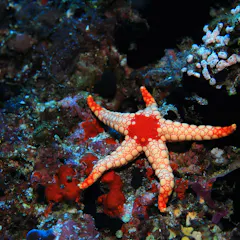
Nightvision, ejectable stomachs and regrowable arms mean starfish are more than meets the eye.

The ocean floor off Australia’s east coast bears the scars of numerous subsea landslides, which have potentially triggered tsunamis over the past several millennia.

Australia was a different place 275 million years ago - wild storms surged through icy seas, and marine animals lived a tenuous existence. But brittle stars had a survival strategy.
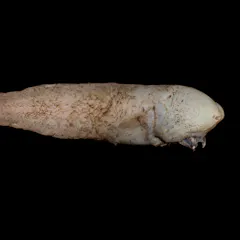
Surveying the bottom of the ocean turns out to be far from easy. But there was something wonderful about seeing animals we have only read about in old books.
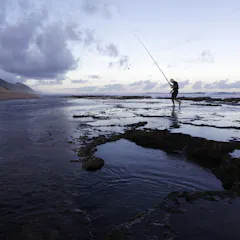
Marine sediments provide evidence of climate variability in South Africa going back 270,000 years. These changes correspond with changes in the archaeological record of the country.
Top contributors
-

Harold T. Stearns Professor of Earth Science, Wesleyan University
-
CSIRO Fellow, CSIRO
-
Senior Curator of Marine Invertebrates, Museums Victoria Research Institute
-
Director of the ARC Centre of Excellence for Our Future Oceans and Scientia Professor in Oceanography, UNSW
-
Science Guide & Visiting Researcher, Earth Sciences, University of Cambridge
-
Associate professor, University of Rhode Island
-
Associate Research Faculty, Coastal and Marine Laboratory, Florida State University
-
Lecturer, University of Sydney
-
Associate Professor, University of Sydney
-
Professor, Department of Oceanography, Dalhousie University
-
University of Southampton
-
Distinguished Professor of Geology, University of Florida
-
Assistant Professor of Invertebrate Ecology at Moss Landing Marine Laboratories, San José State University
-
Professor and Director of ACCESS-NRI, Australian National University
-
Senior Lecturer in Climate and Fluid Physics, Australian National University