
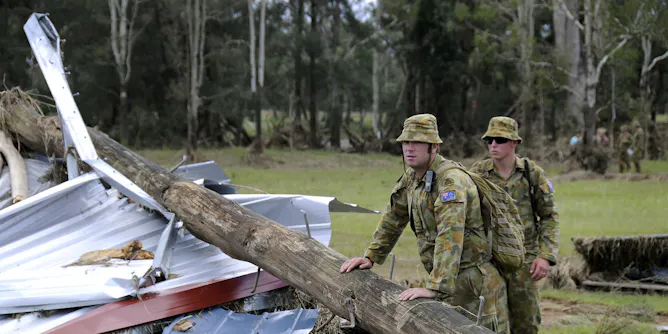
Australia faces many security issues driven by climate change, including more international migration and an increase in defence personnel being sent on disaster relief missions, a Senate inquiry has found.
Articles on Sea level rise
Displaying 241 - 260 of 331 articles
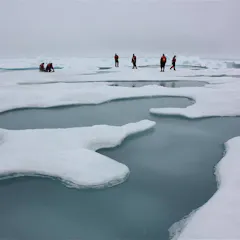
Climate change is transforming the Arctic, with impacts on the rest of the planet. A geographer explains why he once doubted that human actions were causing such shifts, and what changed his mind.

There is plenty of debate over what route was taken by the first people to reach Australia. New research reveals a likely route through a now submerged chain of islands.
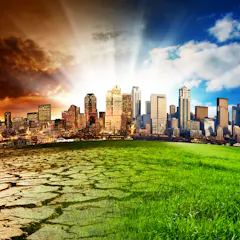
Long-term climate modelling may appear to focus on the impossibly far future. But the full impact of some climate processes won’t be apparent for centuries.
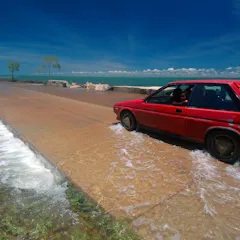
King tides and rising seas are an increasing and predictable threat, but adaptation plans to limit the damage to coastal property are still not managing the political obstacles.
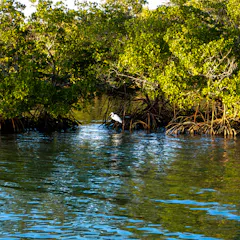
As Earth’s climate warms, mangroves are expanding north and south from tropical zones. Mangroves reinforce shorelines and store huge quantities of carbon, so protecting them is an effective climate strategy.
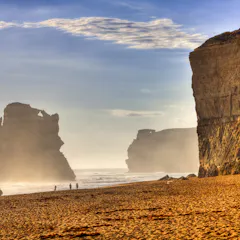
People have been forced to move in the past thanks to changes in sea levels that affected Australia’s coastline.

Climate change is raising global sea levels. Now research shows that ‘hot spots’ where seas rise another 4 to 5 inches in five years can occur along the Atlantic and Gulf coasts, further magnifying floods.
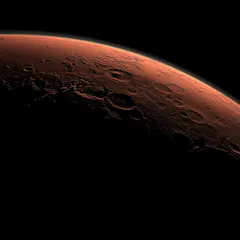
The race may be on to send humans to live on Mars, but is it worth the effort – and the spend – when we have our own problems to deal with on Earth.
New Zealand’s plan to create the world’s first humanitarian visa for climate refugees has to consider ways people from Pacific Island nations actually want to be assisted.
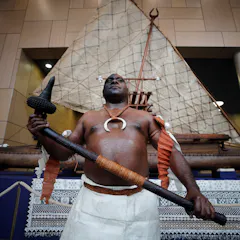
To many people, island nations such as Tuvalu, Kiribati and the Marshall Islands are synonymous with climate catastrophe. But prophesies of doom aren’t all that helpful.
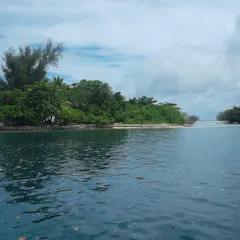
In 1850, the Micronesian island of Nahlapenlohd was the scene of Pohnpei state’s first battle involving cannons and muskets. Less than two centuries later, it has sunk beneath the waves.
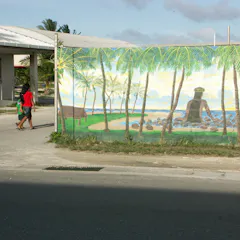
Australia is good at ‘hard hat’ responses to crises such as cyclones. But a new environmental declaration on the Pacific Islands points out that the best approach is more well-rounded and subtle.

Due to rising sea levels, low-lying island nations are in immediate danger. If drastic measures are taken, this disastrous trend can be transformed into an opportunity for sustainable development.

To create property systems that are as dynamic as the landscapes we occupy, we might need to start thinking about ourselves as belonging to and answerable to the land, not the other way around.
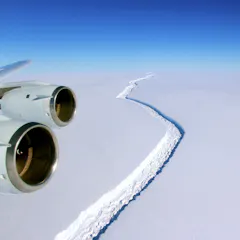
A huge iceberg is set to break free from Antarctica. While the iceberg isn’t hugely concerning, it could herald the breakup of the entire Larsen C ice shelf, which could trigger more sea-level rise.
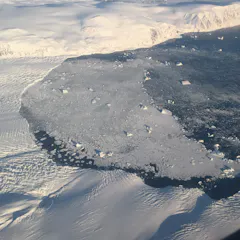
Greenland’s ice is largely responsible for the accelerating pace of sea-level rise. A new analysis shows that, while Greenland accounted for just 5% of the rise in 1993, that figure rose to 25% by 2014.

In the wake of the collapse of Malta’s spectacular arch, which UK coastal features are under threat from the unrelenting forces of wind and water?

Part of the land inhabited by some of the early Australians is now submerged, but details of their life is now revealed in an excavation on an island off the continent’s north-west coast.
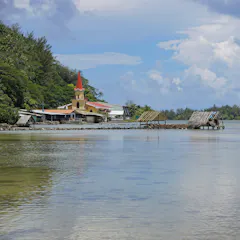
What does God have to do with climate change? A lot, if you want to engage with communities in the Pacific Islands, where almost everyone goes to church and religious leaders are hugely influential.
Top contributors
-

Chair Professor, Climate Change Research Centre, UNSW
-
Professor of Geography, School of Law and Society, University of the Sunshine Coast
-
Professor of Climate Adaptation, University of East Anglia
-
Professor of Glaciology and Earth Observation, University of Bristol
-
Professor of Polar Geodesy and ARC Laureate Fellow, University of Tasmania
-
Assistant Professor, Disaster Research Center, University of Delaware
-
Principal Research Scientist, CSIRO
-
Senior Lecturer, School of Geography, Planning, and Spatial Sciences, University of Tasmania
-
Emeritus Professor, University of Sydney
-
Lead - Pilot Deployments Program (AIMS); Professor (Queensland University of Technology; Adjunct), Queensland University of Technology
-
Professor of Glaciology, Te Herenga Waka — Victoria University of Wellington
-
Adjunct professor, UNSW
-
Associate Professor, and Associate Investigator for the ARC Centre of Excellence for Climate Extremes, Monash University
-
University visitor, University of Southampton
-
Pro Vice-Chancellor of Research, University of Technology Sydney