
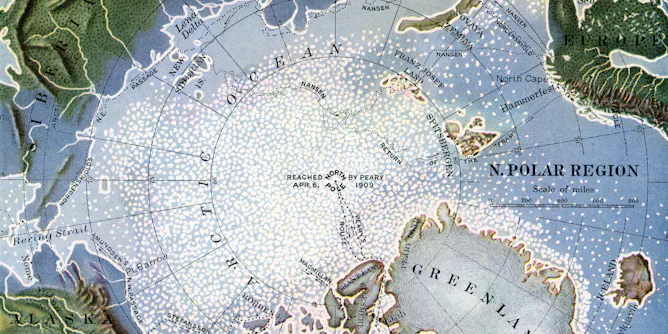
The pattern of autumn sea ice growth has been completely disrupted. The director of the National Snow and Ice Data Center explains what’s happening.
Articles on Sea ice
Displaying 61 - 80 of 109 articles

The Laptev Sea is one of the Arctic’s biggest nurseries of new sea ice in winter, but Siberia’s record summer heat may have halted production.
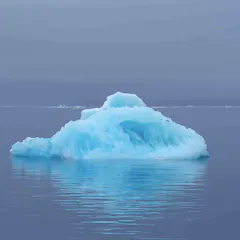
Extreme shrinkage of summer sea ice is just the latest evidence of rapid Arctic warming – and what happens in the Arctic doesn’t stay there.
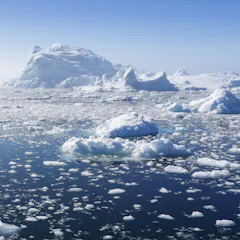
Scientists find oceanic heat has overtaken atmospheric heat as the main cause of melting.

The Arctic is warming about twice as fast as the planet as a whole, with serious consequences. Scientists have been warning about this for decades.
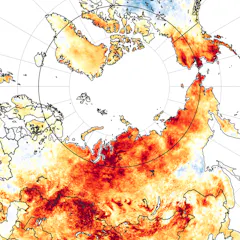
Models have predicted for some time that with every degree of global warming, the Arctic will see double or more.
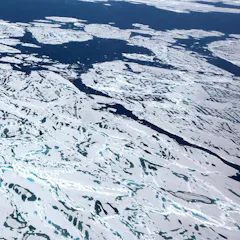
Understanding sea ice loss requires expensive and difficult expeditions. Scientists have developed a new model that predicts the growth of small ponds on sea ice more efficiently.

How sea water circulates underneath Antarctic ice shelves is a vital missing link in climate change projections.

The long tusk of the male narwhal earned these whales their fanciful nickname. But there’s more to these Arctic mammals than their unique spiral tooth.

Emperor Penguins thrive in harsh conditions, but a new study shows that their fate depends on human action to slow global warming and associated loss of sea ice.
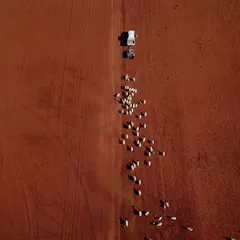
What if the nightly news had regular updates on forest clearing, ocean temperatures and fossil fuel consumption? These indicators sit alongside temperatures as signs of climate change.

Warm summers aren’t the only threat to Arctic ice – increasingly intense winter storms are also weakening and reducing ice cover.

More than 600 experts will spend the next year drifting in Arctic waters to gain a better understanding of how climate change is affecting the region and how it can be fought.
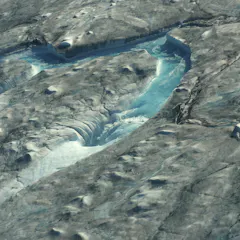
Studies show that the Arctic is heating up twice as fast as the rest of the planet.
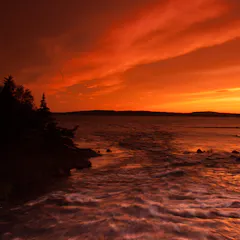
Coastal communities are helping scientists understand the impacts of marine heatwaves — and find solutions.
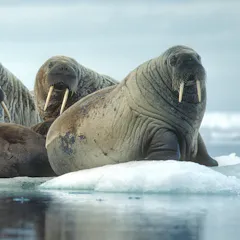
Algae at the bottom of the Arctic food chain relies on sea ice.
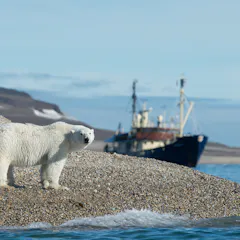
Polar bears ‘invading’ a Russian village have renewed concern over climate change in the Arctic, but human-wildlife conflicts are flaring up everywhere.
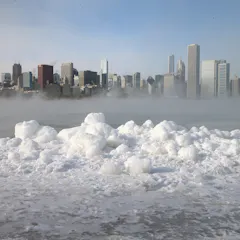
An atmospheric scientist explains why water can do some strange-looking things at very cold temperatures, and what’s different about snowfalls on Mars.
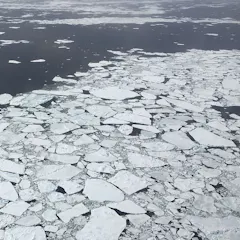
Antarctic sea ice cover fell to an all-time low recently and hasn’t yet recovered. Why? The initial answers could lie in an unlikely place – the tropics.

Climate change is shrinking Arctic sea ice and opening the region to ship traffic. Whales, seals and other marine mammals could be at risk unless nations adopt rules to protect them.
Top contributors
-

Alaska Climate Specialist, University of Alaska Fairbanks
-
NERC Independent Research Fellow in Oceanography, University of Southampton
-
Senior Scientist, National Snow and Ice Data Center (NSIDC), Cooperative Institute for Research in Environmental Sciences (CIRES), University of Colorado Boulder
-
Deputy Lead Scientist, National Snow and Ice Data Center (NSIDC), Cooperative Institute for Research in Environmental Sciences (CIRES), University of Colorado Boulder
-
Associate Scientist, Woods Hole Oceanographic Institution
-
Professor of Glaciology and Earth Observation, University of Bristol
-
Research Professor of Geography and Director, National Snow and Ice Data Center, University of Colorado Boulder
-
Australian Laureate Fellow, Distinguished Professor, Deputy Director of ARC Securing Antarctica's Environmental Future (SAEF), University of Wollongong
-
Chief Scientist, Australian Antarctic Division and Professor of Climate Science, Australian National University
-
Director of the ARC Centre of Excellence for Our Future Oceans and Scientia Professor in Oceanography, UNSW
-
Professor of Physical Oceanography, Bangor University
-
Senior Research Associate in Physical Oceanography, University of Tasmania
-
Associate Professor in Environmental History, University of Tasmania
-
ARC Future Fellow, IMAS and ACE CRC, University of Tasmania
-
ARC Future Fellow and Associate Professor in Climate Science, ARC Centre of Excellence for 21st Century Weather, The University of Melbourne