
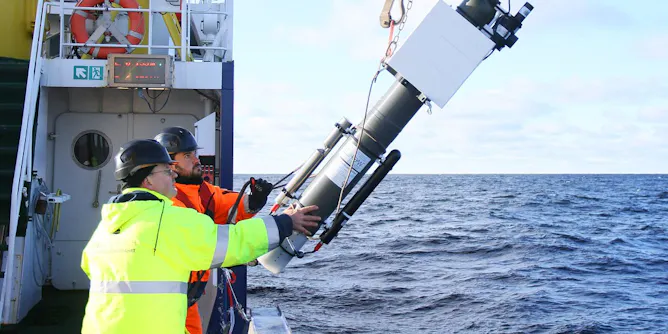
Defunding marine monitoring networks could jeopardise efforts to avoid losing track of the world’s oceans and their precious ecosystems, which drive the blue economy.
Articles on Polar sea ice
Displaying all articles

A polar scientist explains the changes hunters who rely on the ice are seeing off Utqiagvik, and how those shifts are echoed in satellite data and climate models.

New research explores the wide-ranging consequences of record low summer sea ice in Antarctica. From more ocean warming to extra icebergs, it’s bad news we must hear.

Part of the system that pumps water, heat and nutrients around the globe is at risk. Climate change could slow the Antarctic Circumpolar Current down 20% by 2050.
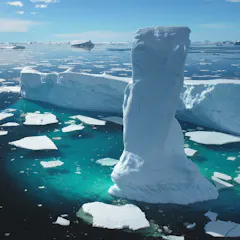
New research shows melting ice is causing the Atlantic Meridional Overturning Circulation (AMOC) to slow down, with widespread consequences for the world’s climate and ecosystems.

These powerful ‘rivers in the sky’ provide a huge share of annual precipitation in many regions, including California. They can also melt sea ice, with global climate implications.

The early heat melted snow and warmed rivers, heating up the land and downstream ocean areas. The effects harmed salmon fisheries, melted sea ice and fueled widespread fires.
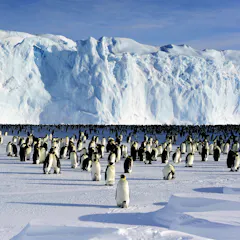
The first comprehensive assessment of trends in Southern Ocean ecosystems reveals an urgent need to address climate change. The summary for policymakers can guide decision-makers.
Sea ice extent in July 2023 has been around 10% below last year’s record low for the month.
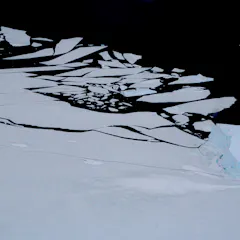
More trouble in Antarctica: the extent of frozen seawater fastened to the coast (called landfast ice) hit a record low in March 2022. If this trend persists, the consequences could be catastrophic.
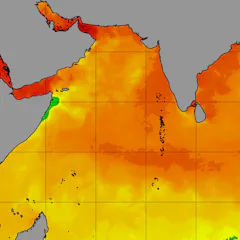
Drought in Europe, dwindling Arctic sea ice, a slow start to the Indian monsoon – unusually hot ocean temperatures can disrupt climate patterns around the world, as an ocean scientist explains.
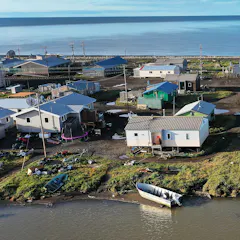
In the years since the Supreme Court rejected Kivalina’s appeal on May 20, 2013, the community’s search and rescue team has faced increasing climate disasters: ‘We just can’t adapt this fast.’
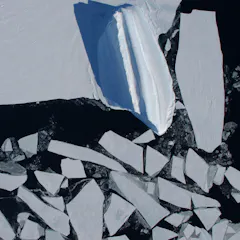
The rhythmic expansion and contraction of Antarctic sea ice is like a heartbeat. But there’s been a skip in the beat. Deeply concerned scientists have released a diagnosis for policy-makers.

Polar bears are increasingly seeking sustenance in human trash because of melting sea ice and a loss of hunting opportunities. The result is a rise in human-bear conflict – and dead bears.
Top contributors
-

Senior Research Associate in Physical Oceanography, University of Tasmania
-
Adviser, Antarctica and Marine Systems, Science & Policy, University of Tasmania
-
Alaska Climate Specialist, University of Alaska Fairbanks
-
Climate Scientist, British Antarctic Survey
-
Polar Climate Scientist, British Antarctic Survey, Associate Lecturer, The Open University
-
Assistant Professor of Marine and Environmental Affairs and American Indian Studies, University of Washington
-
Antarctic Marine Zooplankton Ecologist, University of Tasmania
-
PhD candidate, University of Tasmania
-
Senior Researcher in Antarctic Remote Sensing, University of Tasmania
-
Senior Research, Euro-Mediterranean Center on Climate Change; Professor of Ocean and Climate Dynamics, Georgia Institute of Technology
-
Senior Scientist, National Snow and Ice Data Center (NSIDC), Cooperative Institute for Research in Environmental Sciences (CIRES), University of Colorado Boulder
-
Professor - Wildlife and Wildlands Conservation Program, Brigham Young University
-
Deputy Lead Scientist, National Snow and Ice Data Center (NSIDC), Cooperative Institute for Research in Environmental Sciences (CIRES), University of Colorado Boulder
-
Transdisciplinary Researcher & Knowledge Broker, CSIRO
-
Quantitative Sea Ice Biogeochemist/Ecologist, University of Tasmania