
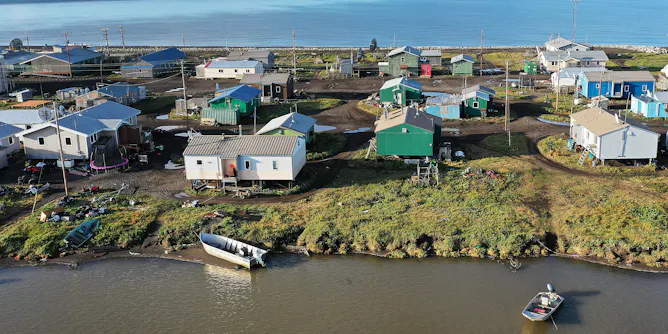
In the years since the Supreme Court rejected Kivalina’s appeal on May 20, 2013, the community’s search and rescue team has faced increasing climate disasters: ‘We just can’t adapt this fast.’
Articles on Sea ice
Displaying 41 - 60 of 109 articles

Atmospheric rivers can melt fragile new sea ice. When these storms arrive in waves, the sea ice doesn’t have a chance to recover.

Emperor penguins survive in a ‘Goldilocks zone’ between too much sea ice and too little. Climate change is having an impact.

Polar bears are increasingly seeking sustenance in human trash because of melting sea ice and a loss of hunting opportunities. The result is a rise in human-bear conflict – and dead bears.

The ocean is often considered a silent universe. But many recent studies highlight the importance of the soundscape for many marine species, both large and small.
ToxChips study the changes in the DNA of animals exposed to contaminants, like those found in oil spills.

The SA Agulhas II is helping South Africa to become a leader in Antarctic science.
This seemingly one-off heatwave may be a harbinger for the future under climate change.
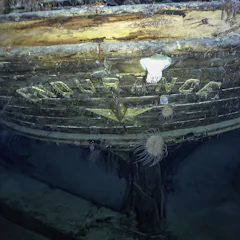
The resting place of Shackleton’s ill-fated ship is now an international heritage site, and a reminder of how Antarctica’s place in our collective consciousness has changed since the ‘heroic age’.

Sea ice is thinning at an alarming rate. Snow is shifting to rain. And humans worldwide are increasingly feeling the impact of what happens in the seemingly distant Arctic.

A closer look at how ice cover changed through the months offers some important insights into the role of climate change and why every year isn’t a record.

A plan for humanity’s surviving and thriving through our planetary crisis.

Some of the climate changes will be irreversible for millennia. But some can be slowed and even stopped if countries quickly reduce their greenhouse gas emissions, including from burning fossil fuels.

A particularly stormy winter has pushed perennial sea ice into the Arctic melt zone.

Emperor penguins survive in a ‘Goldilocks zone’ between too much sea ice and too little. A new study shows the risk they face from climate change.

As the climate changes, the ocean is also changing. And that’s putting our health at risk.

Russia is attempting to claim more of the Arctic seabed, an area rich in oil, gas and minerals. It’s also expanding shipping and reopening Arctic bases. Here are two things the U.S. can do about it.
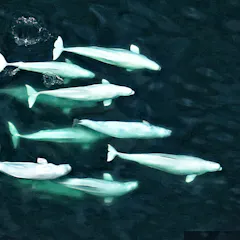
Belugas use sound to communicate, navigate the dark marine environment and find food. But climate change is opening up Arctic waters to more sound, and could affect the health and survival of belugas.
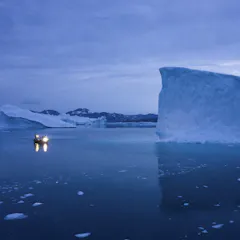
The Arctic has been a remote place for much of its history. But climate change is bringing global problems and opportunities to its door.
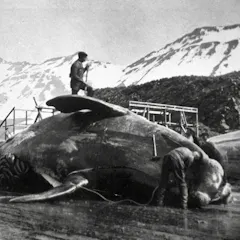
For 200 years, a small number of countries have exploited the marine wildlife of Antarctica, often with devastating impact on their populations.
Top contributors
-

Alaska Climate Specialist, University of Alaska Fairbanks
-
NERC Independent Research Fellow in Oceanography, University of Southampton
-
Senior Scientist, National Snow and Ice Data Center (NSIDC), Cooperative Institute for Research in Environmental Sciences (CIRES), University of Colorado Boulder
-
Deputy Lead Scientist, National Snow and Ice Data Center (NSIDC), Cooperative Institute for Research in Environmental Sciences (CIRES), University of Colorado Boulder
-
Associate Scientist, Woods Hole Oceanographic Institution
-
Professor of Glaciology and Earth Observation, University of Bristol
-
Research Professor of Geography and Director, National Snow and Ice Data Center, University of Colorado Boulder
-
Australian Laureate Fellow, Distinguished Professor, Deputy Director of ARC Securing Antarctica's Environmental Future (SAEF), University of Wollongong
-
Chief Scientist, Australian Antarctic Division and Professor of Climate Science, Australian National University
-
Director of the ARC Centre of Excellence for Our Future Oceans and Scientia Professor in Oceanography, UNSW
-
Professor of Physical Oceanography, Bangor University
-
Senior Research Associate in Physical Oceanography, University of Tasmania
-
Associate Professor in Environmental History, University of Tasmania
-
ARC Future Fellow, IMAS and ACE CRC, University of Tasmania
-
ARC Future Fellow and Associate Professor in Climate Science, ARC Centre of Excellence for 21st Century Weather, The University of Melbourne