
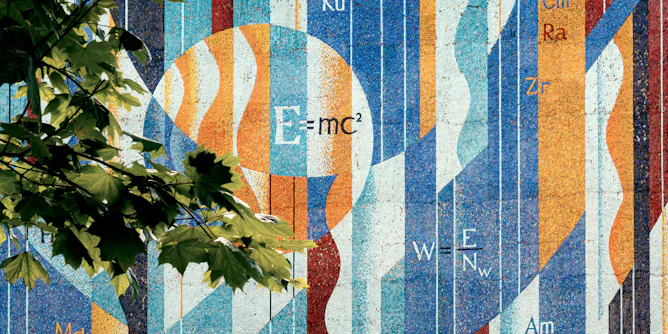
Everyone, no matter their background, should have an equal chance to work in science – but there are huge systemic barriers.
Articles on Science journals
Displaying all articles

The world’s library of scientific papers is becoming contaminated as fraudsters use ‘paper mills’ to game scholarly publishing for profit.
Science sleuths are stepping up efforts to detect bogus science papers. This includes building tools that comb through millions of journal articles for signs of tortured phrases spawned by AI.
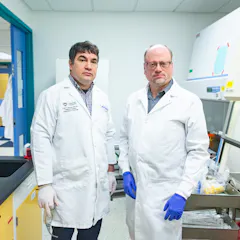
‘Paper mills’ are contaminating the world’s scholarly output with fake papers that hinder research. Lifesaving biomedical fields are especially hard hit.

Science rankings rely on papers in academic journals. Broadening the view to include many more open-access journals will upend the usual order – thanks to China’s vast number of publications.
Pressure to ‘publish or perish’ and get results out as quickly as possible has led to weak study designs and shortened peer-review processes.
In some cases, it can be difficult for academics to know which journals are not credible – but other times, people feel pressure to publish in these publications.

Lack of free access to research leads to discrimination, both in academia and for us all. The new guidance from the US is a huge step in the right direction.
Whenever you hear about a new bit of science news, these suggestions will help you assess whether it’s more fact or fiction.

Trump doesn’t just ignore science, he attacks it. Australia’s experts have an obligation to speak out on crises such as the coronavirus pandemic, even if it means picking a side in our politics.
There is a stark mismatch between the elements required of a modern news story – unique, high impact – and the reality of medical research being slow, meticulous and progressing one step at a time.

An urgent discussion is needed around the cost of research publications.
Scientific articles are the way in which scientists communicate their results to their peers.
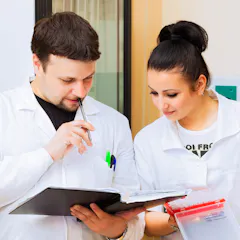
There’s peer review – and then there’s peer review. With more knowledge you can dive in a little deeper and make a call about how reliable a science paper really is.
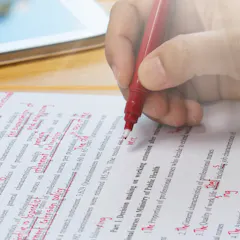
Key areas of focus for tweaking peer review include making journal editors more directive in the process, rewarding reviewers, and improving accountability of editors, reviewers and authors.

Could the real open access please stand up? If more research was published according to true open access principles, we’d see better application of evidence for everyone’s benefit.
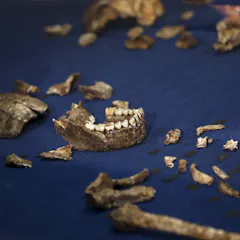
A rush of ancient DNA projects in Africa has presented the curators of archaeological skeletons with ethical issues because research requires the destruction of human bone.
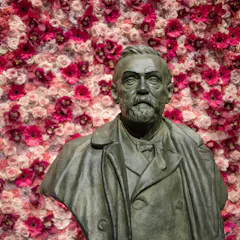
Today’s scientific research is characterized by interdisciplinary, international collaboration. Awards like the Nobel Prizes haven’t caught up.
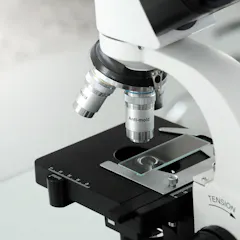
Scientific truth is based on a body of research which has been tried and tested by many researchers over time. Peer review filters the good science from the bad.
Peer review is a crucial part of the academic publication system. It is also a critical part of the hiring and evaluation process. What’s the problem with peer review?
Top contributors
-

Previous Vice President of the Academy of Science of South Africa and DSI-NRF SARChI chair in Fungal Genomics, Professor in Genetics, University of Pretoria, University of Pretoria
-
Professor of Computer Science, Université Grenoble Alpes (UGA)
-
Professor of Computer Science, Institut de Recherche en Informatique de Toulouse
-
Contributing editor, Retraction Watch
-
Professor of Public Affairs, The Ohio State University
-
Editor in Chief, Medical Journal of Australia, Queensland University of Technology
-
Professor of Epidemiology and Biostatistics, Texas A&M University
-
Professor of Journalism and Chair, Knight Center for Environmental Journalism, Michigan State University
-
Associate Professor (hon) at the Centre for Public Awareness of Science, Australian National University
-
VC Postdoctoral Fellow, RMIT University
-
Associate Professor of Media, KIMEP University
-
Professor of Chemistry, Connecticut College
-
Professor and Director, Centre for Neuroendocrinology, University of Pretoria
-
Associate Professor, School of the Environment, The University of Queensland
-
Professor of Biological Anthropology, University of Cape Town