

Alzheimer’s research shows what happens when funding pressures and vested interests corrupt the pursuit of scientific truth.
Articles on Research fraud
Displaying all articles

The world’s library of scientific papers is becoming contaminated as fraudsters use ‘paper mills’ to game scholarly publishing for profit.

Science sleuths are stepping up efforts to detect bogus science papers. This includes building tools that comb through millions of journal articles for signs of tortured phrases spawned by AI.
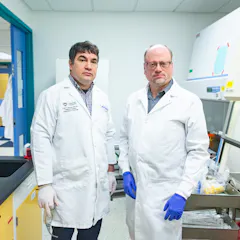
‘Paper mills’ are contaminating the world’s scholarly output with fake papers that hinder research. Lifesaving biomedical fields are especially hard hit.

The only way for science to fight the booming fake research industry is to fund smart, dedicated people to stay ahead of the fraudsters.

A new screening tool to help study reviewers identify what’s fake or shoddy in research may be on the horizon. And everyday people can apply some of the same critical analysis tools.

Not all Alzheimer’s research has been compromised by allegations of scientific fraud. But we should interrogate whether the governing bodies of research and drug approvals are truly effective.

Australian scientists are no more honest or dishonest than those in other countries that have national bodies to investigate research fraud. We have a sport integrity watchdog but not one for research.

John Carlisle’s method for spotting potentially fraudulent figures has already been adopted by two top medical journals.
Top contributors
-

Professor of Computer Science, Institut de Recherche en Informatique de Toulouse
-
Professor of Computer Science, Université Grenoble Alpes (UGA)
-
Contributing editor, Retraction Watch
-
Emeritus Professor of Applied Statistics, The Open University
-
Professor of Statistics, Queensland University of Technology
-
Professor of Medicine and Public Health, University of Colorado Anschutz
-
Professor of Research Ethics, University of Portsmouth
-
Medical Researcher, WEHI (Walter and Eliza Hall Institute of Medical Research)
-
John Curtin Distinguished Professor of Health Sciences, Director, Curtin Health Innovation Research Institute, Curtin University