
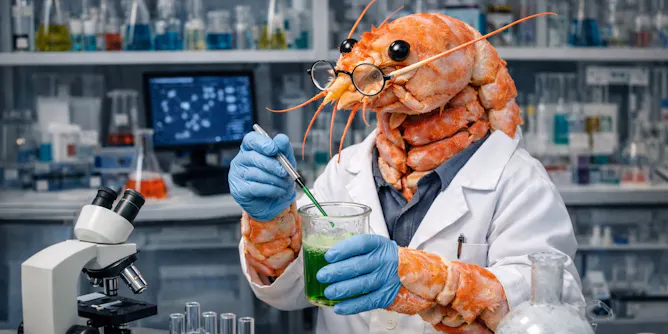
A new study shows AI writing is turning traditional measures of research quality upside down.
Articles on Science publishing
Displaying all articles

Everyone, no matter their background, should have an equal chance to work in science – but there are huge systemic barriers.

Science rankings rely on papers in academic journals. Broadening the view to include many more open-access journals will upend the usual order – thanks to China’s vast number of publications.
A new statistical test lets researchers search for similarities between groups. Could this help keep new important findings out of the file drawer?
There’s peer review – and then there’s peer review. With more knowledge you can dive in a little deeper and make a call about how reliable a science paper really is.
Key areas of focus for tweaking peer review include making journal editors more directive in the process, rewarding reviewers, and improving accountability of editors, reviewers and authors.

Could the real open access please stand up? If more research was published according to true open access principles, we’d see better application of evidence for everyone’s benefit.
Science papers are supposed to be communication tools - and yet hardly anyone can understand them, even other scientists.
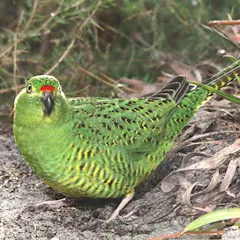
With the right approach to data security, scientists’ discoveries of the locations of rare and sought-after species needn’t leave a trail for poachers to follow.

The traditional mode of publishing scientific research faces much criticism – primarily for being too slow and sometimes shoddily done. Maybe fewer publications of higher quality is the way forward.
Embracing more rigorous scientific methods would mean getting science right more often than we currently do. But the way we value and reward scientists makes this a challenge.
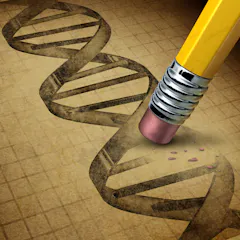
A recent closed meeting about building synthetic genomes raised suspicions about just what scientists were planning, away from the public eye.

Scientists build on knowledge gained and published by others. How can we know which findings to trust?
Meta-analyses that combine many different studies are the gold standard for medical evidence. But they are only as good research they examine.
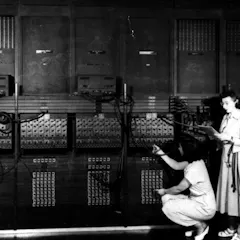
Virtually every researcher relies on computers to collect or analyze data. But when computers are opaque black boxes that manipulate data, it’s impossible to replicate studies – a core value for science.

Researchers from around the globe tried to replicate 100 published psychology studies. They were successful on only 36.

It’s a problem when much of what winds up in scientific journals isn’t replicable, for various reasons. The research community is taking baby steps toward addressing the “reproducibility crisis.”

UNDERSTANDING RESEARCH: What do we actually mean by research and how does it help inform our understanding of things? It’s important to publish all results – both positive and negative – if researchers…

How do you know the people billed as science experts that you see, hear and read about in the media are really all that credible? Or have they been included just to create a perception of balance in the…
Most academic papers today are published only after some academic peers have had a chance to review the merits and limitations of the work. This seems like a good idea, but there is a growing movement…
Top contributors
-

Professor of Biological Sciences, University of Maryland, Baltimore County
-
Professor of Mathematics and Statistics, University of Maryland, Baltimore County
-
Editor in Chief, Medical Journal of Australia, Queensland University of Technology
-
Associate Professor and Director - TERN Ecosystem Surveillance, Adelaide University
-
Postdoctoral Research Associate, University of Maryland
-
Ph.D. Candidate in Chemical Biology, Harvard University
-
Data Integration and Synthesis Manager, TERN, The University of Queensland
-
ACT Health
-
Associate Professor, Dept of Global Health; Infectious Diseases Specialist, Boston University
-
Assistant Professor and Co-Director of the Histopathology and Tissue Shared Resource, Georgetown University
-
Data manager, Atlas of Living Australia, CSIRO
-
Assistant Professor of Cognitive and Information Sciences, University of California, Merced
-
Associate Professor and Marine Ecologist, Adelaide University
-
Distinguished Journalist In Residence, Arthur Carter Journalism Institute, Retraction Watch
-
NHMRC Research Fellow, University of Wollongong