

Publishing and having access to scientific articles is an expensive business for research institutions. Fortunately, there are content providers out there who deliver rigorous material that’s free of charge.
Articles on Open access
Displaying 1 - 20 of 123 articles

‘Diamond open access’ means research is free to read, free to publish. It’s a public good – but it relies on volunteer labour.
‘Green open access’ has existed for decades – and it’s not hard to get academics to use it more.

Academic publishing now shows the same decline that has hit social media and online marketplaces.

‘Open science’ is a radical shift from traditional research practices. But it can help research integrity in several ways.

The new Australian Internet Observatory will shed crucial light on the inner workings of social media platforms.

Science rankings rely on papers in academic journals. Broadening the view to include many more open-access journals will upend the usual order – thanks to China’s vast number of publications.

Secondary publishing rights could facilitate immediate open access to publicly funded research and foster global innovation and discovery.

Some open access journals — those that don’t charge their readers a fee — require that researchers pay to publish with them. Removing author fees helps more researchers to publish their work.

Lack of free access to research leads to discrimination, both in academia and for us all. The new guidance from the US is a huge step in the right direction.

Making scientific research free to read could bolster collaboration and research on solving problems such as pandemics, climate change and more. The UN has taken a step towards realising this goal.

Open access to COVID-19 research accelerated the development of solutions. The urgency of climate change demands the same approach, but more than half of Australian research is still behind paywalls.
The idea is publicly funded Australian research should be free for the public to read when published. But if it means taking money from universities struggling for research funding, that poses risks.
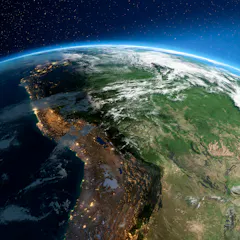
We need to guarantee that the benefits of sciences are shared between scientists and the general public, without restriction. Peru and Brazil are leading the way.
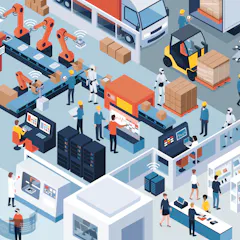
An ‘open’ approach to hardware could make production bottlenecks a thing of the past.

In many other countries, a majority of research publications are now open access, but the system of paying for access still dominates academic publishing in Australia.

For science to be open, one can reasonably think that it would have to use open software. However, being completely open is not that easy.

Higher education should provide access for as many people as possible to fulfil their potential as individuals. Leaders in higher education must be ready to examine what it will take to achieve this.

All modern scientists should share ownership of their knowledge and research.

Indonesia has seen progress in open research ecosystem development. More needs to be done.
Top contributors
-

Visiting Fellow, Australian National Centre for the Public Awareness of Science, Australian National University
-
Editor in Chief, Medical Journal of Australia, Queensland University of Technology
-
Professor, School of Psychology, University of Sydney
-
Associate Professor, School of Chemistry, University of Sydney
-
Dean of Research, Humanities, Curtin University
-
Emeritus Fellow, Australian National University
-
Senior Lecturer in Literature, Technology and Publishing, Birkbeck, University of London
-
Professor Emeritus, The University of Queensland
-
Researcher, University of Pretoria
-
Deputy University Librarian, University of California, Merced
-
Secretary-General, International Human Frontier Science Program Organisation; Emeritus Professor, Monash University, Monash University
-
Lecturer in History of Medicine/Life Science, The University of Melbourne
-
Former Associate Vice Provost, The University of Texas at Austin
-
Adjunct Professor Faculty of Law, Queensland University of Technology
-
Lecturer at Department of Geology, Institut Teknologi Bandung