
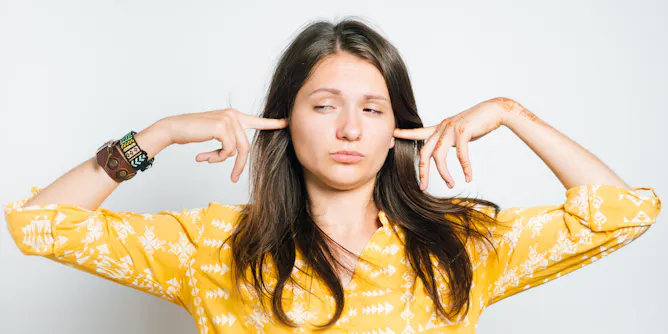
Quirks of human psychology can pose problems for science communicators trying to cover controversial topics. Recognizing what cognitive science knows about how we deal with new information could help.
Articles on Science journalism
Displaying 21 - 39 of 39 articles
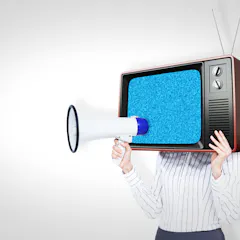
Now that we’re in a post-truth world, a timely report from the National Academies of Sciences, Engineering and Medicine highlights evidence for what works and what doesn’t when talking about science.
Changes to the ABC’s science show Catalyst follow recent criticism of some of its journalism. But will the new format still give a voice to Australian science, or will some issues lose out?
The ABC failed its own accuracy test when it broadcast claims of health risks associated with wireless devices such as mobile phones.

The public loses when their only choices are inaccessible, impenetrable journal articles or overhyped click-bait about science. Scientists themselves need to step up and help bridge the divide.
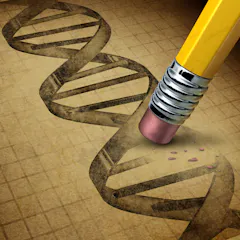
A recent closed meeting about building synthetic genomes raised suspicions about just what scientists were planning, away from the public eye.

Are there sex differences in the human brain? The answer is more nuanced than yes or no.

Sometimes big research news bypasses the usual scientific publishing process. Here’s why that’s not good for scientists or the public.

The media prefers positive stories to the traditional doom and gloom of climate coverage.

Nobel Prize-winning science is almost by definition arcane and complex. While these esoteric fields have their moment in the spotlight, does it matter if the rest of us understand?

It’s a problem when much of what winds up in scientific journals isn’t replicable, for various reasons. The research community is taking baby steps toward addressing the “reproducibility crisis.”

What’s behind a plant scientist’s research getting reported in over 4,000 media outlets? Here’s her post-game analysis.
Making science ‘sexy’ leads us to keep looking in the wrong place for the things science could do for us.

Science has a reputation for vigorous hypothesis-testing in the search for truth. But when errors make it into scientific journals, the hallowed self-correction process seldom lives up to the ideal.
Most science communication appeals to those who already love science. It’s harder, but important, to reach out to the disengaged too.
There is a wealth of science communication going on, but it’s still not enough.
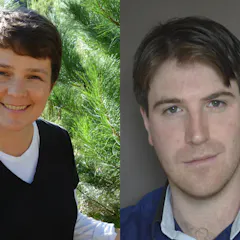
The 3rd annual John Maddox Prize has been awarded to Emily Willingham, a science writer in the US, and David Robert Grimes, a physicist at the University of Oxford, in recognition of their work in the…
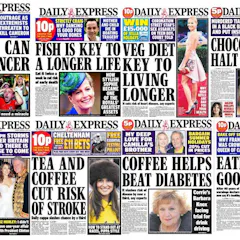
Another story about how some food holds the cure for cancer is making headlines in the Daily Express. This time the saviour is the humble carrot. But it isn’t its first time in the limelight. In March…
Martin Luther King said, “On some positions, Cowardice asks the question, ‘Is it safe?’ Expediency asks the question, ‘Is it politic?’ And Vanity comes along and asks the question, ‘Is it popular?’ But…
Top contributors
-

Professor of Life Sciences Communication, University of Wisconsin-Madison
-
Distinguished Journalist In Residence, Arthur Carter Journalism Institute, Retraction Watch
-
Professor and Chair of Life Sciences Communication, University of Wisconsin-Madison
-
Professor, Australian National University
-
Postdoctoral Researcher in Chemistry, University of Cambridge
-
Ph.D. Candidate in Cognitive Science, University of California, San Diego
-
Ph.D. Candidate in Chemical Biology, Harvard University
-
Director Emerita of the Alan Alda Center for Communicating Science, Stony Brook University (The State University of New York)
-
Visiting Fellow, Australian National University
-
Postdoctoral Research Fellow, Neuroscience, Boston University
-
Postdoctoral fellow, Kellogg School of Management, University of North Carolina at Chapel Hill
-
Professor, School of the Environment, The University of Queensland
-
Chair, The Conversation Media Group
-
Chair in Science Communication & Future Media, University of Salford
-
Professor of Health Psychology, University of Wollongong